Medieval Hilltop Town Called "The Most Livable City in the World"
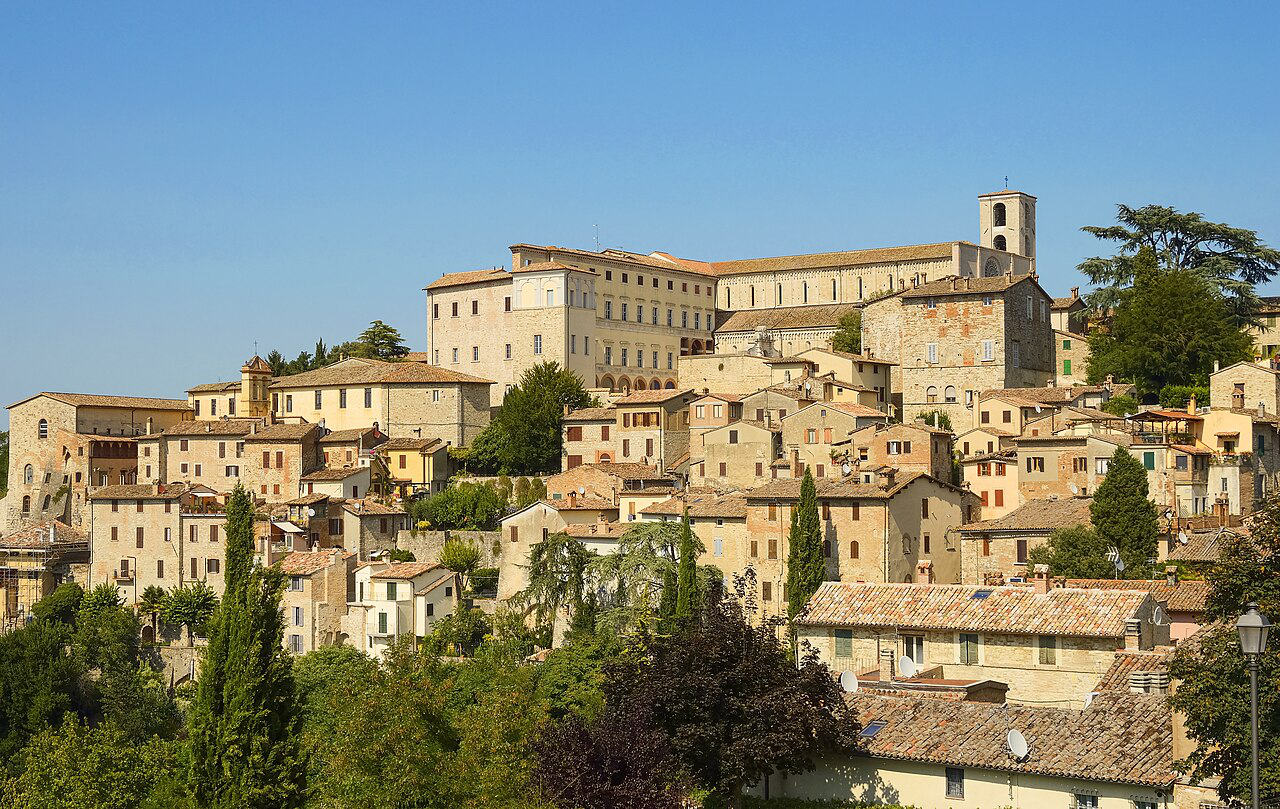
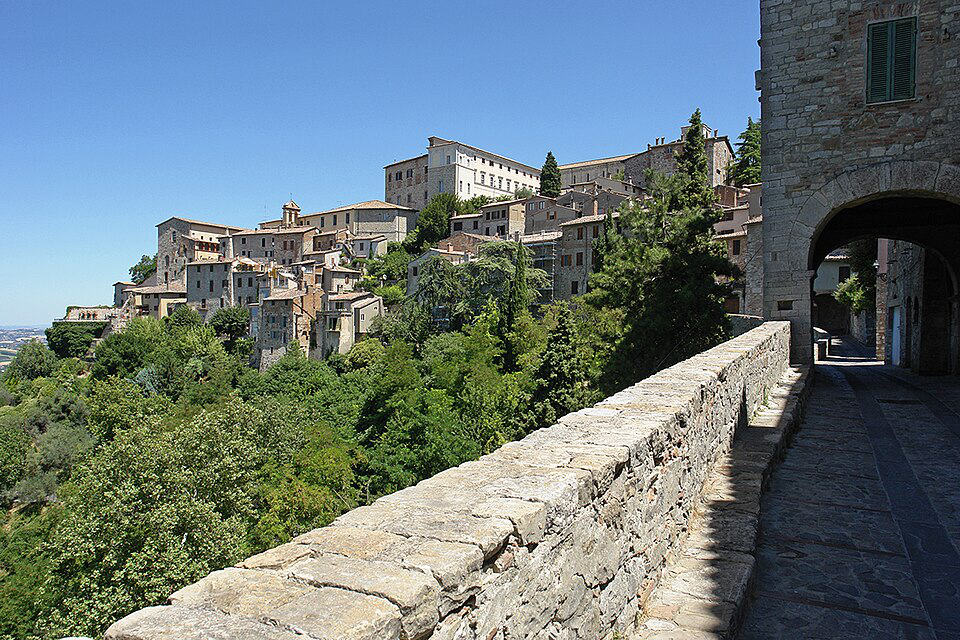
Todi sits 400 meters above the Tiber Valley on a hilltop the Etruscans chose for defense centuries before the Romans arrived. You see the town's medieval walls from the valley below - 4 kilometers of protective fortifications built in the 13th century when Todi's population actually outnumbered Rome (as did Florence, Venice, and Genoa, because Rome had fallen far by then). The walls are almost exactly the same length as Lucca's famous walls, built much later.
Architect and urban planner Richard Levine of the University of Lexington called Todi "the most livable city in the world" in 1991, and while that sounds like marketing hyperbole, he had specific criteria: the balance of urban infrastructure against medieval preservation, the ratio of green space to built environment, the accessibility of services, the intact social fabric. What matters to visitors is simpler - Todi gives you medieval beauty without the tourist crowds. It's less visited than Assisi or Perugia, equally beautiful, and genuinely feels like a town people live in rather than a museum.
The Piazza del Popolo is arguably Umbria's prettiest square - 13th-century palaces surrounding it, the Romanesque-Gothic cathedral dominating one side, cafes spilling onto the stones, locals lingering on benches, and underneath your feet lies the forgotten Roman forum. The medieval streets radiating from this square are narrow, atmospheric, and worth getting lost in.
Getting There and Parking
By Car: From Rome or Florence, take the E45 highway. Exit at Todi-Orvieto. Free parking available outside the medieval walls at Porta Orvietana or Porta Romana. Pay parking closer to center at various points. The historic center is pedestrianized.
By Train: Nearest station is Todi Ponte Rio (7km from town). Local buses and taxis connect to the historic center. More frequent trains stop at larger stations in Perugia (40km) or Orvieto (40km), then bus or car to Todi.
By Bus: Direct bus service from Rome (approximately 2 hours), dropping passengers in the center.
The town is compact and walkable once you're inside the walls. Expect hills - this is a hilltop town, and the medieval streets slope.
Time Needed
Half day (3-4 hours): Piazza del Popolo, Cathedral, San Fortunato church, climb the campanile for views, wander medieval streets, lunch.
Full day: Add Temple of Santa Maria della Consolazione, Beverly Pepper Park contemporary sculptures, underground tunnels tour, Palazzo del Popolo museums, longer lunch with local wine, more time in artisan shops and quiet corners.
Overnight: Early morning and evening light on the town, dinner at better restaurants that locals use, sunrise/sunset from viewpoints.
What to See in Todi
1. Piazza del Popolo
Start here - the heart of Todi and one of Italy's most beautiful medieval squares. Built on top of the Roman forum (still buried beneath), surrounded by buildings all dating from the 13th century when Todi was at peak power as an independent commune.
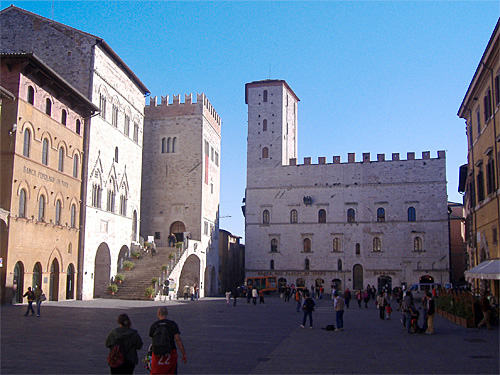
Palazzo del Popolo (1213-33): Gothic lines, originally housed the town's governing body. Now contains the Museo Civico (local art and artifacts, archaeological finds from Etruscan and Roman periods) and Pinacoteca Comunale (paintings including works by Lo Spagna). The building itself is the attraction - study the windows, the stonework, the proportions.
Palazzo del Capitano: Adjacent to Palazzo del Popolo, connected by external staircase. Together they form the distinctive medieval skyline of the square.
Palazzo dei Priori: Opposite side of the square, with characteristic Ghibelline crenellations. Currently houses municipal offices.
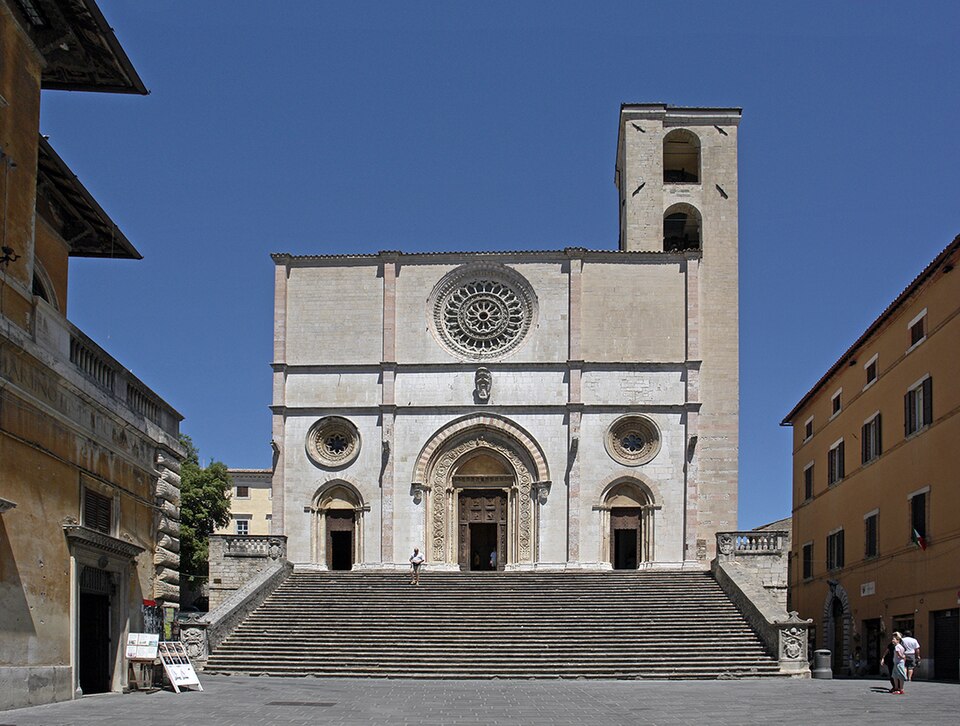
Cathedral of Santa Maria Assunta: Romanesque-Gothic facade (12th century), beautiful rose window, interior with wooden choir stalls. Less ornate than Orvieto's cathedral, but the restraint suits Todi's character. The crypt contains Roman columns recycled from earlier structures.
The square itself functions as Todi's living room - locals cross it going about daily business, cafes line the edges (Caffè Cavour has been here since 1865), markets set up occasionally. Sit with a coffee and watch the rhythm.
2. Chiesa di San Fortunato
Walk uphill from Piazza del Popolo through narrow streets to this Gothic church (construction started 1292, finished 1460). The facade is unfinished - bare brick where marble facing was planned - but the interior soars with Gothic vaulting.
Jacopone da Todi's tomb: In the crypt lies Jacopone da Todi (1230-1306), nicknamed "God's Jester." Wandering Franciscan friar, poet who wrote in local Umbrian dialect (before Dante did the same thing in neighboring Tuscany - locals point out proudly that Jacopone got there first), outspoken opponent of Pope Boniface VIII. His poetry shaped Italian vernacular literature.
Campanile climb: 150 steps to the top of the bell tower, but the reward is the best panoramic view of Todi and the hills behind. You see the entire town layout - the concentric medieval walls, the Tiber Valley below, the Temple of Santa Maria della Consolazione outside the walls, and on clear days, views stretching to Perugia in the distance. Worth the climb.
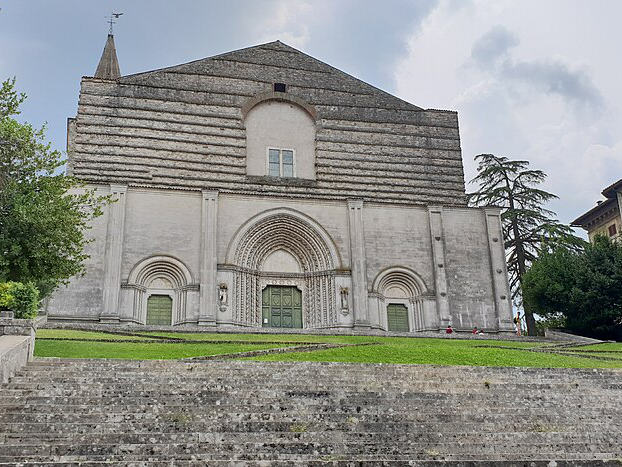
3. Temple of Santa Maria della Consolazione
Just outside the town walls (10-minute walk downhill from San Fortunato, or drive/taxi if you prefer), this Renaissance masterpiece sits in the landscape like a geometric meditation. Designed by Cola da Caprarola, possibly with Bramante's involvement, following the Greek Cross pattern that became fashionable during the High Renaissance.
Construction began 1508, completed 1607 - nearly a century of work. The dome, the symmetry, the pale stone against green landscape. Bramante's influence shows in the proportions even if he didn't design it directly (he died 1514, early in construction). This is Renaissance architecture at its most pure - less ornate than later Baroque, more about perfect mathematical ratios.
The best view is actually from the San Fortunato campanile looking down at it, but walking around the structure itself shows how the design changes appearance from each angle while maintaining geometric harmony.
4. Beverly Pepper Park
Umbria's first monothematic contemporary sculpture park, connecting the Temple of Santa Maria della Consolazione to the historic center along the medieval walls. American sculptor Beverly Pepper (1922-2020) donated 16 works from her private collection, permanently installed along a naturalistic-urban path.
The sculptures engage with the landscape and medieval walls - steel and stone, contemporary forms against ancient fortifications. Some pieces tower several meters high, others sit low and horizontal. The juxtaposition of contemporary art with medieval architecture could feel jarring but somehow works. Pepper lived in Umbria for decades and understood the context.
Free to walk through anytime. Allow 30-45 minutes for the full circuit.
5. Underground Todi
Beneath the medieval streets lies a forgotten hydraulic system - ancient Roman cisterns and tunnels that channeled water and prevented landslides and erosion. An impressive example of ancient engineering, carved from the stone, designed to drain accumulated underground water. The system was abandoned after the modern aqueduct was completed in 1925, but recently rediscovered and partially opened for tours.
The Pozzo Romano (Roman well-cistern complex) and various tunnel sections can be visited with guided tours. Check with the tourist office in Piazza del Popolo for current tour schedules and booking. These tours are less established than Orvieto's underground, so availability varies.
6. Torre del Maurizio
Small tower near Piazza del Popolo (not to be confused with Orvieto's Torre del Maurizio, which is larger and more ornate). Worth a glance as you wander the streets.
Where to Eat in Todi
Ristorante Umbria (Via San Bonaventura, 13): Traditional Umbrian cuisine. Chef Fausto Todini was among the first Umbrians to receive a Michelin star (back in the 1970s). The terrace in back is probably the finest outdoor dining spot in Todi - views over the valley. Truffle dishes, porcini mushrooms, game, pasta with aromatic herbs, local wines. Book ahead for terrace tables.
Trattoria Antica Hosteria de la Valle (Via Ciuffelli, 19): Family-run, classic trattoria atmosphere. Handmade pasta (try the palomba - pasta with dove sauce, traditional dish from when the town was under siege). Wild boar, rabbit, local meats. Good house wine. Moderate prices.
Pizzeria Ristorante Le Roi de la Crepe (Via Matteotti, 6): Name suggests crepes, but the pizza from their wood-fired oven is excellent. Casual, good value, popular with locals for weeknight dinners.
Wine: Look for Tudernum winery's bottles in restaurants and shops. Their Grechetto di Todi Superiore called "58" and Trebbiano Spoletino "TS 396" are both excellent whites, good value, truly local. Tudernum is just outside Todi and takes its name from the Roman name for the town (Tuder).
Todi's History in Brief
Etruscan origins: Settlement on this hilltop predates Roman conquest. Strategic defensive position above Tiber Valley.
Roman period: Became "Tuder," important town on the Via Flaminia connecting Rome to the Adriatic. The forum beneath Piazza del Popolo dates from this era.
Medieval power: 13th century was Todi's golden age. Independent commune, wealthy from trade and agriculture, population briefly exceeded Rome's (though this says more about Rome's decline than Todi's size). Built the 4km of walls, the palaces in Piazza del Popolo, expanded churches.
Papal influence: Renaissance period saw papal control. Several popes maintained residences here. The Temple of Santa Maria della Consolazione was built during this era.
Modern times: Tourism since mid-20th century, accelerating after Levine's 1991 declaration. Population today around 17,000 (including surrounding frazioni). Successfully balanced preservation with livability - locals still populate the center, shops serve residents not just tourists, schools and services function inside the walls.
Practical Tips
Market day: Saturday morning market in Piazza del Popolo and surrounding streets. Food, clothes, household goods. Worth visiting for local color.
Todi Festival: Annual arts festival in late August/early September. Theater, music, dance performances across various historic venues. If visiting then, book accommodation well ahead.
Walking shoes essential: Medieval cobblestone streets, hills, uneven surfaces. Todi is not accessible for those with serious mobility issues.
August can be crowded: Like all Italian hill towns, August sees domestic tourists. June, September, early October offer better weather-to-crowd ratios.
Lunch timing: Restaurants close between lunch and dinner (typically 2:30pm-7:00pm). Plan accordingly or you'll be stuck with bar snacks.
Beyond Todi: Nearby Attractions
Monte Castello di Vibio (6km northwest): Tiny medieval village with the Teatro della Concordia - the world's smallest theater (99 seats), inaugurated 1808, restored 1990s. Complete with stalls, two decks of boxes, and a stage. Check if performances scheduled during your visit.
Montefalco (40km northeast): "Balcony of Umbria" for sweeping views. Frescoed churches, Sagrantino di Montefalco wine (bold red, worth tasting at source), narrow medieval streets. Easy half-day trip from Todi.
Deruta (15km north): Majolica ceramic production center for centuries. Workshops line the streets, demonstrations available, museum showing historical pieces. If interested in Italian ceramics, worth a stop.
Getting back to your villa: Most visitors spend 4-6 hours in Todi, then return to villa bases in the surrounding countryside. The town is best experienced at a leisurely pace - rushing through defeats the "most livable city" character. Better to see less and sit longer in the Piazza del Popolo watching local life than to tick boxes and leave.
Where to stay near Todi
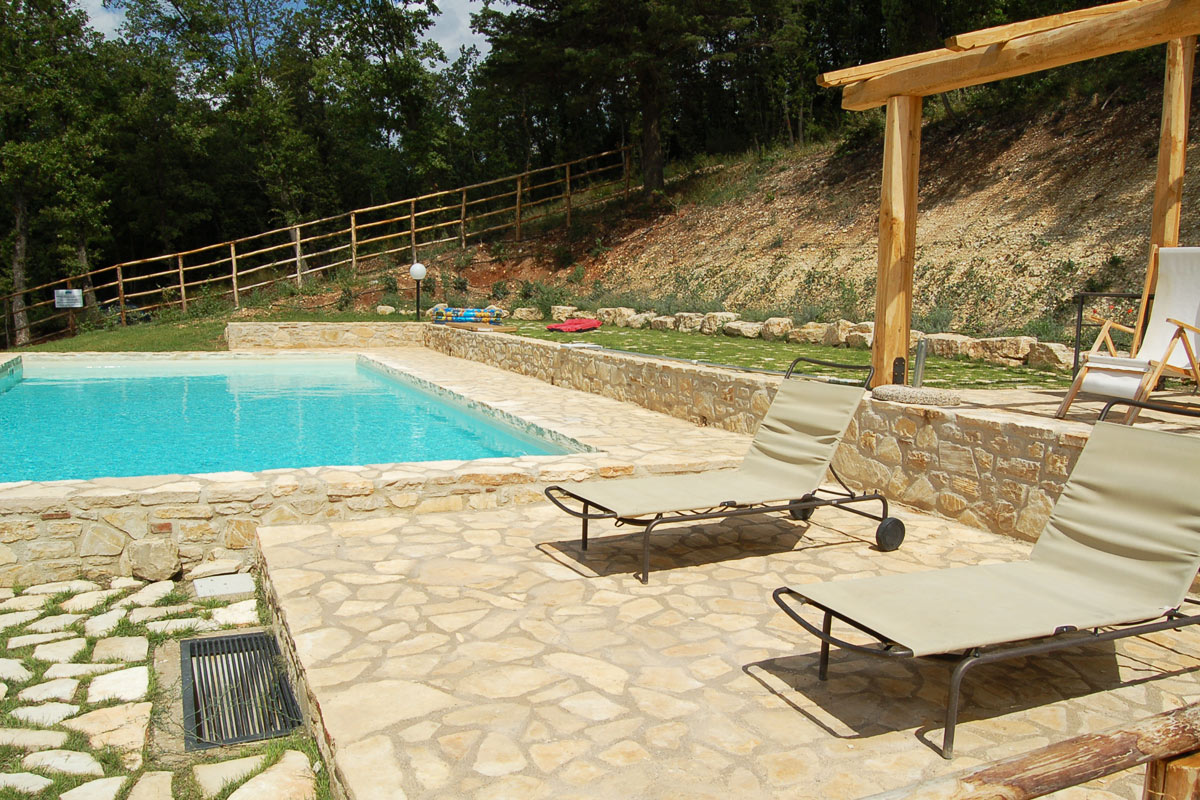
Casa Umbra for 6 is a great place to base yourself to visit Todi, and to explore Umbria generally.
Author: Dan Wrightson
Dan Wrightson grew up in Tuscany, Italy and has been writing about, sketching and exploring Tuscany and Italy since 1983.
15th Apr 2026 15th Apr 2026