A Day in Tuscany's historical port
Livorno is often overlooked but it is a wonderful city to explore, a bustling port with a lively cultural and gastronomic life. Here are some tips on the city's hidden gems and attractions: there’s plenty worth discovering.
It is a port city so there are old forts, canals, bridges to explore, as well as excellent local dishes. Livorno is unusual in Tuscany as it is a relatively young city, built by decree for the Medici family as a port on the Mediterranean.
Etruscan origins
There are traces of Etruscan settlements here - it is, after all, a strategic spot on the Tuscan coast. The Romans too had a Castrum on the site, and Queen Mathilde of Tuscany built a tower here in the 12th century, but Livorno was little more than a fortified village, languishing in the shadow of its powerful neighbour, Pisa.
Medici's Ideal City
Pienza, in the Val d'Orcia, is famous for being an “Ideal City”, created by Pope Pius II to bring his native village back to life - and promptly renamed in his own honour. But lesser-known Livorno is also a city created by ruler’s decree, fashioned into an ideal city and a powerful port. In the sixteenth century the Medici family, keen to build a port to rival Pisa, declared Livorno a Free Port and employed Bartolomeo Ammannati and later Bernardo Buontalenti to build him an ideal city - and to start work on ambitious fortifications.
The city underwent an enormous expansion, with canals and canal-side buildings constructed by workmen and engineers imported from Venice, and fortifications built to withstand modern cannon warfare.
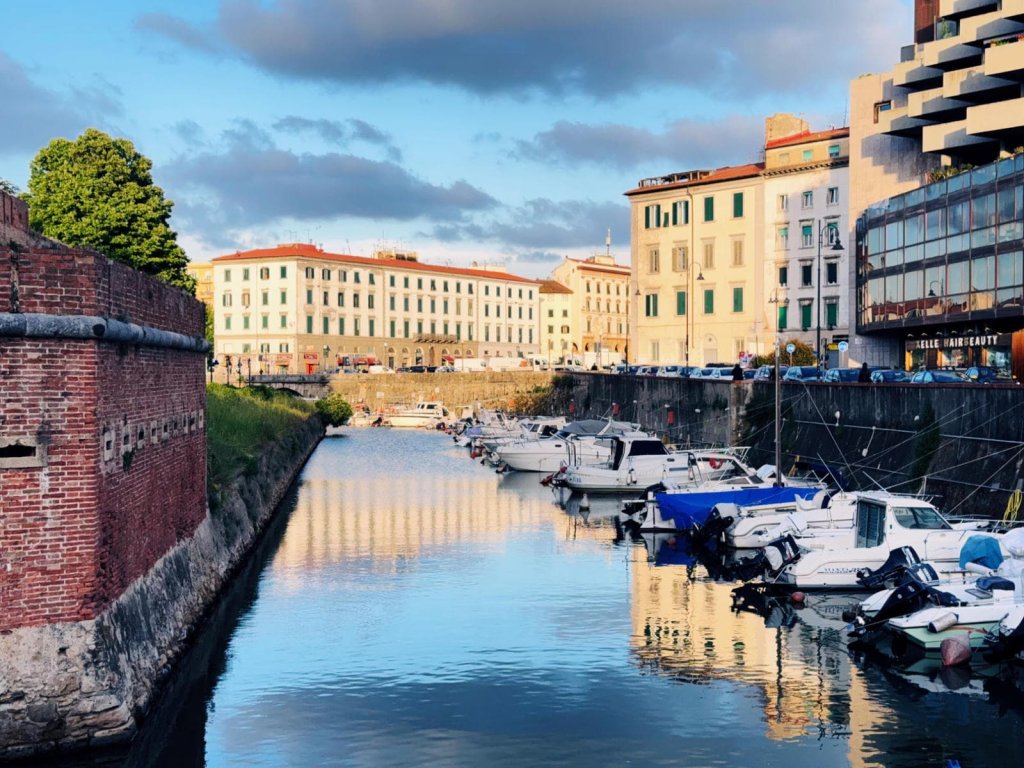
The project was continued by Ferdinando I who ordered the city's expansion in 1629, and called Venetian engineers to help him reclaim land from the sea, building a whole new city quarter on wooden piles just as was done for Venetian buildings.

Today it has a reputation as an independent and free-thinking city, with a record of resistance to the status-quo and a low tolerance of fools.
A local satirical newspaper, "il Vernacoliere" is popular across Tuscany for its outspoken views. I like to think of it as a Tuscan version of "Private Eye". It hosts the wonderful work of Federico Maria Sardelli, a multi-talented classical conductor who also draws some fabulous cartoons for Il Vernacoliere.
A Tuscan Venice
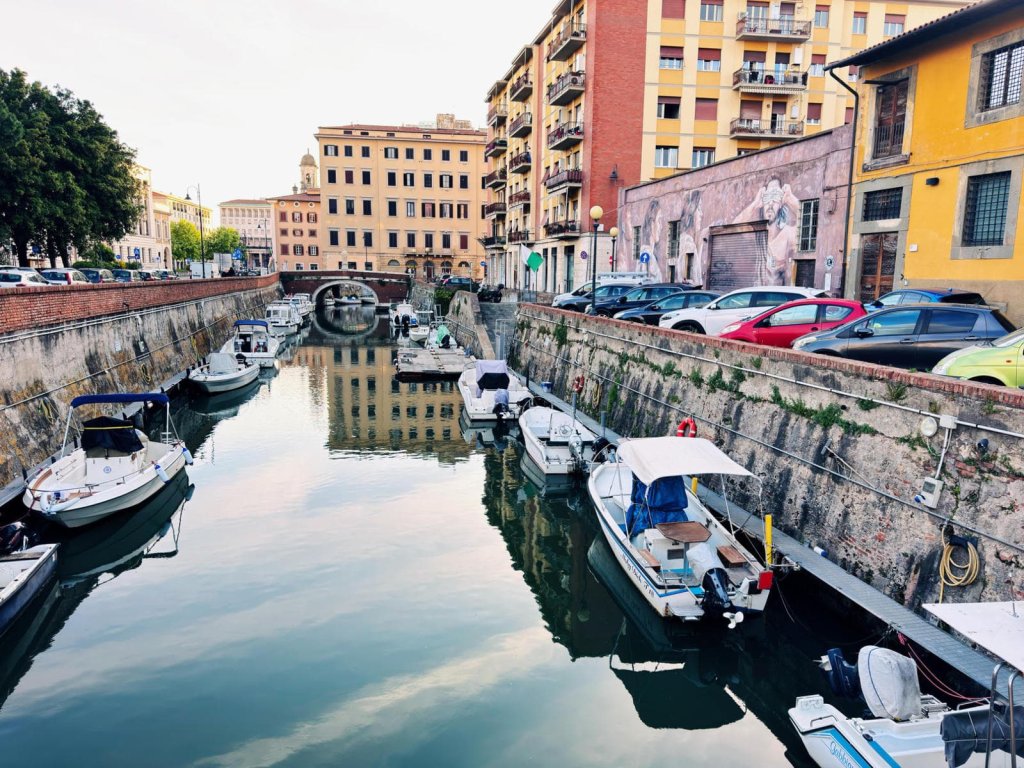
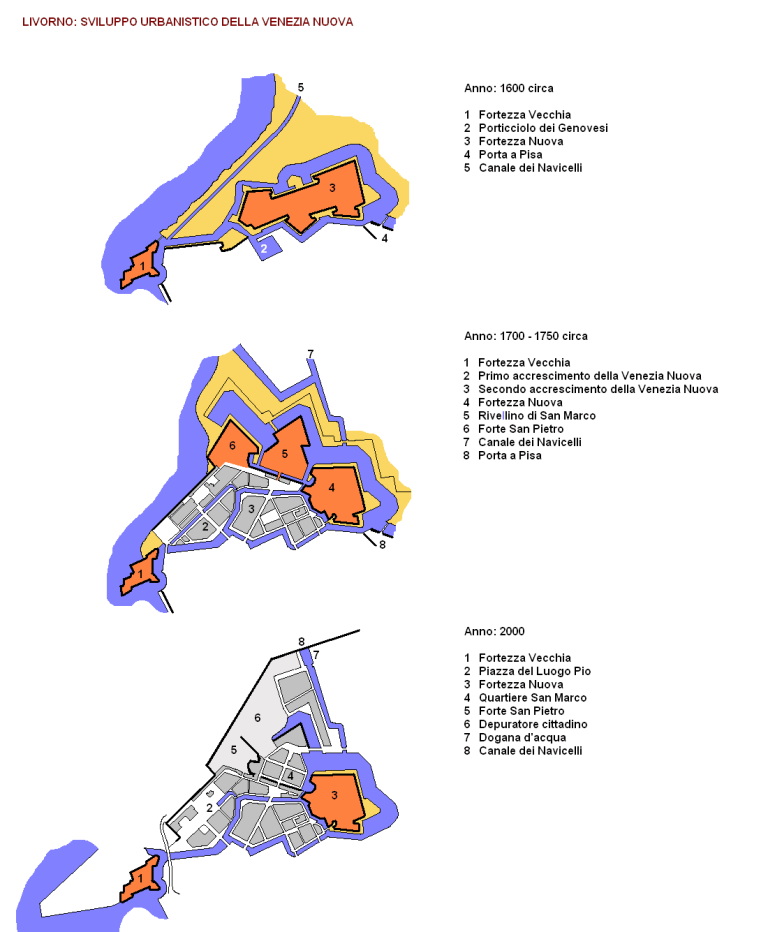
As part of the expansion and fortification of Livorno a series of canals and forts were built. This area is still known as "Venezia Nuova" and is a great place to start to explore the city.
Start in Piazza Micheli
What3Words: ///ballroom.diamonds.civic
Statue of 'I Quattro Mori'
If you start from this square, take a moment to look at the monument of the "Quattro Mori", built to commemorate Ferdinand the I's victories over Moorish Pirates in the sixteenth-century, a constant harassing presence to mediterranean trade and naval traffic.
Although the statue was originally meant to honor Ferdinando I, the people of Livorno - known for their sharp sense of humour - chose to rename the monument after the four bronze statues of Moorish figures rather than its distinguished leader. This is how it became widely known as the "Quattro Mori" (Four Moors).
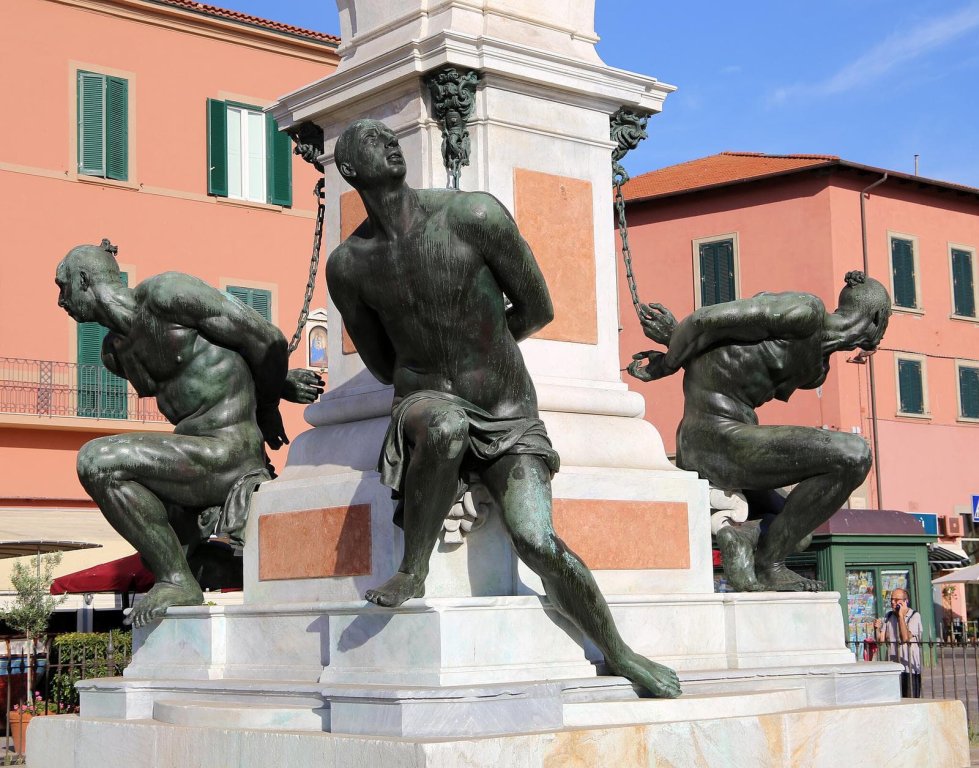
Sailko, CC BY 3.0, via Wikimedia Commons
Livorno in Battello
What3Words: ///stop.exile.scowls
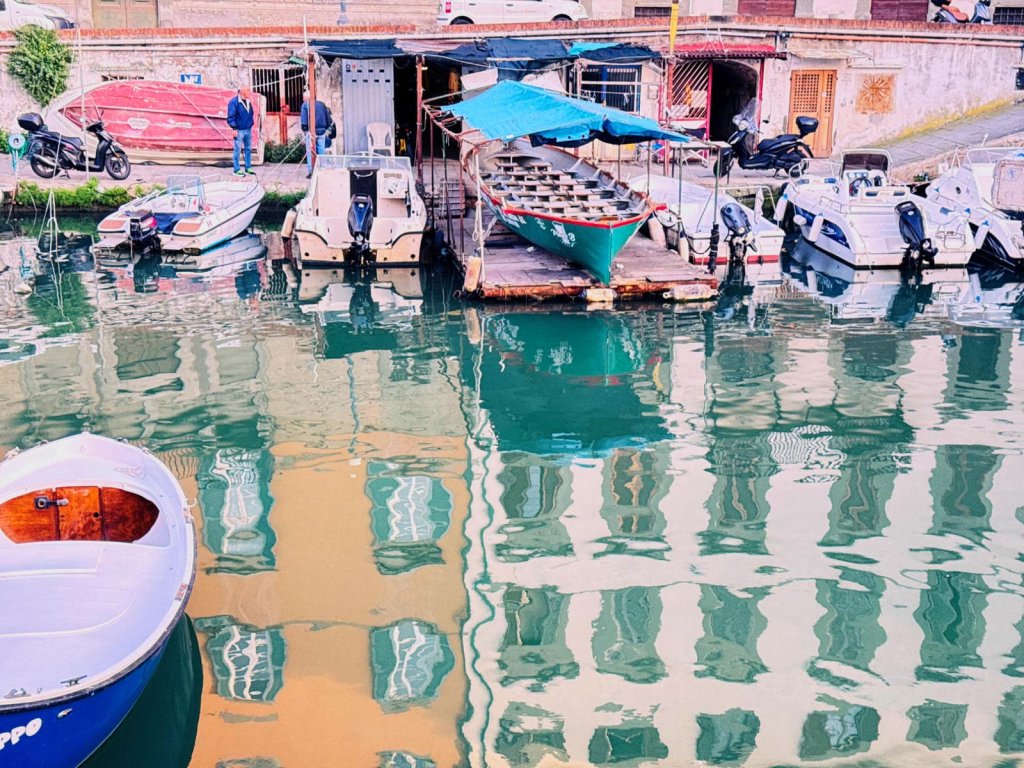
One of the best ways to explore this old centre of Livorno is by taking a boat tour. Departing from the port, these tours offer a scenic journey into "Venezia Nuova" along the canals and past Livorno's fortresses, through the heart of the city. Perfect for families or those who prefer sightseeing without too much walking.
You can also pick up the boat on one of its stops along the canals.
Fortezza Vecchia
What3Words: ///uproot.older.modern
If you're sticking with me and walking, head north from Piazza Micheli towards the old fortress "Fortezza Vecchia", today an events venue, once the main point of defence for the city. The fortress contains the remains of two earlier castles, a fort built by the Pisans as well as 11th-century tower from the reign of Matilda.
The Medici family massively enlarged Livorno and its role in the Mediterranean, but the site was already militarily important, and there are remains here going back to the Roman times.
At the Fortezza Vecchia turn right along Livorno's canals, lined with boats and some beautiful old buildings.
The Fosso Reale: Livorno’s Historic Canals
The Fosso Reale, or "Royal Canal," is part of Livorno’s historic defensive system. The word fosso means "moat," and, much like Venice’s canals, these waterways were originally designed for irrigation and navigation. Over time, they became an iconic feature of the city, resembling narrow streets crisscrossing its center.
This monumental project was completed with the labour of around 2,000 enslaved people and 5,000 farmers; an achievement with dark echoes. In 2002, Livorno’s canals were recognized as a UNESCO World Heritage Site.
Fortezza Nuova
What3Words: ///divider.softly.tangible
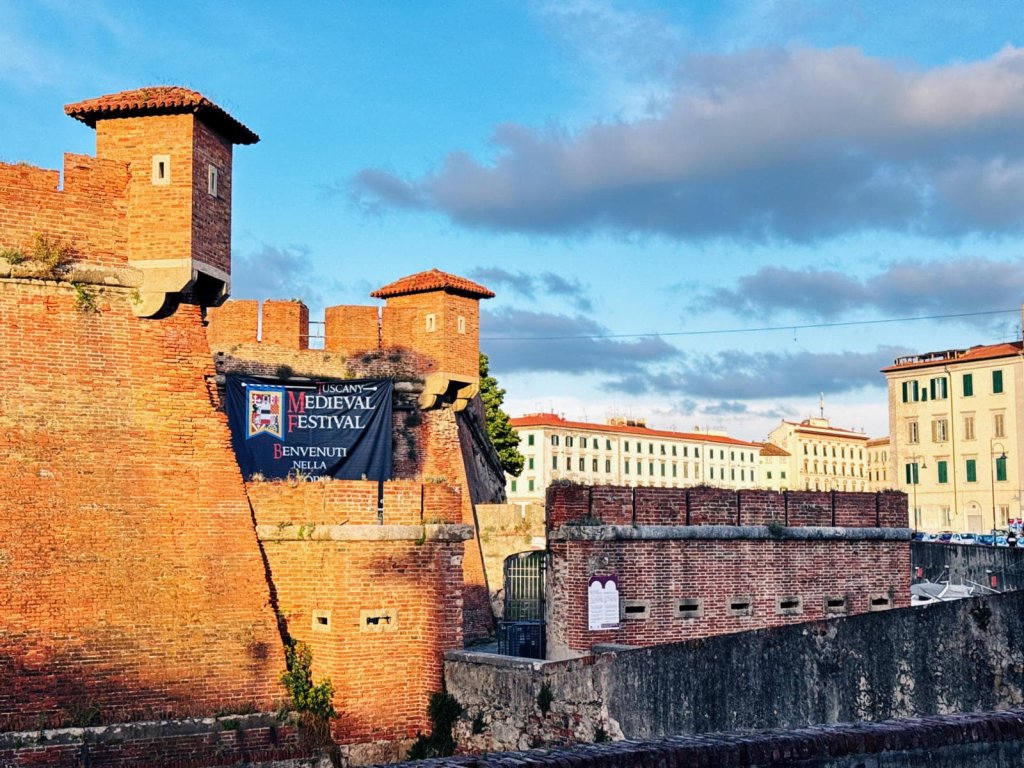
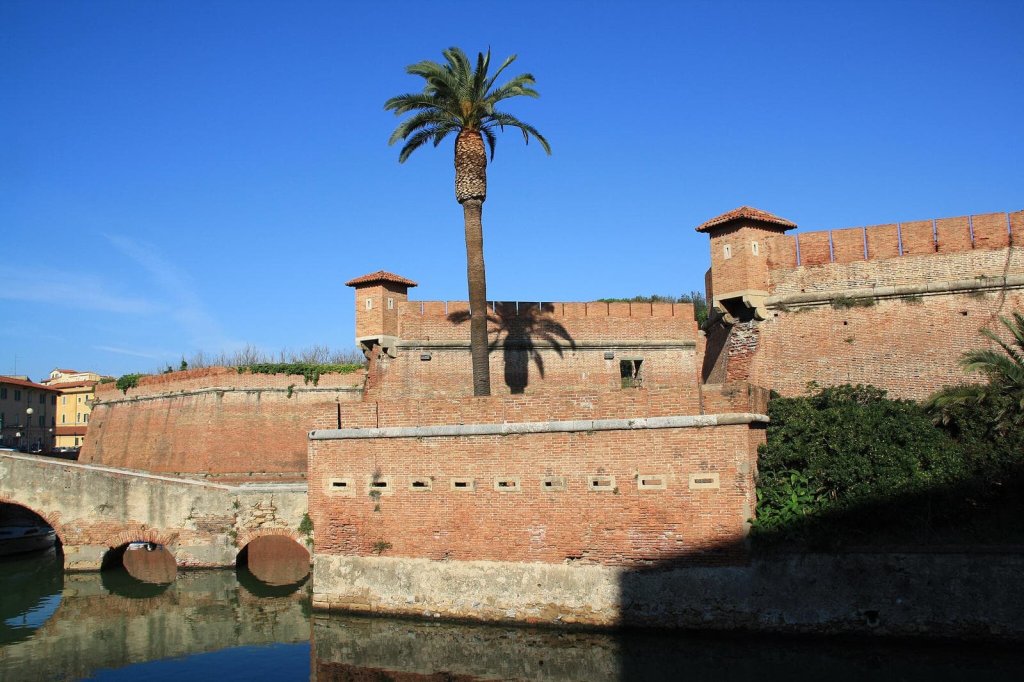
Following the canals will lead you to the new Fortress, Fortezza Nuova. This is actually only one part of the original fort, which was made up of three similar structures, of which this is the only one left today.
I, Etienne (Li), CC BY-SA 3.0, via Wikimedia Commons
Surrounded by water, the Fortezza is reached only by bridge and is also. like the Fortezza Vecchia, used for cultural events.
Piergiuliano Chesi, CC BY 3.0, via Wikimedia Commons
Lunch in the Covered market of "Le Vettovaglie"
What3Words: ///dishing.tidying.alright
Carrying on around the main canal in a clockwise direction, you'll come across the "Mercato Centrale". Built in the mid-19th century its enormous glass roof is supported on graceful iron trusses, combining grandeur with an airy, open feel. The internal area is about the size of two football fields.
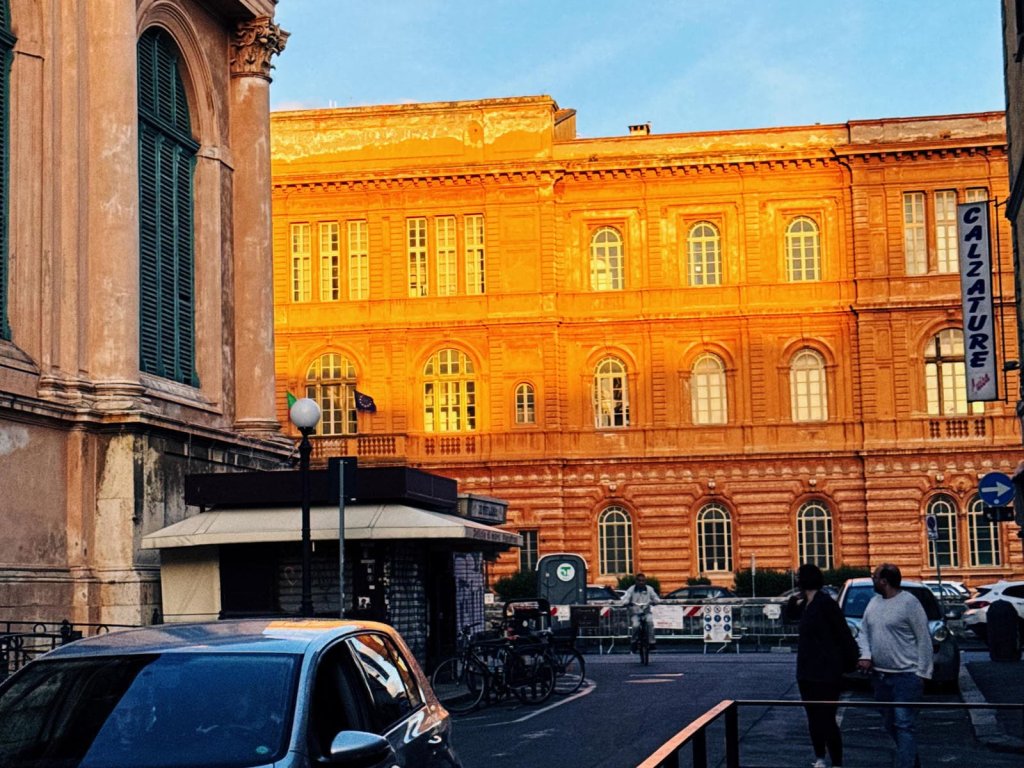
Inside, you'll find around 200 stalls selling fresh fish, local produce, and much more. The market also hosts happy hours, where bars and restaurants make the most of the incredible local ingredients. Once the main supplier for the Tuscan Navy, the market even has an underground warehouse, supplied directly via the Fosso Reale canal.
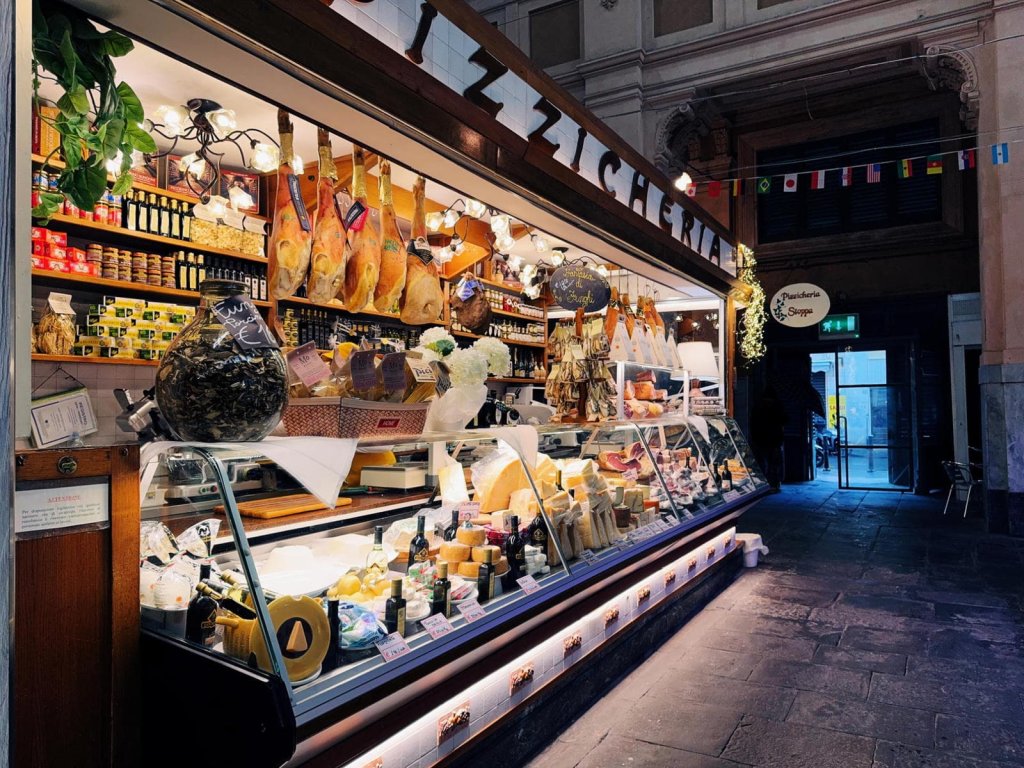
It's a good time to stop for lunch, try I Poggetti, known for quick bites and buffet-style happy hours, or Alle VettoVaglie, a recently opened venue run by a group of sommeliers. They showcase creative comfort street food, expertly paired with fine wines, all with a touch of Livorno’s signature local charm.
Museo Giovanni Fattori
What3Words: //falls.nobody.outdone
Art Lovers might wish to visit this museum dedicated to the work of Giovanni Fattori. Fattori was one of the main artists of Tuscany's "Macchiaioli" movement, contemporaneous with the French impressionists. This small group of artists were active in the late nineteenth-century and painted with 'spots of colour' ('macchia' means 'spot' or 'mark' in Italian).
Fattori's work captures the light of the Tuscan coast beautifully, I think his work is beautiful and on a par with the work of his French contemporaries.

Romance of Terrazza Mascagni
What3Words: ///flux.candy.happen
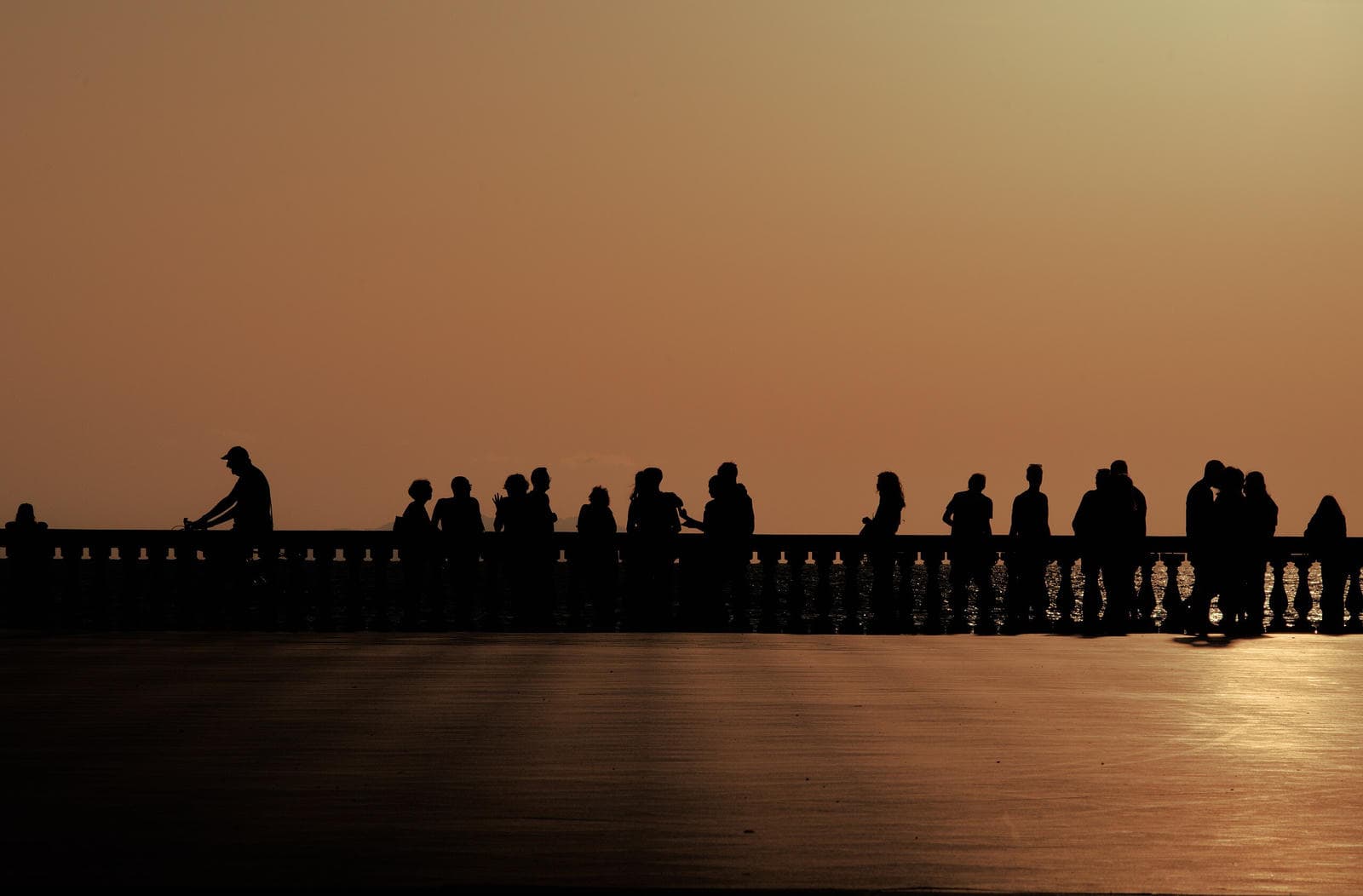
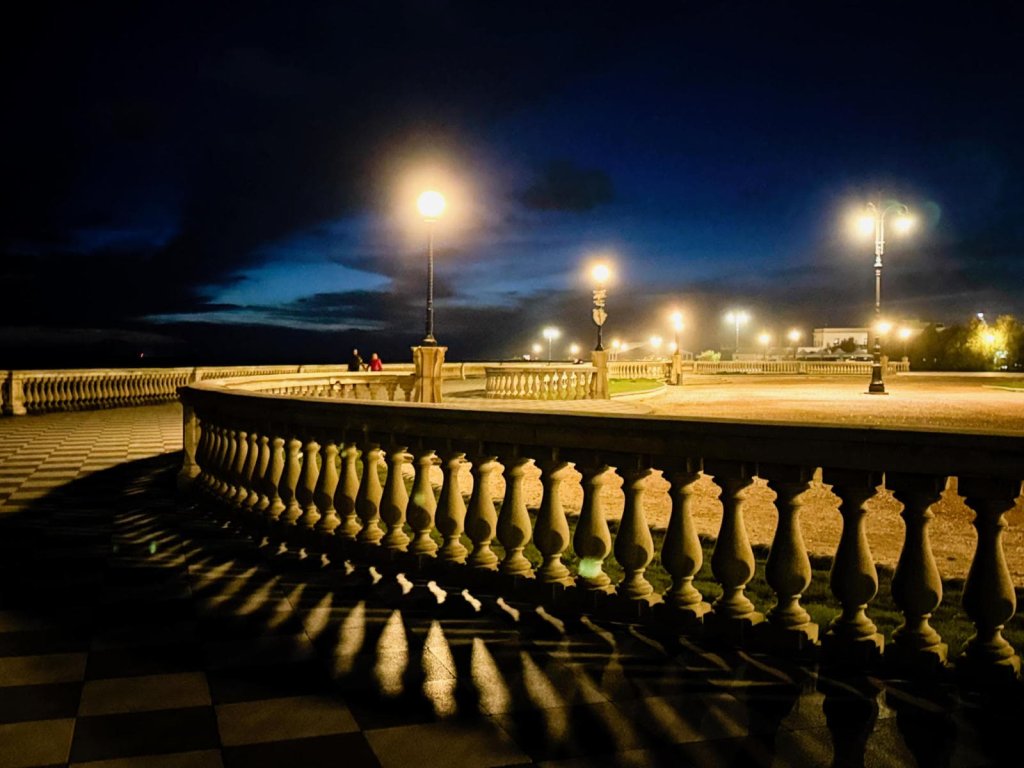
As the day ends, the Terrazza Mascagni is a wonderful place to enjoy the sunset over the Mediterraean, a striking checkered terrace on the very edge of the rocky Tuscan coastline.
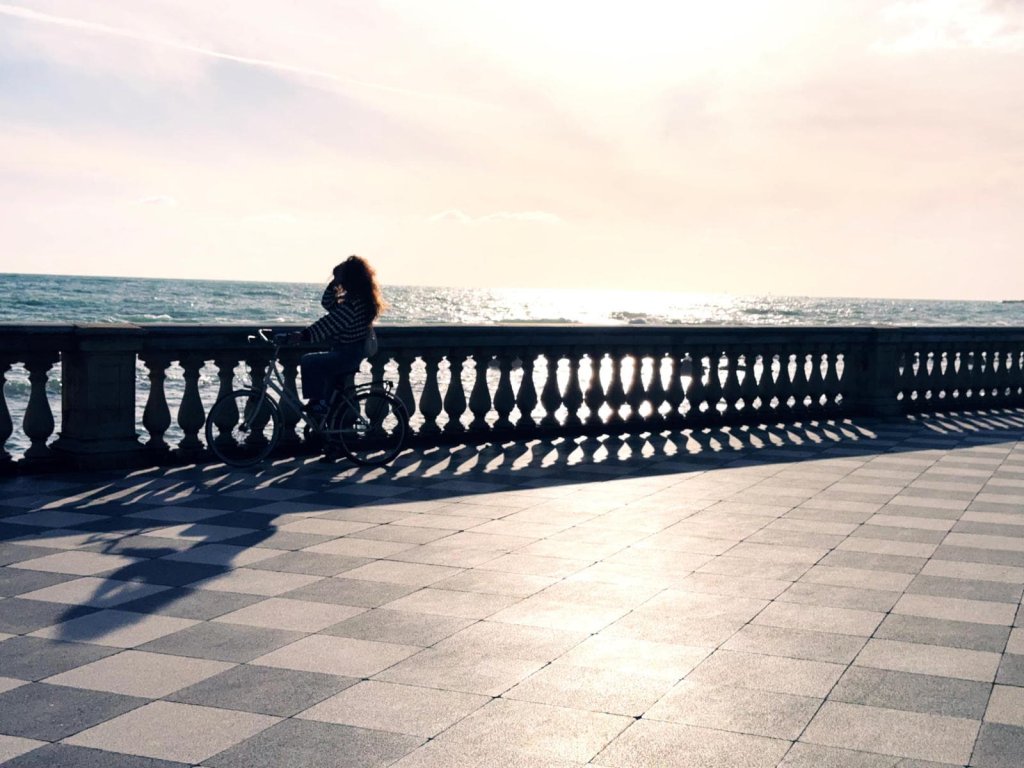
It is named after Pietro Mascagni, Livorno famous composer, author of the Cavalleria Rusticana. It's a focal point for the city, the place couples come for romantic walks, where grandparents buy icecreams for their grandchildren and where everybody enjoys fabulous sunsets.
Livorno's Aquarium
What3Words: ///pausing.follow.banter
On the Terrazza you'll also find Livorno's Aquarium, a great place to see the Mediterranean's underwater inhabitants close up. On the ground floor you can explore recreated marine habitats, with highlights like a touch tank where you can gently pet rays, and the wreck tank, home to Mediterranean predators. You can also see octopus, a zebra shark, two green turtles named Ari and Cuba, jellyfish, and graceful seahorses.
Upstairs, the Aquarium explores the world of insects, amphibians, and reptiles, with iguanas, giant African snails, and even vibrant poison dart frogs.
Where to stay around Livorno
We have a beautiful villa in the countryside close to Livorno, it sleeps 8 and has a private pool and AC.
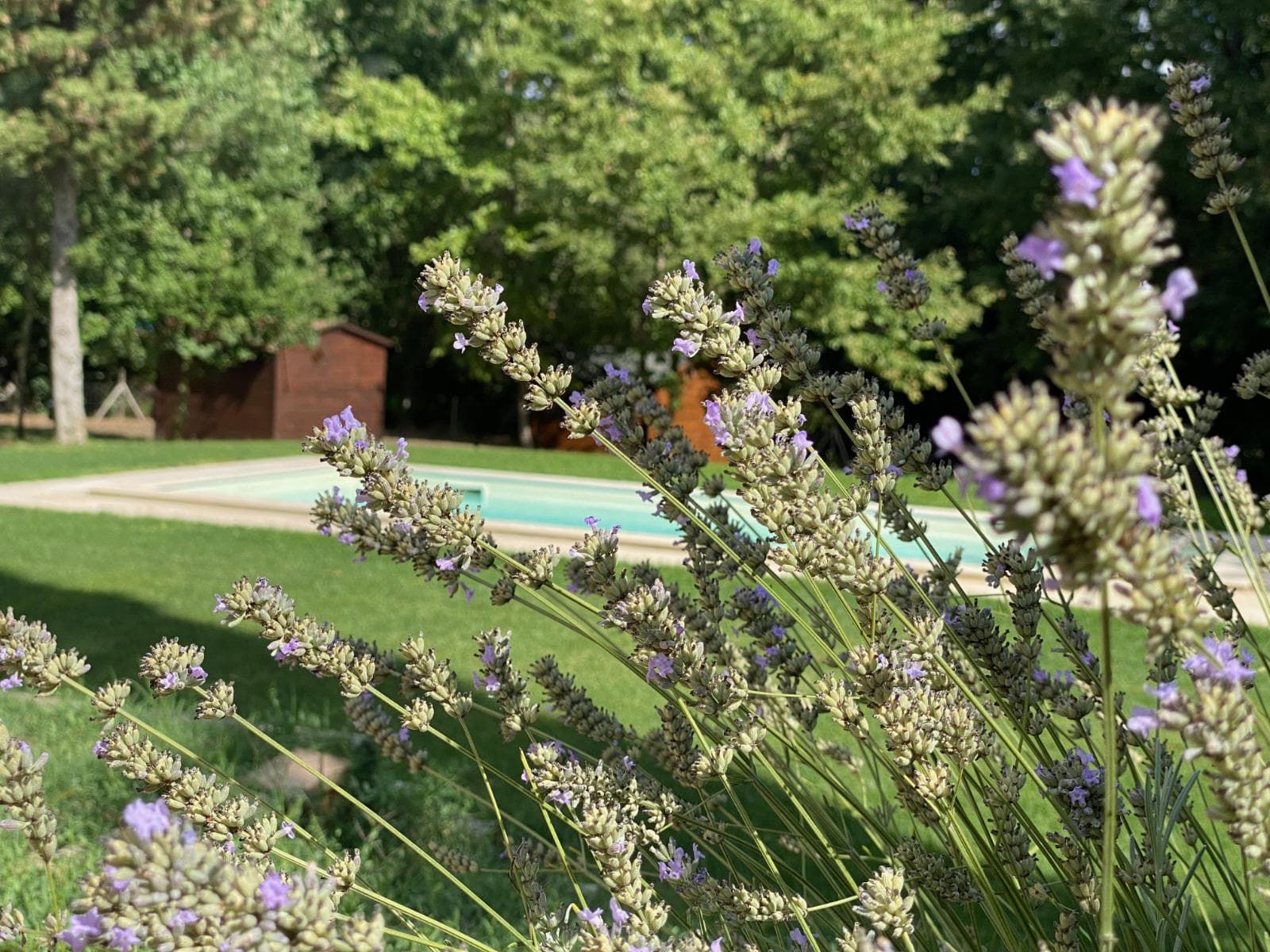
Or have a look at all of our Villas near Livorno
Where to Eat in Livorno
Livorno is bustling port renowned for its fish specialities such as Cacciucco, a hearty tasty fish stew and Triglie alla Livornese which are baby red mullet cooked with tomato, garlic and French parsley. The coastline above and below Livorno have a string of lovely coastal villages with some great sea-view fish restaurants.
FAQs about Exploring Livorno
1. Is Livorno a walkable city?
Yes, the centre of Livorno is walkable, and the area around the fortresses and to the Mercato Centrale is all within walking distance from the railway station.
2. Is there much to do in Livorno?
There are ports and canals to explore, a couple of good museums, excellent food stalls in the Mercato delle Vettovaglie, there are even beaches you can walk to. It's also worth checking out which events are on in the fortresses, the city puts on some good shows.
3. Is Livorno worth visiting for tourists?
Livorno isn't as packed with Art as some of Tuscany's more famous cities, but there is plenty to see and it is a bustling and vibrant city, with great food and nightlife. Once you've explored the city centre you could go up the coast by bus to see some of the beaches.
Author: Dan Wrightson
Dan Wrightson grew up in Tuscany, Italy and has been writing about, sketching and exploring Tuscany and Italy since 1983.
31st Mar 2025 17th May 2025