A twelfth-century saint
South-west of Siena there is a small fortified town called Chiusdino, the birthplace of Saint Galgano in the twelfth century. Galgano Guidotti was born into wealth and privilege, the son of a feudal lord and a knight himself. By all accounts he was a bon-viveur and took full advantage of the privilege of his position until one night, when his horse threw him out of the saddle. He had a vision of a round temple on a hill, attended by Jesus, Mary and the apostles; during his vision an angel appeared to him, urging him to repent and change his ways, but Galgano refused, saying he could no more change his nature than he could split a boulder with his sword.


The sword in the rock
To prove his point he thrust his sword into the heart of a boulder, expecting it to bounce off the rock. The sword plunged into the heart of the stone and Galgano vowed to devote his life to Christ. The saint became a hermit, living on the small hill of Montesiepi, east of Chiusdino where his friends and family lived. Like Saint Francis, he befriended animals and lived a simple life - in 1181, at the age of 33 ,he died, but his fame had already grown.
The round chapel of Montesiepi
Barely three years after his death a beautiful round and simple chapel was built on the site of his hermitage, centred on the rock that still carried his sword embedded in its heart. The round chapel, with a beautiful dome of concentric alternating bricks, became a focus of pilgrimage. Miracles were claimed to happen there and Galgano's fame swiftly grew; the process of canonization, to make Galgano a saint, was the first formal such process by the vatican, and was started in 1185, barely four years after his death.
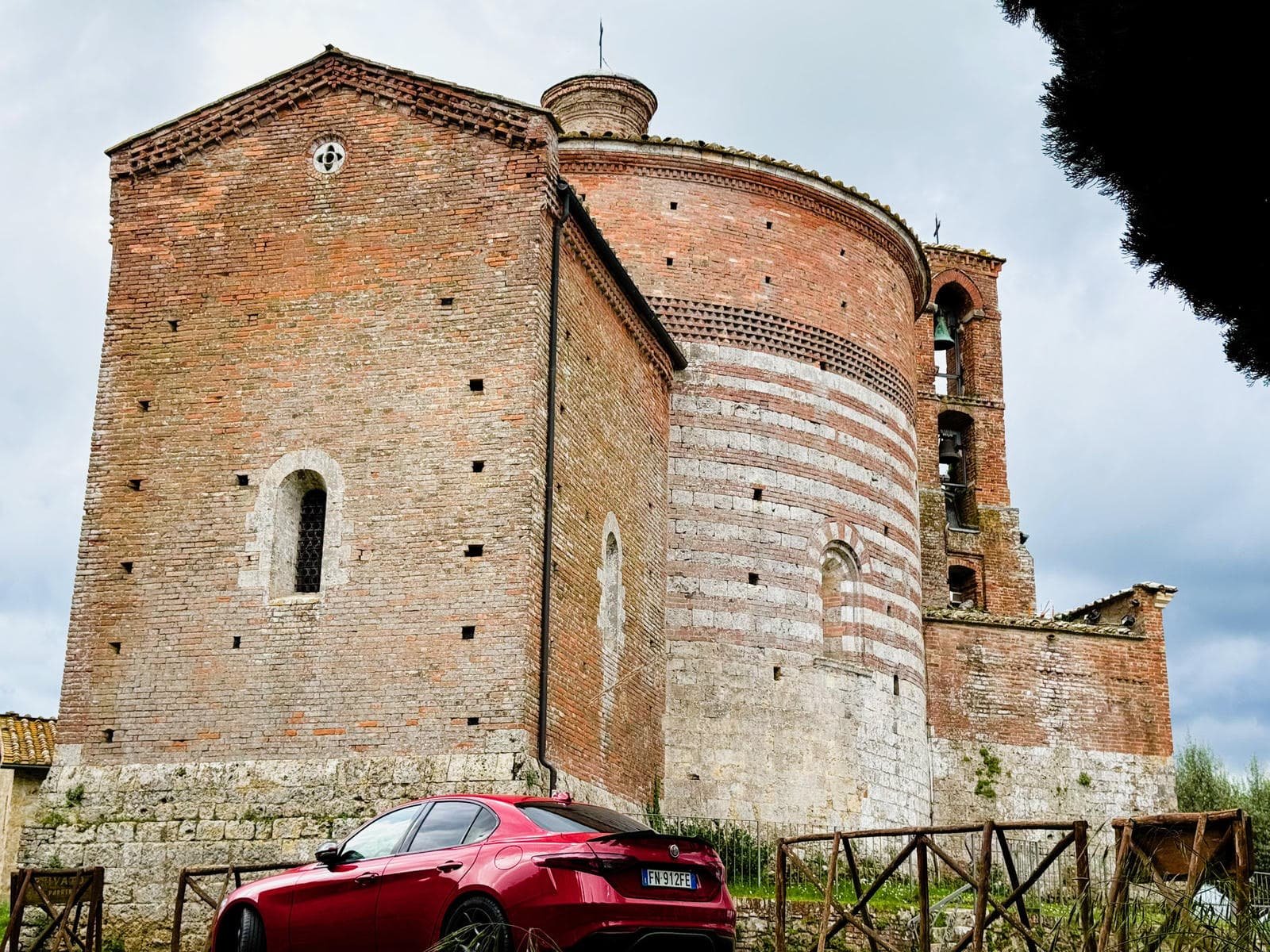


Though the chapel was built by order of Galgano's mother, Dionigia, it was soon taken over by Cistercian monks. As San Galgano's fame grew, the monks expanded their monastery, building a beautiful Abbey below the small hill of Montesiepi. By 1220 the construction of the abbey and monastery had been started, and San Galgano was recognised as a Cistercian saint with a lively and faithful following, particularly in Siena and Volterra.


The rise and fall of the Abbey of San Galgano
By 1280 the abbey was complete, and the Cistercian monks wielded power and influence within Siena and its territories. It was a power to be reckoned with, until, barely 80 years later, the monastery was attacked and pillaged by John Hawkwood. Known in Tuscany as "Giovanni Acuto", John Hawkwood was the leader of a band of mercenary raiders who had started their career in England's "Hundred Years War" and had then searched for their fortune further south. He was known in Italy, and particularly in Tuscany, for his cunning and keen fighting skills, but he was also infamous for his lack of loyalty and his swiftness to double-cross or even triple-cross those who were paying for his services.

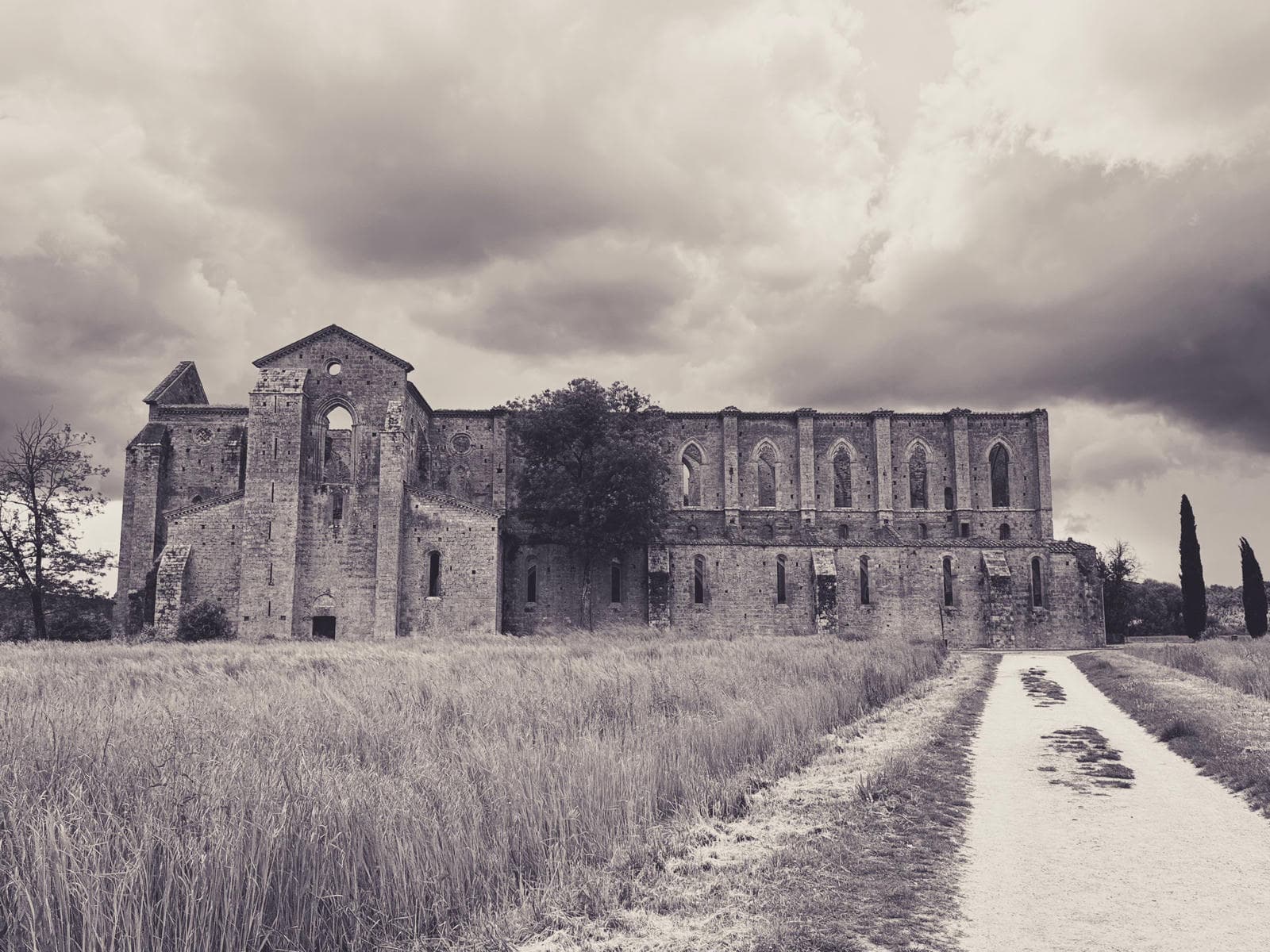
After Hawkwood's attack, the monastery and the abbey fell into poverty and lost influence. For four centuries it survived as a shadow of its former self, though it continued to have an abbot. In 1786 the bell tower collapsed, and demolished the roof of the church on its way down.
Romantic ruins
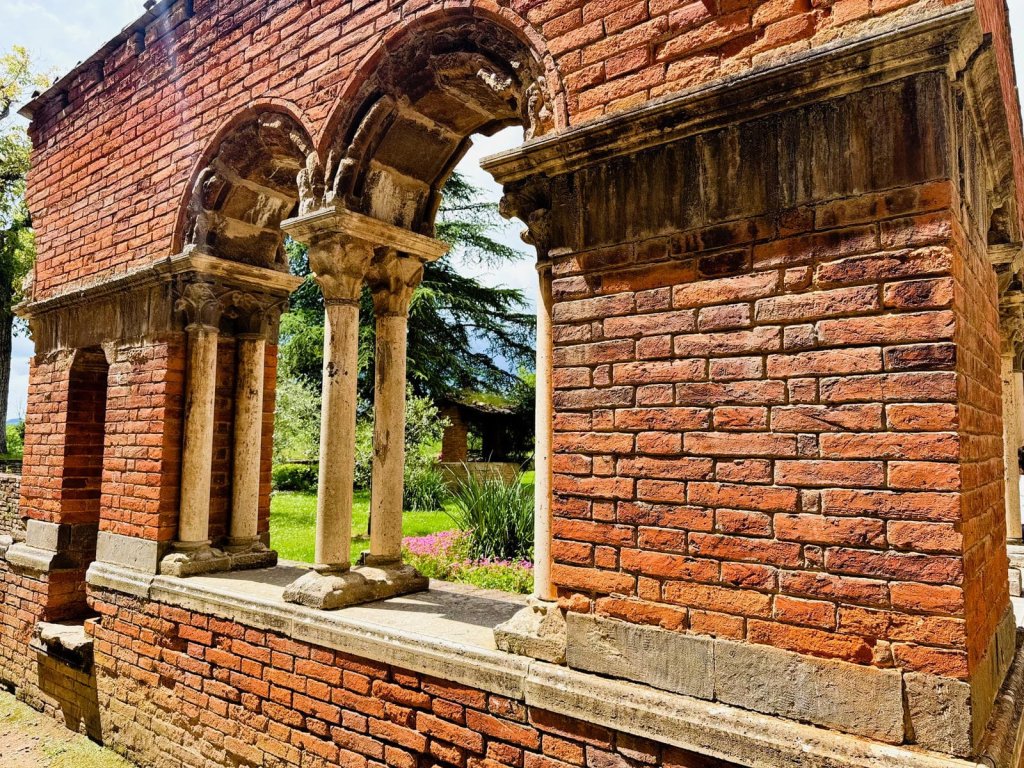
The ruins were partially looted for the cut stone and terracotta bricks over the remaiining centuries. Today it has been partially restored, but remains roofless. In the summer concerts are held here - it's a wonderful experience to sit in the old Abbey with the night stars above as classical music filters through the ancient columns. Parts of the monastery also survive - the vaulted ceiling of the scriptorium is particularly striking.


Frescoes by Ambrogio Lorenzetti
In the fourteenth-century small chapel was built onto the round chapel of Montesiepi, and in 1336 or thereabouts, Ambrogio Lorenzetti painted a beautiful cycle of frescoes here. It's slightly breathtaking to enter this tiny round building centred on a sword in the rock and spy, through a nearby open doorway, these beautiful frescoes of a quality normally only seen in the Palazzo Pubblico of Siena, or the National Gallery in London.
The scenes are of a "Madonna in Maestà", an "Annunciation", a scene of Galgano surrounded by saints and angels, and, lower down, a panorama of Rome, perhaps referring to San Galgano's pilgrimage to the city.


Chiusdino and the birthplace of San Galgano
The fortified town of Chiusdino is a fifteen-minute drive from the Abbey, and is worth a visit. The narrow alleys in the village are impassable by car, making exploring the town of foot a pleasure, and a sequence of views between medieval buildings and churches.
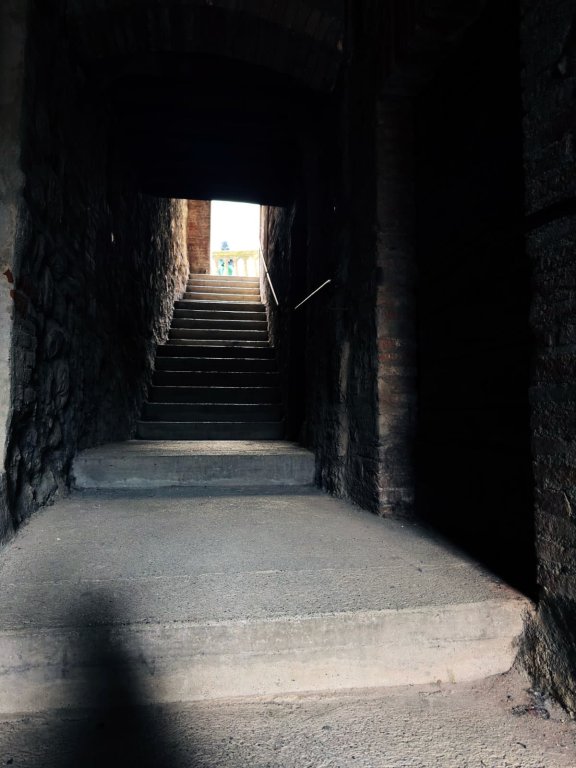
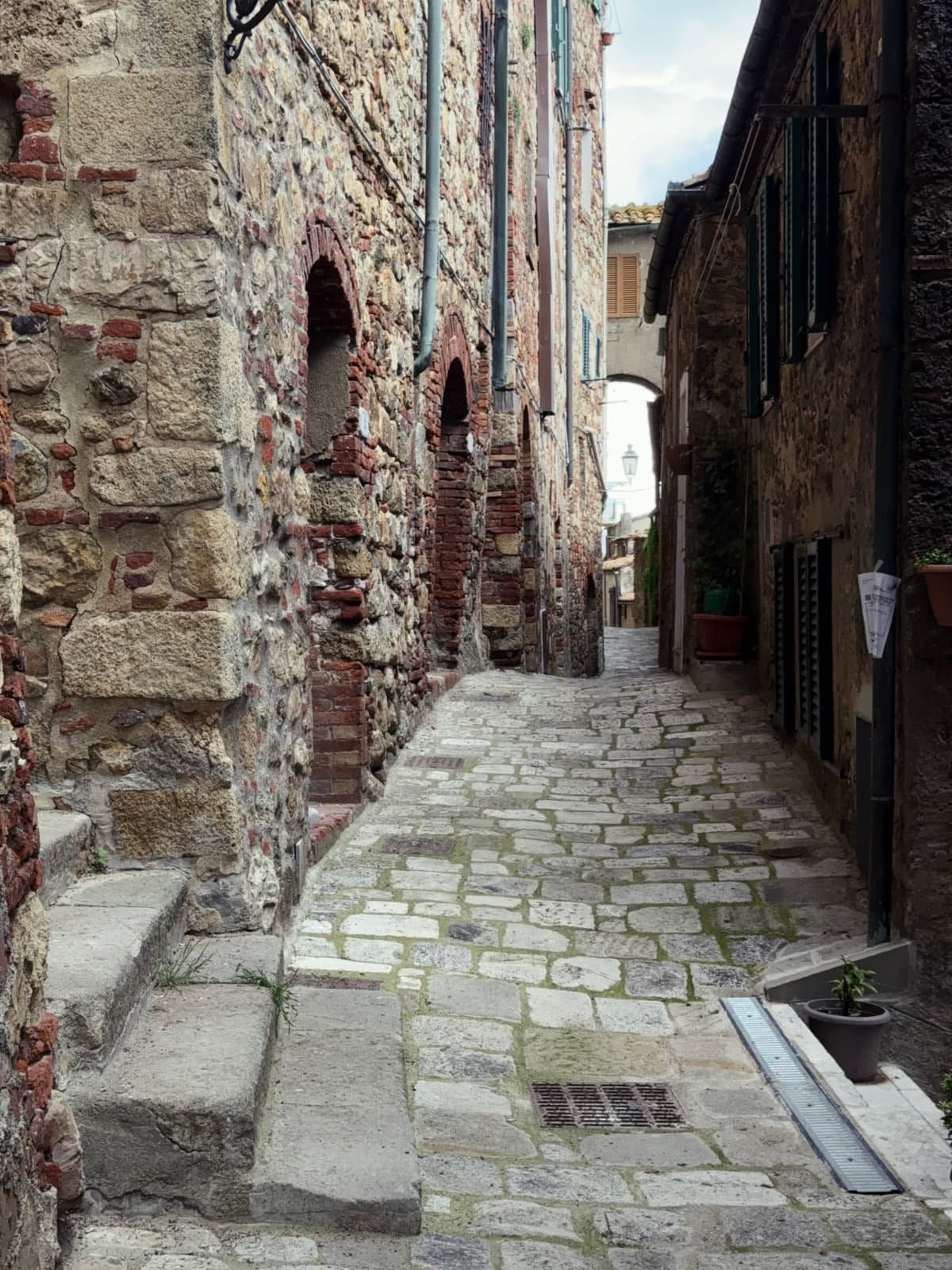
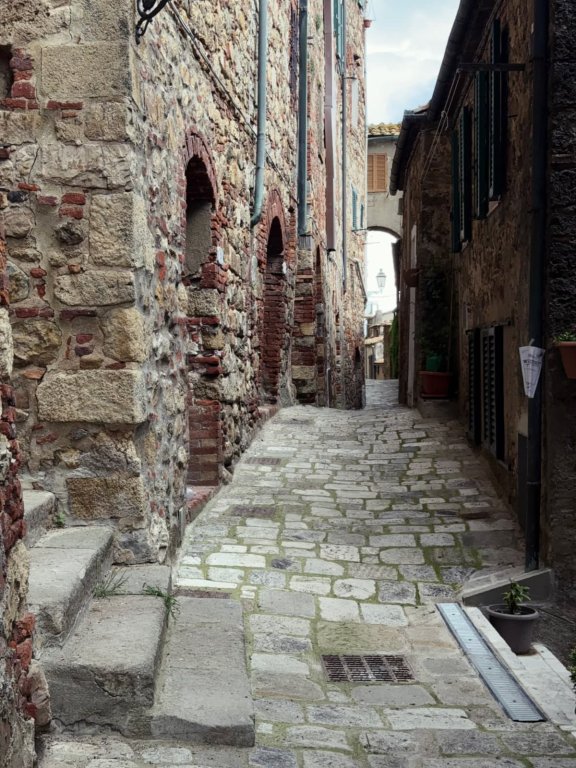
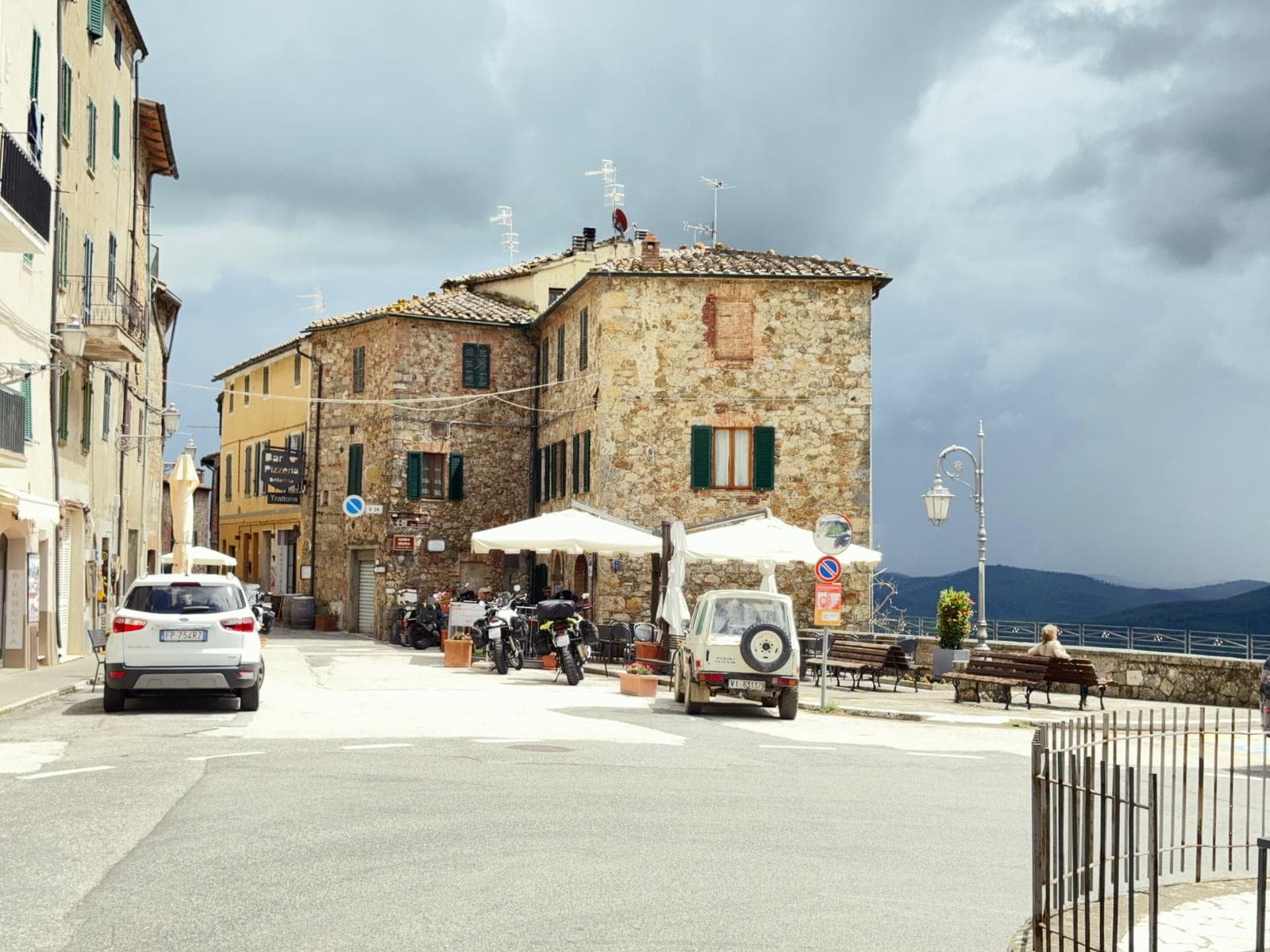
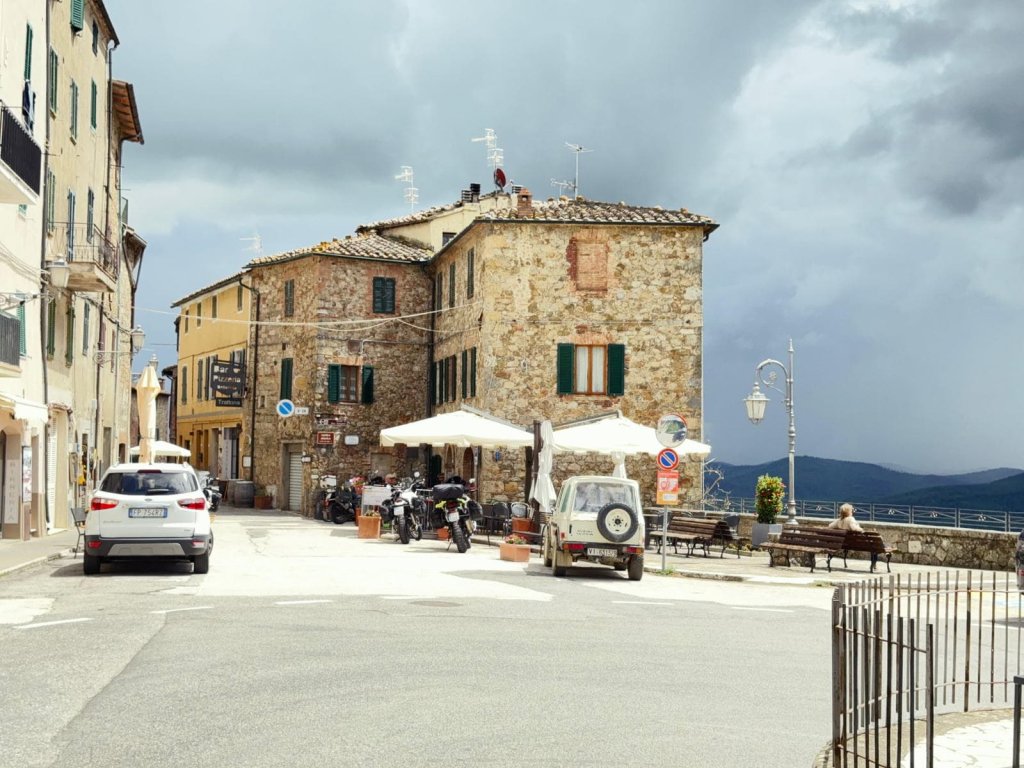
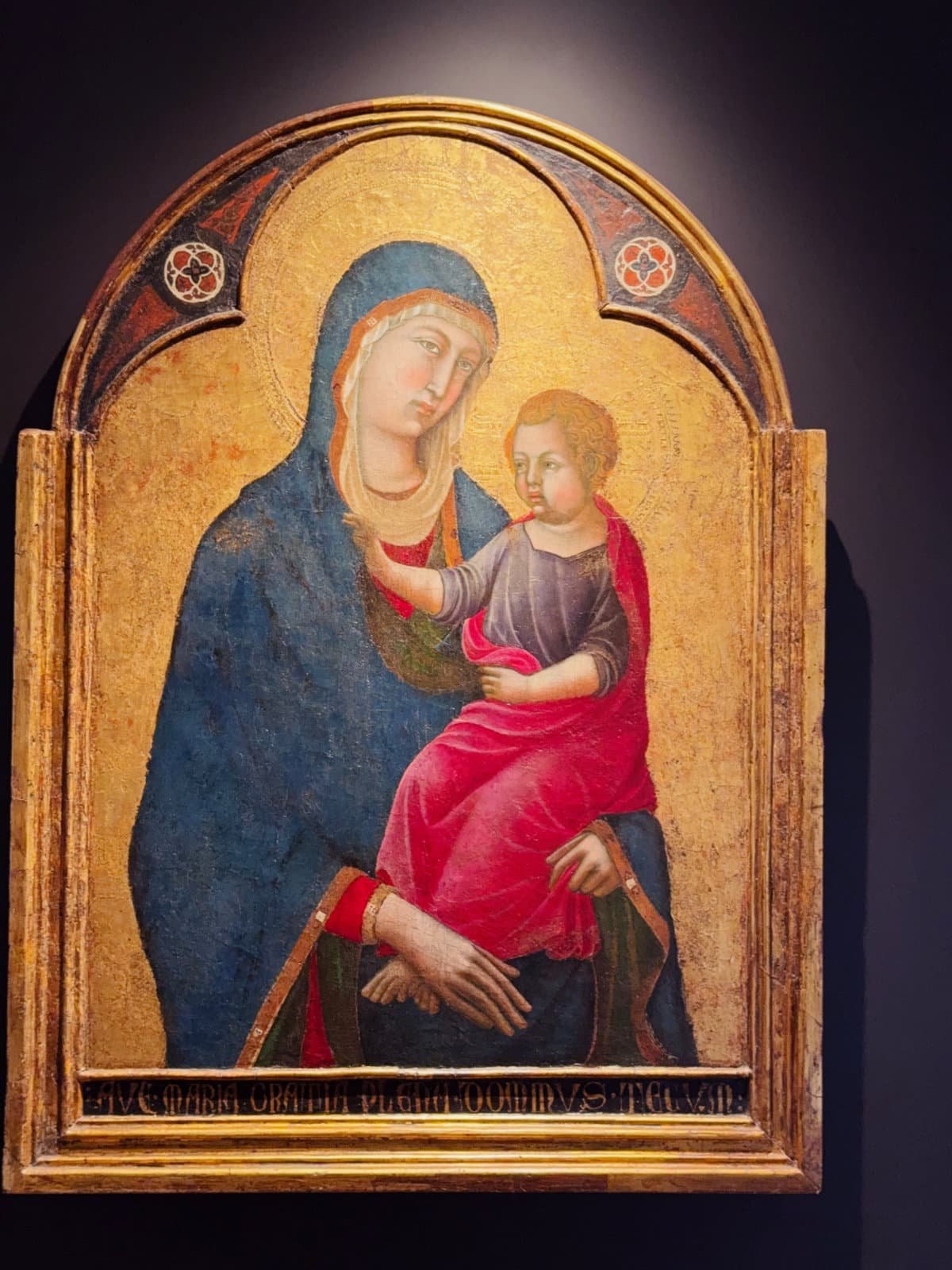
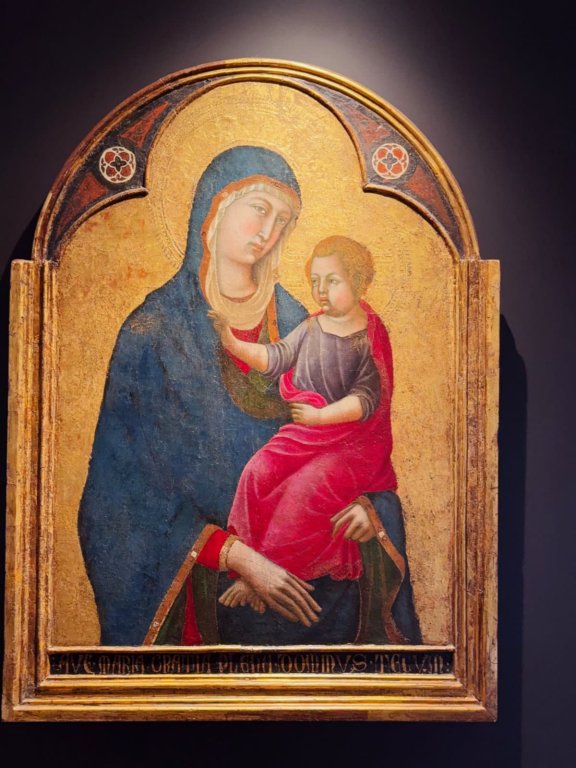
Chiusdino also houses the "Museum of San Galgano" which is an unexpected delight. It has, as you'd expect, a high amount of San Galgano-based relics and ex-votos, but it also has some good artwork, in particular a Mother and Child by Niccoló di Segna, a Sienese artist from the middle of the fourteenth-century.
Getting to San Galgano
To reach San Galgano, use this "What3words" link - you can then choose which mapping app you prefer. You can buy tickets to visit the abbey and these will get you into the Museum in Chiusdino too.
Directions to the Abbey of San Galgano
Getting to the museum in Chiusdino
The Museum in Chiusdino is in Via Delle macine, 14A, Chiusdino.
This What3Words link will take you to the museum: Museo Civico e Diocesano Chiusdino
while this link will take you to a car park -
from here a short walk will take you into town and to the museum.
Where to stay nearby
For other places to stay close to Chiusdino and San Galgano, have a look at:
Author: Dan Wrightson
Dan Wrightson grew up in Tuscany, Italy and has been writing about, sketching and exploring Tuscany and Italy since 1983.
2nd Jun 2025 2nd Jun 2025