A jewel of a cloister
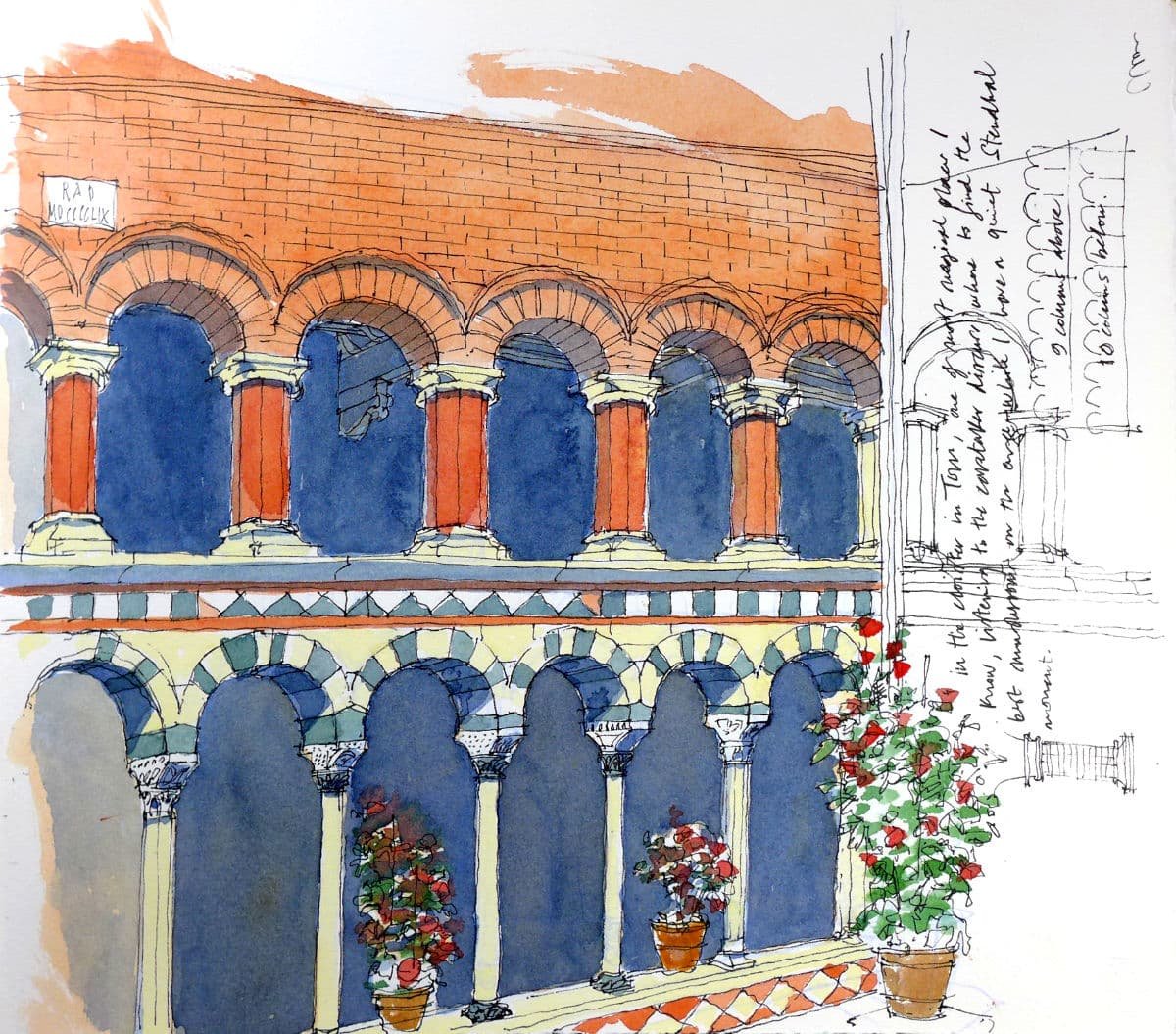
Tuscany is full of secrets. Close to Siena, on a ridge that descends from the forested hills further west, is a tiny hamlet, and at one end of it is an ex-monastery, founded in 1069. Inside the monastery, now privately owned, is a jewel of a cloister. The first stage was built a century after the cloister was founded, so around the end of the 12th century. A century later they got round to building a second layer of columns and arches and then in the 15th century the third a last round of columns was added. I've sketched it a few times, this is my latest, from 2018.

History of Torri
An earlier, paleo-christian church was on this site before the foundation of the Abbey and the construction of the current church. The first document relating to the Abbey of Torri is recorded in the 11th century. The church was built before the cloister, and the fortified village of Torri is already recorded by 1208. The monks of the abbey were able intermediaries between local feudal lords and the growing power of nearby Siena - by the mid-thirteenth century the abbey enjoyed the protection of powerful Siena.
Around the end of 16th century the Abbey was occupied by the troops of Gonzaga, and the monks displaced. In1867 most Church property was returned to the Vatican, the Nerucci family found a neat cataloguing loophole that allowed it to remain in private hands. Ownership later passed to the Bicocchi family who remains the current owners.
Carved scenes on the capitels
The cloister is breath-taking - the lower level has 10 carved stone columns, while the second level has 9, so the columns do not align, which gives a very pleasing effect, though it's difficult to know what to ascribe it too. I was told once that this staggering of the columns helped the building survive earthquakes - the weight is transmitted to the ground in angular lines across the various arches rather than directly down, but I haven't verified it.
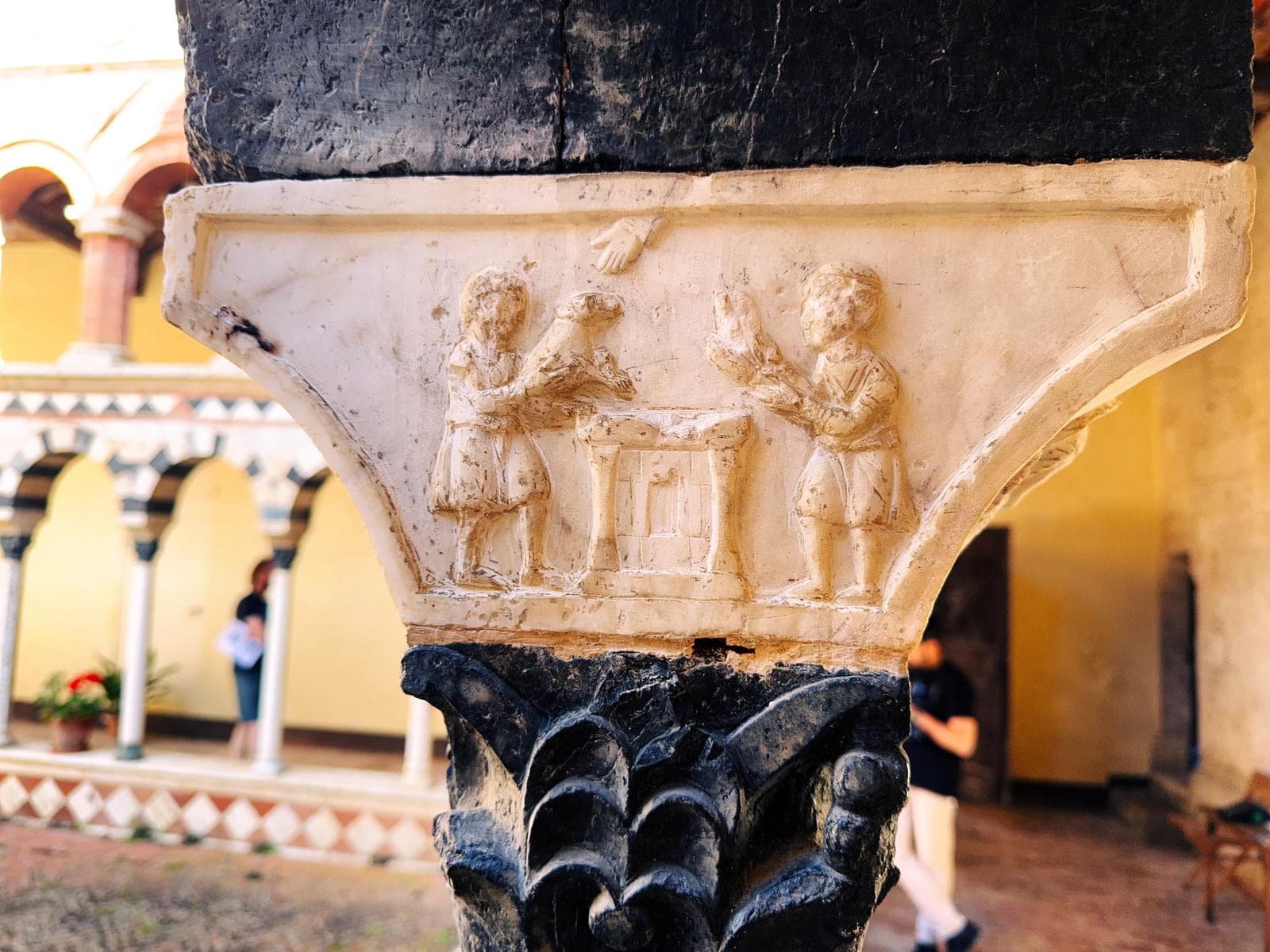
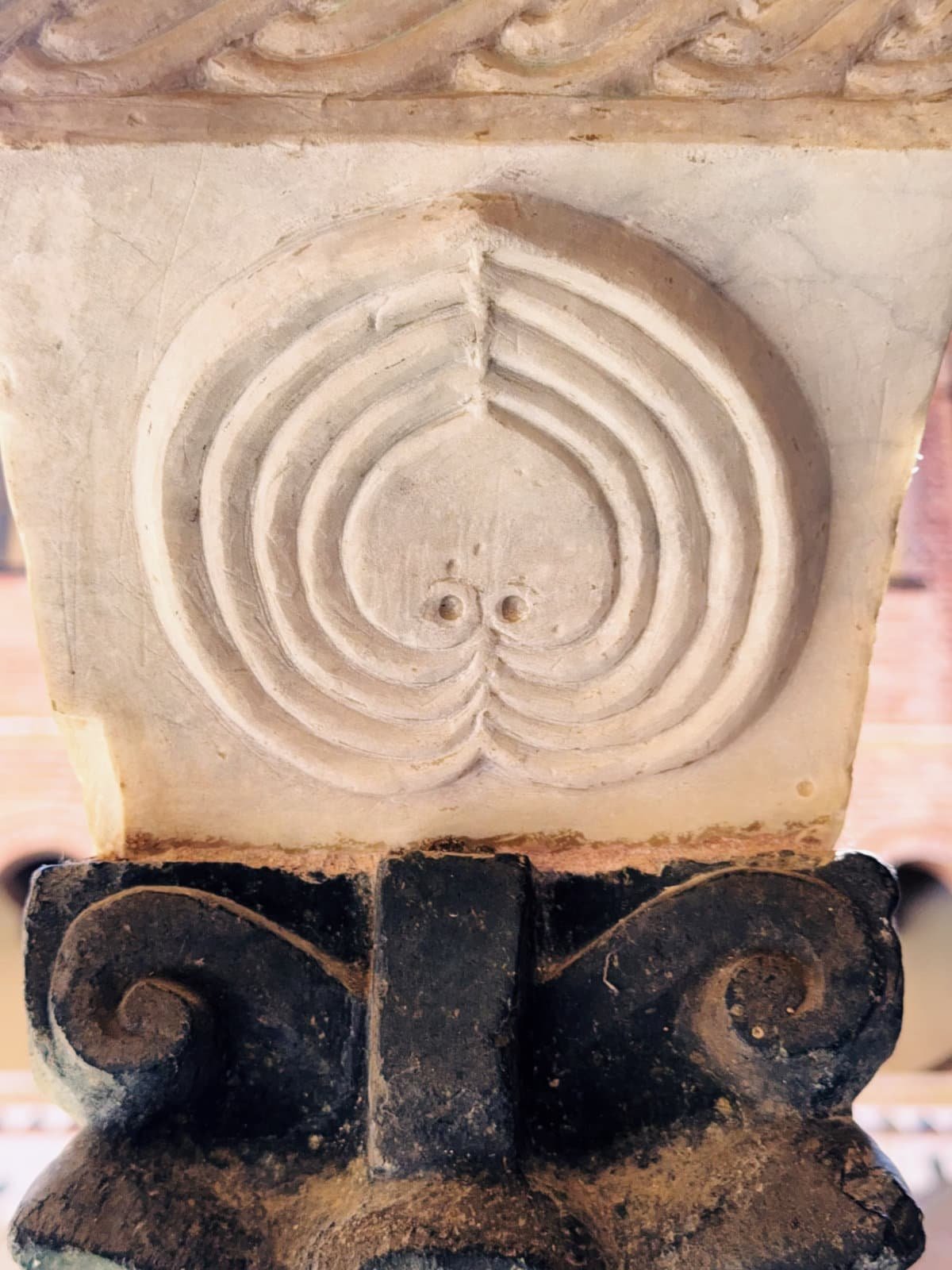
The capitels of the lower arches are all carved, some very simply and others with more complex scenes. There is a pilgrims shell, double-headed dogs, a scene of a man beating another which I can only imagine is Cain and Abel - look around them and try to guess what they all mean.





How to visit the Chiostro of the Abbey of Torri
Currently the abbey is open for visits on Mondays, Thursdays and Saturdays, between 8:30 and 12:30
Tickets are €5 and can be bought on arrival. Children under 12 enter free.
Church of Santa Mustiola
Last time I visited the cellars and the church were also open, which is unusual. The cellars are interesting, with enormous wine vats and old farming equipment.


The church, dedicated to Santa Mustiola, is a single volume with no aisles or internal columns. The walls are painted in black and white stripes in an echo of Siena's cathedral marble walls. An unexpected delight was a Madonna and child by Luca di Tommé.


Who was Santa Mustiola?
Santa Mustiola was an early Christian martyr, cousin of the emperor Claudius II. She lived in the third century and was arrested after aiding a Christian who had given burial to a martyr. Her punishment was to be flogged to death and legend has it that, in an attempt to escape her sentence, she crossed the lake of Chiusi on her cloak. Captured, she died a martyr on the third of July, a date when local inhabitants around the lake say you can occasionally see the wake of her cloak crossing the lake at dawn. Another apocryphal tale linked to Santa Mustiola is that she was in possession of the wedding ring of Mary and Joseph.
Sketching the cloister
On a couple of visits I have found time to sit down and sketch - it's a pleasure to have the time to really look at the building in detail. Every capital on the lower columns is different, describing local life, religious symbols and depicting saints. It's really worth a visit if you're in the area - just find Torri on the map and you can't fail to find the Church when you arrive - the cloister is on the left, down a side passage. Ring the bell if no-one is there, the caretaker lives nearby with his opera-singing wife. If you're lucky she'll be practicing!
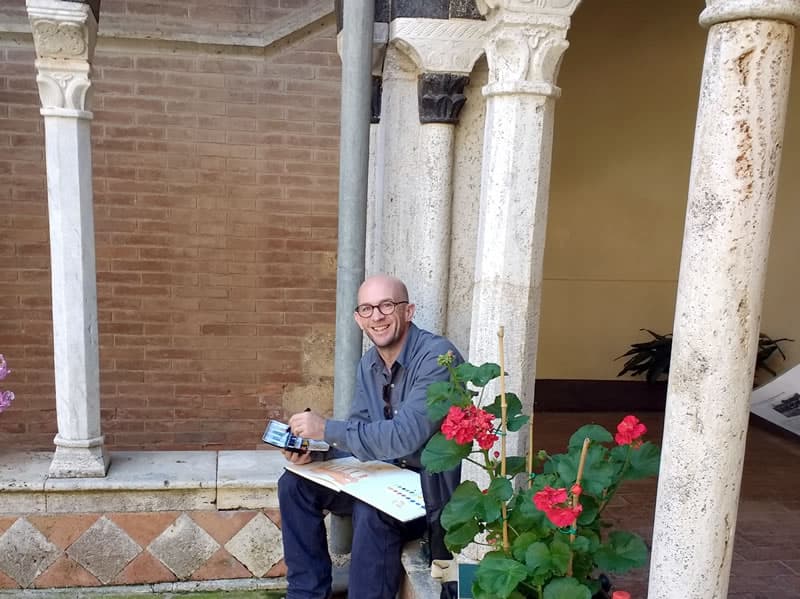
Here's a photo a visitor took of me painting in the cloister!
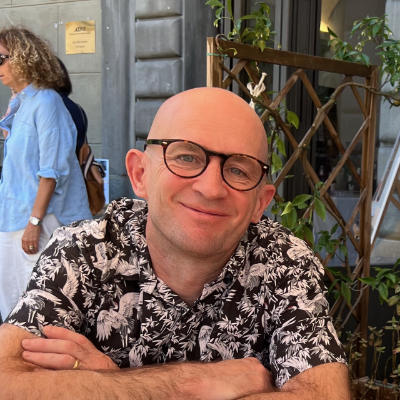
Author: Dan Wrightson
Dan Wrightson grew up in Tuscany, Italy and has been writing about, sketching and exploring Tuscany and Italy since 1983.
8th Jul 2023 20th May 2025