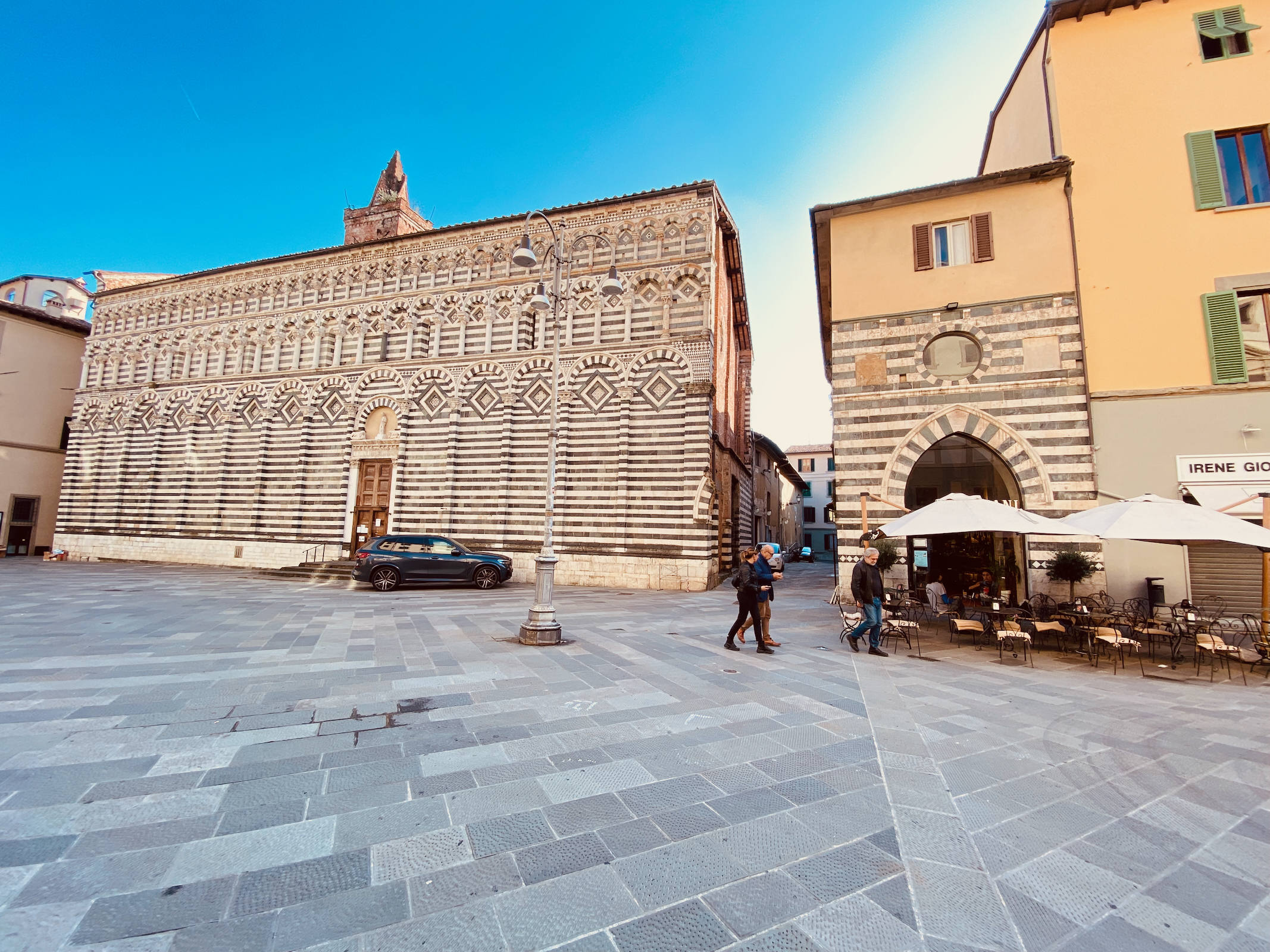
Map of accessible museums in Tuscany
The map also shows the locations of our wheelchair accessible villas. Zoom into to the main cities as the icons overlap at scale.
Wheelchair-friendly museums in Tuscany
Tuscany has more heritage buildings crammed into a small area than almost anywhere in Europe, which makes access for wheelchair users and visitors with disabilities harder than it should be. Cobblestones, steep medieval streets and fifteenth-century staircases are not going away. What has changed is that a growing number of museums have made a serious effort to fix what can be fixed: lifts, ramps, tactile routes, hearing loops and trained staff.
Free access
Disabled visitors (and their helpers if listed) have a right to free access to national museums; privately managed venues may have different policies. Bring the certificate as you will need something to prove your disability. It used to be the EU disability card but since leaving the EU, British visitors will have to bring something similar instead.
Visitors report that usually a UK blue disability badge is accepted, while US visitors have also reported that, in general, original english language documents detailing disabilities will be accepted. I'm afraid I have no experience to offer here, so if anybody has better advice please write to me (via the contact form for the website) and I will correct, add and update to this information.
This is not a list of token gestures. It covers places that have made genuine provision, with honest notes on what you will actually encounter. I'm not a wheelchair user though, so if you visit any of these venues and have notes for future visitors please contact me and I will gladly update and add to this page.
Florence
A practical note for Florence: visitors with a disability certificate (certificato di invalidità or Legge 104) can take a car into Florence's ZTL restricted zones. This removes one of the main logistical difficulties in reaching the central city museums.
I've put the Florence museums on a separate page as there are so many of them: Wheelchair accessible museums in Florence
Lucca
Lucca is a great city for wheelchair visitors as it is on a plain (unusual in Tuscany's hilly landscape) and the city centre is largely pedestrianised. You can explore through the narrow streets, going from the remarkable Piazza dell'Anfiteatro to Piazza San Michele and off to the Duomo and it's museum. The city walls that surround the historic centre are also a great place to go and circumnavigate the city, shaded by plane trees and with good views of the city from the higher vantage point.
Cathedral and Museum
(Piazza Antelminelli) Lucca's Cathedral of San Martino can be accessed via ramps that the staff can lay down for visitors - this might be awkward to organise during busy periods so best to call ahead. Once inside, it's worth going to see the funerary statue of Ilaria del Carretto, a striking marble sculpture of the wife of the lord of Lucca, Paolo Guinigi. This 15th century masterpiece is by Jacopo della Quercia, and shows the shift towards humanism from the late gothic style.
The Cathedral museum is a relatively recent museum but has some wonderful pieces, like the diptych of Areobindo, the city's consul who travelled to Constantinople in the sixth century and returned with this work of art. Accessibility is OK once inside, all the floors are linked by lifts, but once again you'll need staff to put down ramps for entry.
Fondazione Barsanti e Matteucci
(Via Sant'Andrea 58) This is a bit of a specialised interest and nothing to do with Tuscany usual renaissance and early-medieval diet; it's a museum of two inventors from Lucca and their work on early internal combustion engines. I love early engineering museums so I'm including it in this list, but it's A. tiny and B. you can only visit the ground floor. However, the working models of the engines the two engineers developed in the late nineteenth century are on the ground floor, and you can ask the museum staff to run the engines for you, so I think it's worth a visit.
The museum is also very close to the Torre Guinigi, a medieval tower with an oak tree growing out of the top which is most definitely not accessible by wheelchair, so this might be the perfect venue for a visit while you wait for friends.
Villa Guinigi National Museum
(Via del Bastardo) This villa is one of Lucca’s most significant buildings, commissioned by Paolo Guinigi in 1413 as his ‘residence of delights.’ The villa suffered neglect and decay until designated a civic museum in 1924. Today the museum takes visitors through the history of the city via artworks and archeological finds.
A particularly beautiful piece is an Attic krater (large vase) showing Theseus killing the Minotaur, from an Etruscan tomb in nearby Capannori.
The museum is accessible, but I can't find full details as the website is down. I'll visit next time I'm there and report back, but I'm including it meanwhile as reports say it has ramps and lists and is entirely accessible.
Pisa
Pisa is not as easy as Lucca to get around, but the traffic runs a little easier and there are large car parks.
Piazza dei Miracoli and Leaning Tower
(Piazza dei Miracoli) The Tower is out of bounds - it's difficult enough going up when not in a wheelchair. Whenever I climb it I get flashbacks to our school trip and climbing the tower when it was raining. Health and Safety wasn't really a factor then, so there were no barriers, and every year somebody would go off the edge after slipping on the wet marble. So let's ignore the tower - though the story of how it was built and financed is interesting (Who built the leaning tower of Pisa)
The area around the tower, the Baptistery, the Cathedral and the Cemetery are all accessible, though the ramp to the cemetery is steep and needs assistance.
Opera del Duomo
Next to Piazza dei Miracoli, this museum documents the creation of Pisa's Cathedral and Miracoli complex, with statues and the impressive Bonanno door. It can be accessed via a ramp to the side of the main entrance.
Museum of Ancient Ships
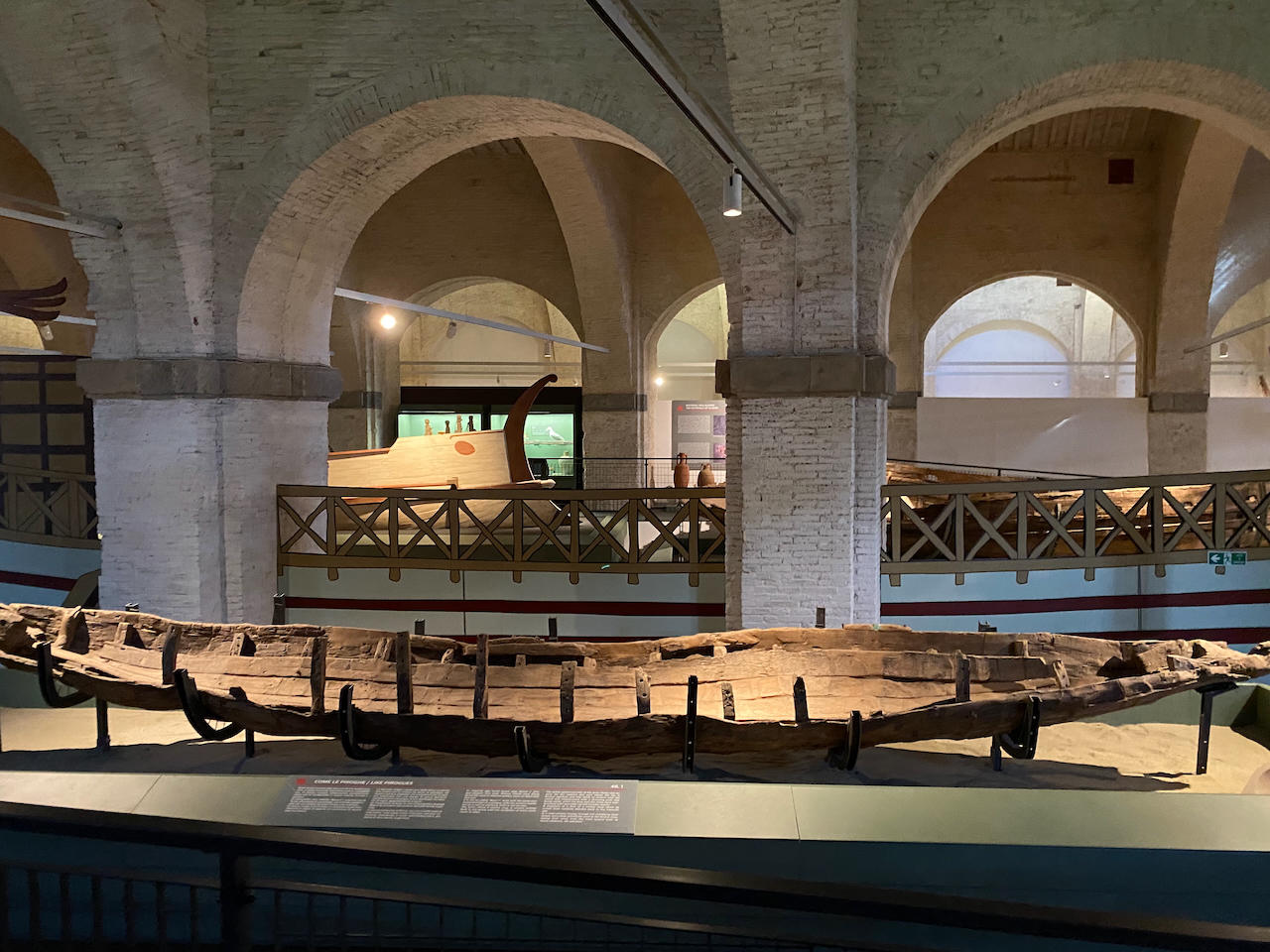
(Lungarno Ranieri Simonelli 16) This is a recent museum, built after an archological discovery of several Roman ships in a silted up harbour in Pisa. It's spacious, has an incredible amount of artefacts, including full-size two thousand year old ships, and some great story-telling. It's also entirely accessible.
Prato
Centro Pecci
(Viale della Repubblica 277) One of Italy's main contemporary art spaces and is fully accessible throughout. It is 30 minutes by train from Florence Santa Maria Novella. The building is purpose-built rather than converted.
Pistoia
Pistoia Sotterranea
Pistoia is one of the most undervisited cities in Tuscany, which makes Pistoia Sotterranea something of a find. Guided tours run through a network of underground tunnels beneath the medieval centre — an icehouse, a mill channel, a wartime shelter — and the entire route is wheelchair accessible. Pistoia is 35 minutes by train from Florence and the historic centre is compact and relatively flat compared to most Tuscan hill towns. Worth a full day.
Castelfiorentino
Museo BeGo
(Via Testaferrata 31) holds the main collection of detached frescoes by Benozzo Gozzoli, rescued from local oratories in the 1960s. The building was purpose-built in the 1990s and includes tactile routes. Closed Tuesdays and Sundays.
Volterra
The main civic museums in Volterra have accessible routes. The town itself is perched on a ridge with steep gradients, but the museum circuit around the Piazza dei Priori is manageable. Call the Musei Civici (+39 0588 87580) to discuss specific requirements before planning a full day trip.
Maremma
The Musei di Maremma network, based in and around Grosseto, operates under a scheme called Superabili which guarantees accessibility across its member museums.
Museo di Storia Naturale della Maremma
(Strada Corsini 5, Grosseto) is in the city centre and fully accessible.
Val d'Orcia
Buonconvento — Museo della Mezzadria Senese
The Museo della Mezzadria Senese documents the sharecropping system (mezzadria) that shaped the Tuscan countryside from the medieval period until its abolition in 1964. The farms, the tools, the domestic interiors, the economics of a tenant family handing half their harvest to a landlord; it is a grounded counterweight to the usual polished-villa version of Tuscany. The museum is part of the Musei Senesi network and is accessible for wheelchair users. Buonconvento is on the Via Cassia south of Siena, easily combined with a visit to the town itself or the Abbazia di Monte Oliveto Maggiore nearby, which is also largely accessible apart from a step at the entrance.
Useful resources
Turismo Senza Barriere offers guided accessible itineraries for Tuscany and other regions.
One consistent piece of advice: phone ahead. Lifts break, temporary exhibitions change floor layouts, and Italian museums do not always update their websites promptly. A two-minute call before travelling will save a wasted journey.
FAQs about Accessible museums in Tuscany
1. How can I get an EU disability card from the UK?
The short answer is that you can't. The UK is no longer in the EU, so UK residents are not able to apply for an EU disability card.
2. What can UK residents use as proof of disability in Italy?
You'll need a combination of items. A UK issued Blue badge for parking is usually honoured in Italy too, and might even be enough to get you your free museum tickets. But it's best you also bring a copy of your PIP/DLA award letter showing disability status. For belt and braces bring a copy of your doctor's letter, and ideally have digital copies of all these documents on your phone.
3. Will an "Access Card" work in Italy?
To be honest, I don't know. But I've read reports of people who found it very useful and accepted at museums and venues. You can apply for one here: https://www.accesscard.online/
Author: Dan Wrightson
Dan Wrightson grew up in Tuscany, Italy and has been writing about, sketching and exploring Tuscany and Italy since 1983.
3rd Apr 2026 4th Apr 2026