
Where to stay in Italy
Italy is impossibly rich - art in every church, food that changes from valley to valley, landscapes that shift from Alpine peaks to Mediterranean coast within a few hours' drive. This abundance is wonderful, but it's also overwhelming, particularly if you're planning your first trip.
My advice: don't try to see everything. Italy rewards patience, not itinerary optimization. Like a good meal or a fine wine, it needs to be savored rather than rushed.
Understanding Italy's geography helps you make better choices. The peninsula stretches across the Mediterranean like a bridge between cultures: Sicily almost touches North Africa, the eastern tip reaches toward Greece, and the northern borders span France, Switzerland, Austria, and Croatia. This geography shaped Italy's character - Arab architecture in Sicilian cities, Greek temples in the south, Alpine culture in the north, Renaissance cities in the center, all hinged on Rome with its layers of history stacked like an archaeological site.
The geography also determines climate and character. The Alps defend the north, while the Apennines run down the spine like a ridge, separating the western and eastern coasts. Where you go matters not just for what you'll see, but for how you'll experience Italy itself.
For a better picture have a look at the maps on this page: Where is Italy
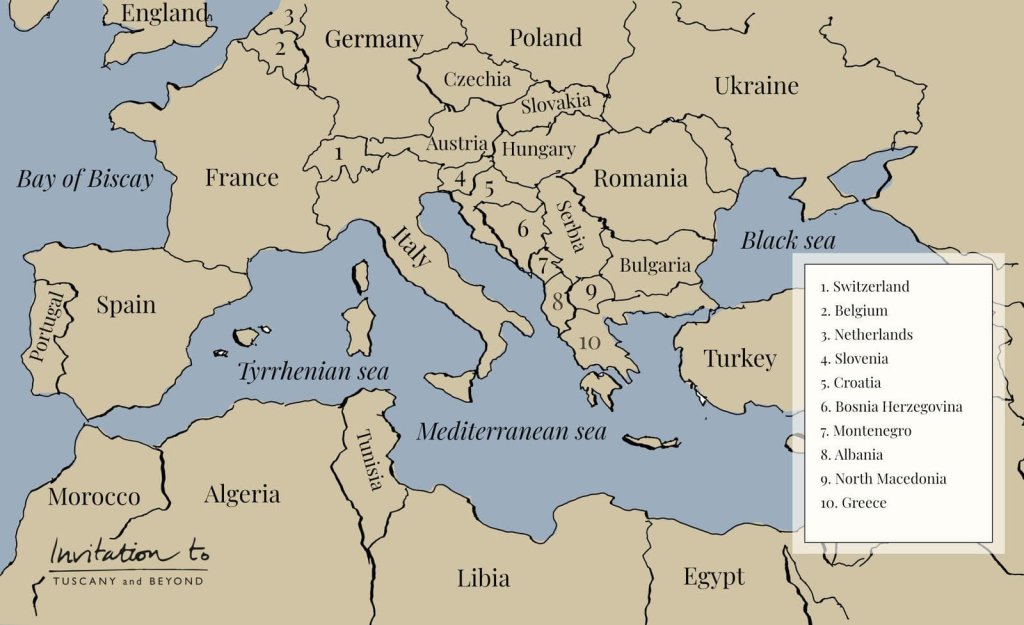
Italy is a bridge across the European divide and the variety found across the nation reflects this, from the arabic architecture of the Sicilian cities to the Greek temples of southern Italy, from the idealistic Renaissance cities of Tuscany to the magical cityscape of Venice in the North - all seemingly hinged on the amazing city of Rome, layered in history, both metaphorically and quite literally.
Italy is also a city whose geography determines its character, so here is a
Physical Map of Italy

Regions of Italy
Italy is divided into 20 regions, all with some degree of autonomy and each with their own character.
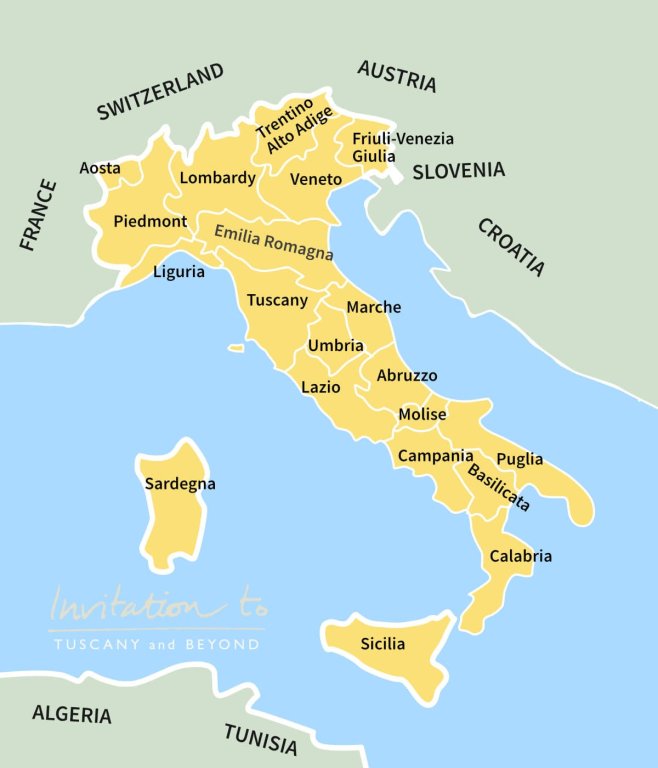
As a general rule, the north of Italy is more industrialised than the south, while the southern regions are more agriculture based. Food, culture and history are prized in all regions of Italy, with great pride taken in local produce and local traditions.
Getting to Italy
Flying to Italy
Italy's main intercontinental airports are in Milan and in Rome, but for a complete list of Italy's international airports have a look at this handy map of International Airports in Italy.
Getting to Italy by Train
It is easy to reach Italy by train from all over Europe. For more details on the train trip from the UK have a look at this page: UK to Italy by Train
Driving to Italy
When driving to Italy you'll normally enter from the north, though the country can also be reached by ferry from other directions. Here is our advice on how to drive to Italy from the UK
Famous regions of Italy
With so many riches across the country it can be difficult to know where to start. Our advice is to pace yourself and not try to see everything in one go. It would be impossible and, like a fine meal, or a fine wine, the beauty of Italy must be savoured and enjoyed over time - rush it and you will fail to grasp it. Some areas of Italy are more famous than others, and they are:
The Italian Lakes
The three great lakes, Maggiore, Como and Garda, stretch across Lombardia and Piemonte in the shadow of the Alps. Everyone knows Lake Como, it's the fashionable one, the George Clooney one, beloved since Pliny the Elder built his villas here in the first century (historians still argue over exactly where, though Bellagio seems most likely). The southern shores are stunning, yes, but they can be crowded and expensive.
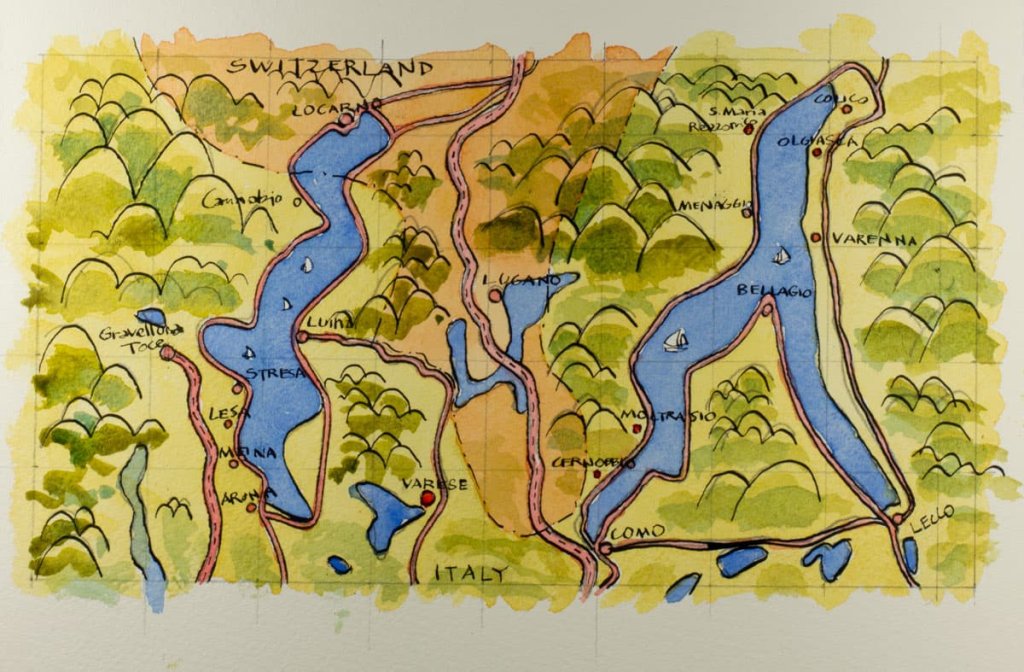
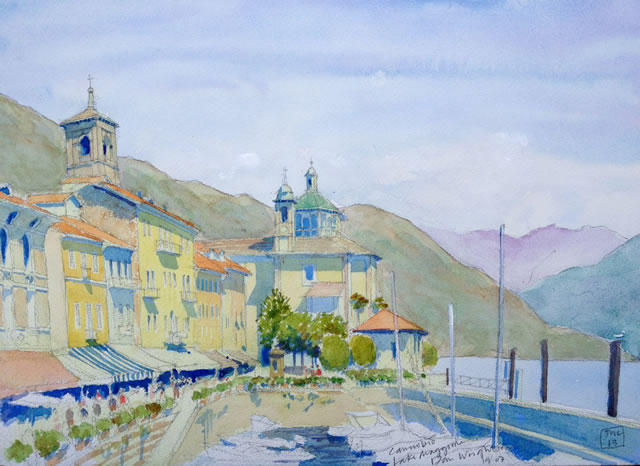
I've always preferred the quieter northern reaches. The light up there is different, clearer, and the Alps feel close enough to touch. I spent a memorable week painting in Cannobio on Lake Maggiore, a small town near the Swiss border that most visitors rush past on their way to the famous bits. The waterfront was perfect for working en plein air, nobody bothered me, and the restaurants served lake fish that had been caught that morning rather than performing for tour groups.
If you're choosing where to base yourself, consider the north. You'll find better value, Alpine valleys to explore, genuine sailing rather than just being photographed on a boat, and villages where life carries on regardless of tourism. The southern sections are perfect for cosmopolitan travellers, and famous with good reason, but if you're a quieter personality like me, the northern sections are wonderful to explore.
Find a villa in the Italian Lakes
Veneto & Venice
A city born from a need to get away from invading hordes of barbarians, today it is one of the most magical cities in the world. Read more about Venice's origin story.
Everybody should see Venice at least once. It's worth staying away from Venice if you don't like crowds - like Mestre, or Verona as mentioned above. It's also worth visiting Venice during the Biennale. The 61st International Art Exhibition runs from May 9 to November 22, 2026, with the theme "In Minor Keys" conceived by curator Koyo Kouoh. Venice Biennale 2026 details
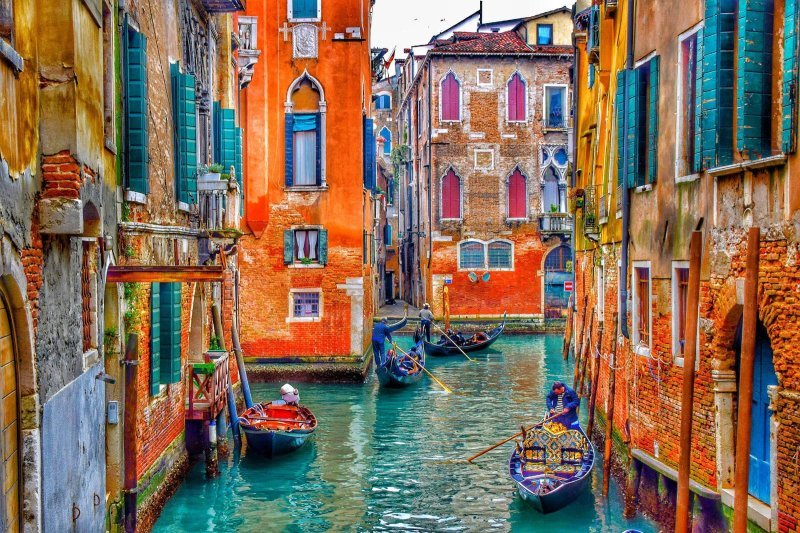
Tip for visitors to Venice: try staying in a town like Verona and then going to Venice on the train. It's an hour's train trip and you'll be staying in a city that regularly stages live opera in their still standing original Roman amphitheatre, the "Arena" - a fabulous experience. The 103rd Arena Opera Festival runs from June 12 to September 12, 2026. Check the schedule here: Arena di Verona 2026
Other cities and towns worth visiting in the Veneto are Treviso and the magical town of Asolo as well as, of course, the many beautiful Palladian villas.

Liguria and the Cinque Terre
Liguria curves along the coast where Italy meets Provence, a narrow crescent squeezed between the Apennines and the Mediterranean. The five colorful villages of the Cinque Terre have become victims of their own postcard appeal, overrun with day-trippers shuffling between gelato shops. Portofino and Santa Margherita Ligure, further north, remain stylish but expensive.
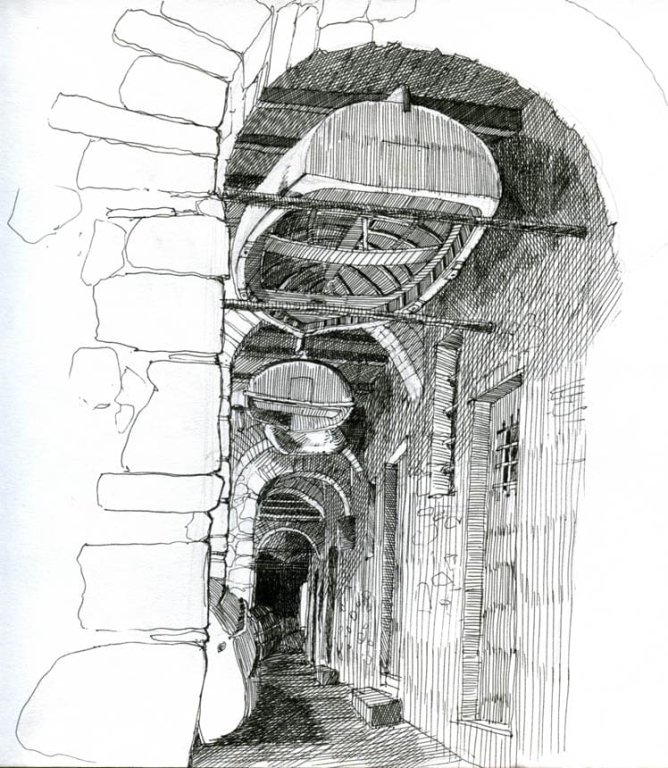
I've learned to stay south instead, near Montemarcello and Tellaro. These villages sit just beyond the Cinque Terre's chaos but share the same dramatic coastline, the same fishing culture, without the crowds. Tellaro particularly has become a favorite, I spent several days there painting the narrow alleyways where fishermen still store their boats upside down through winter. The boats lean against ancient stone walls in compositions that haven't changed in centuries.
From Montemarcello, perched high above the Gulf of La Spezia, you get panoramic views across to the Cinque Terre without having to queue for them. The restaurants serve the same focaccia and trofie al pesto, but to locals rather than tour groups. You can actually have a conversation with the person serving you. If you want the Ligurian coast without the performance, base yourself here. Visit the Cinque Terre for a day if you must, but return to somewhere you can breathe.
Tuscany & Florence
I grew up in Tuscany and I've been painting its landscapes for over four decades, yet I still discover corners that surprise me. Yes, it's the birthplace of the Renaissance, but what keeps me here isn't the history on the walls, it's the life in the piazzas. The way morning light hits the Duomo in Florence changes every season. The hill towns you'll see in postcards, like San Gimignano and Montepulciano, genuinely reward slow exploration rather than a quick photo stop. And the food and wine? This is where I've learned that the best meals happen when you let yourself wander off the main square and follow the sound of locals arguing passionately about whose grandmother made better ribollita.
The most important towns and cities in Tuscany are:
While the areas guests often head to are:
- Chianti, the famous wine region of Tuscany
- Val d'Orcia, the rolling hills south of Siena
- The Maremma
- Val d'Elsa, the valley of Siena and the Francigena pilgrimage route

How to get to Tuscany
Find the best wineries in Tuscany here
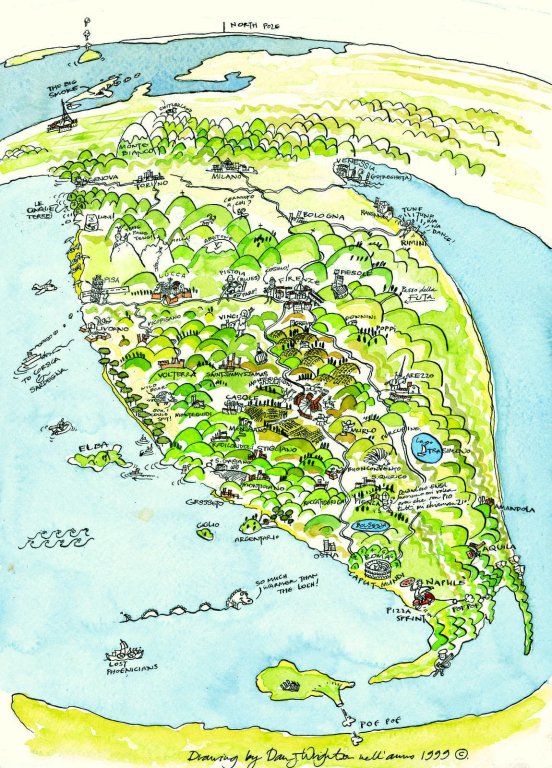
I grew up in Tuscany so most of our villas are here. If you already know you want Chianti for the wine, Val d'Orcia for the views, or somewhere quieter in the Maremma, start there. My soft spot is for the area around Siena - you can find our Villas around Siena.
Otherwise here's the full list: Villas in Tuscany
Find a place to stay in Tuscany
Umbria
Umbria sits landlocked between Tuscany to the northwest and Lazio to the west, often called Italy's 'green heart' for good reason. But understanding Umbria requires recognizing it's really three different regions.
The north, around Perugia and Assisi, shares Tuscany's Renaissance architecture and accessible hilltop towns. Assisi's basilica is genuinely worth seeing, the frescoes are extraordinary, and Perugia hosts one of Europe's best jazz festivals each July. These cities are well set up for visitors, which makes them comfortable bases for first-time travelers to the region.
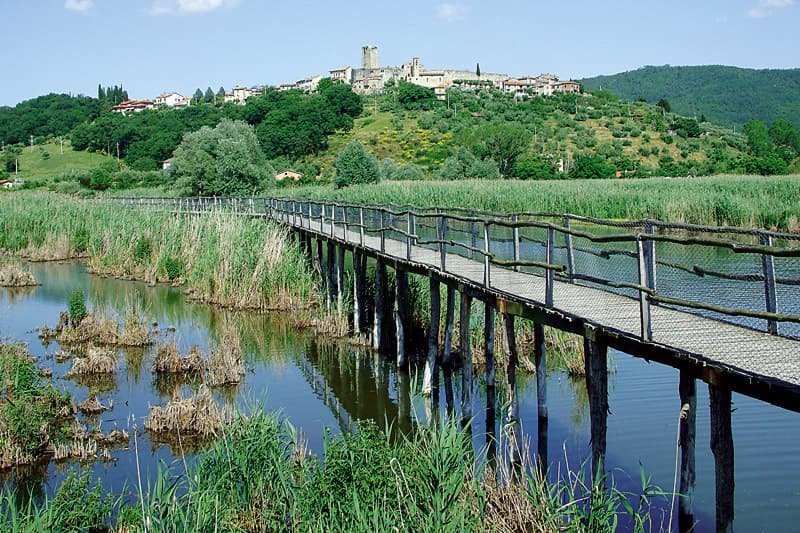
The south-east is something else entirely. This is a green paradise of forested hills, waterfalls, and medieval sanctuaries that see far fewer visitors. The hill towns here, scattered across valleys thick with oak and chestnut, reward slower exploration. Lake Trasimeno, on the Tuscan border, offers sailing, natural reserves, and ancient churches on islands, all surrounded by quiet villages worth discovering.
The western edge, where Umbria meets Lazio, gives you Orvieto, perched impossibly on its tufa cliff. It's one of those cities that stops you mid-sentence when you first see it. The cathedral alone justifies the visit, and the town has excellent restaurants serving local white wines from the surrounding vineyards. If you're looking for somewhere emptier and greener than Tuscany's famous valleys, the south-east delivers. But the north has its own appeal, particularly if you value good infrastructure and easy access to major sites.
How to get to Umbria
Lazio & Rome
The capital of the Roman empire, the centre of Mediterranean power and later of the Catholic church, Rome is a magical city that should not be missed. Our sister company in Denmark, Ponti & Sofia, has a selection of bijou apartments in Rome centre. The site is in Danish but Manuela speaks good english.
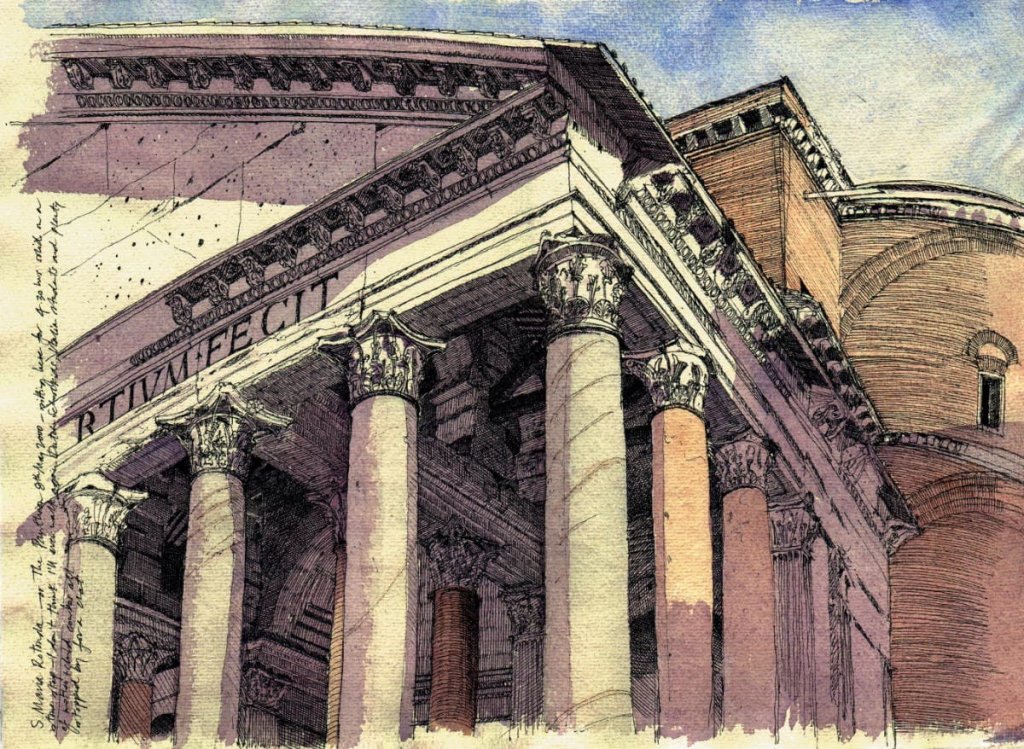
The sketch below is of the Pantheon, an amazing building in the heart of Rome, build around 25BC by Agrippa as a temple dedicated to the twelve Gods and to the living Sovran. Unlike many temples it wasn't destroyed with the advent of Chrisitanity but was transformed into a church, St Maria ai Martiri.
Campania & Amalfi
Naples is chaotic, loud, and completely itself. I spent a few days there during my time at the British School at Rome, when we had a group exhibition at the British Embassy. The highlight was exploring the stone quarries underneath the city, vast empty spaces wwhere the stone to build the city above was carved out. The city operates on its own logic - traffic rules are suggestions, coffee is religion, and the pizza genuinely tastes different than anywhere else. The archaeological museum holds treasures from Pompeii that most visitors never see because they're too busy photographing themselves at the actual ruins.
Speaking of which: if you're heading to Pompeii, do yourself a favor and visit Herculaneum instead. Just as fascinating, if not more so, and far quieter. Unlike Pompeii, the pyroclastic material that buried Herculaneum carbonized organic materials, preserving wooden roofs, beds, doors, even food. You can see the town rather than just imagine it. Guide to Visiting Herculaneum
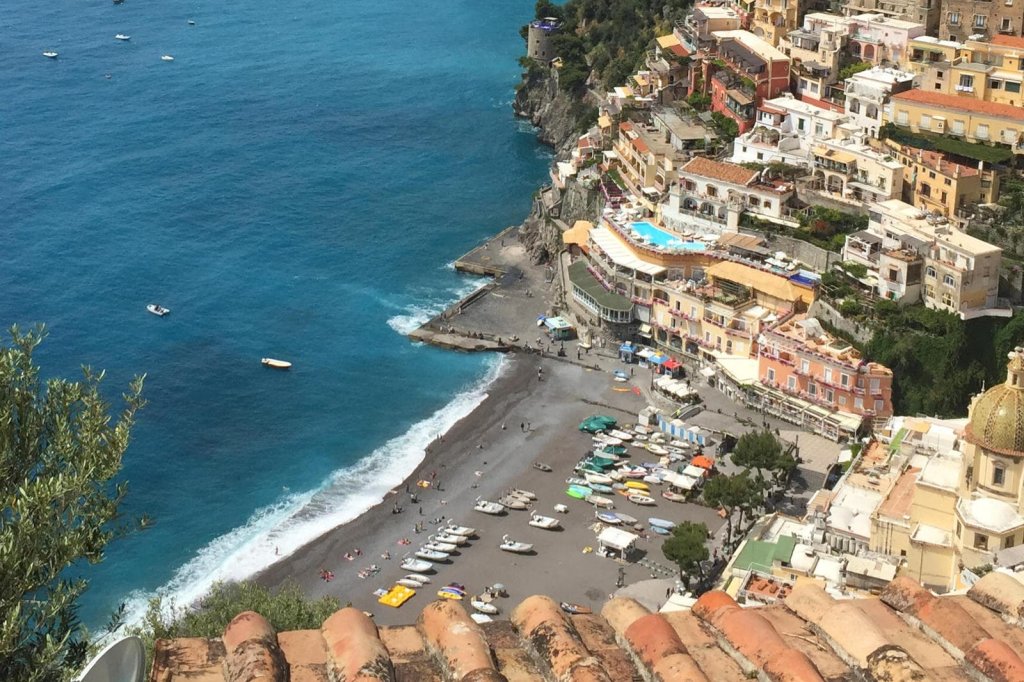
Then there's the coast. Amalfi and Sorrento deliver exactly what they promise: colorful buildings clinging to impossible cliffs, tiny roads weaving through villages, crystal water below. The restaurants with their sail-canvas awnings, the scooters, the occasional Ferrari squeezing through medieval streets - it's theatrical, yes, but the theatre is genuine. This coastline has been stopping travelers in their tracks for two thousand years for good reason.
Puglia
I'll be honest - I don't know Puglia as well as I know other regions. I've explored the Salento coastline, the heel of Italy's boot, and not much beyond that. But that coastline is spectacular: clean seas, reliable sunshine, and beaches that alternate between fine sand and dramatic rock formations.
Puglia was part of Magna Graecia for centuries, more connected to Greece than to Rome, and you see it in the food, the baroque churches, the Greek influence in the architecture. The conical trulli houses around Alberobello have become Puglia's postcard image, and the old masserie (fortified farmhouses) make wonderful places to stay.
The beaches of Salento are what draw most visitors, and rightly so. The Adriatic side tends to be sandier and family-friendly, while the Ionian side offers more dramatic coastline. Both are worth exploring, and both get genuinely hot in summer - this is southern Italy at its sunniest.
Read more about the beaches of Salento
Find a place to stay in Puglia
Calabria
Calabria doesn't make it onto most first-time Italy itineraries, which is precisely why I keep returning. The Greek temples at Paestum stopped me in my tracks, but what I remember most vividly are the hill villages I found by accident, driving inland from the coast. Tiny Byzantine churches with frescoes nobody had bothered to photograph. Restaurants where the menu was whatever a diminutive Calabrian grandmother announced she'd cooked that morning. Every meal was exceptional. When you skip the ticklist approach and leave room for these discoveries, Calabria rewards you with the Italy that doesn't perform for tourists.
The mountainous region of the Aspromonte has hidden hill villages with byzantine frescoes in tiny churches and small simple restaurants with amazing food. The sketch below is from a trip to visit the Temples of Paestum, a group of fabulous 5th century BC Greek temples south of Naples.
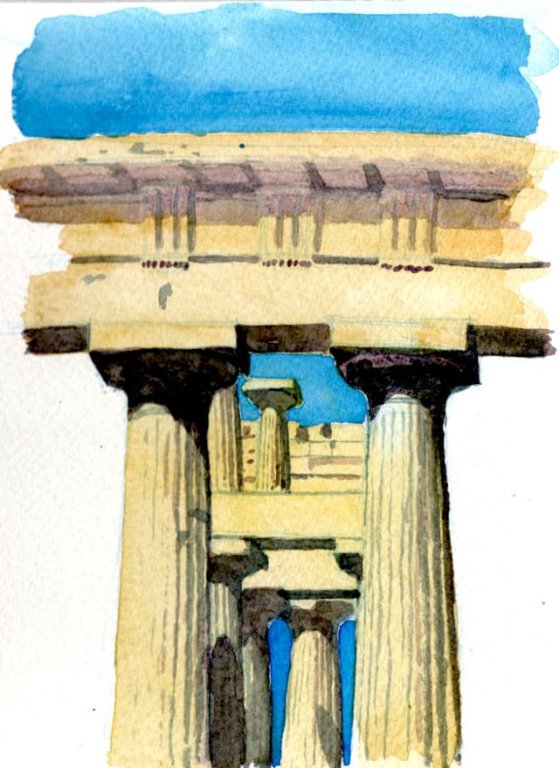
The temples were breathtaking - but I also went driving in the mountainous region inland and visited a series of villages, for no greater reason than seeing them from the road. Several of them had quite remarkable churches with fabulous frescoes inside, none of them mentioned in my local guide. And the tiny restaurants I stopped at were fabulous. The menu often consisted of a diminutive Calabrian mother telling me what she'd cooked that day - and it was always good.
It's worth avoiding turning your visit into a ticklist. Enjoy the unexpected and leave time for it.
Sicily
Sicily is big enough and varied enough that you could spend months there and still have corners left to explore. I've been back several times, each trip different from the last.
One winter I spent time climbing in the mountains above Palermo. The city sits in a bowl surrounded by dramatic peaks, and the contrast between urban chaos below and silent limestone routes above was remarkable. Another time - and I'm not recommending this - I went up Etna while it was erupting. Officially not allowed, obviously, but the volcano was putting on a show and, as a mountaineer I didn't want to miss it. The ground was warm underfoot, the smell of sulfur overwhelming, and the experience unforgettable.
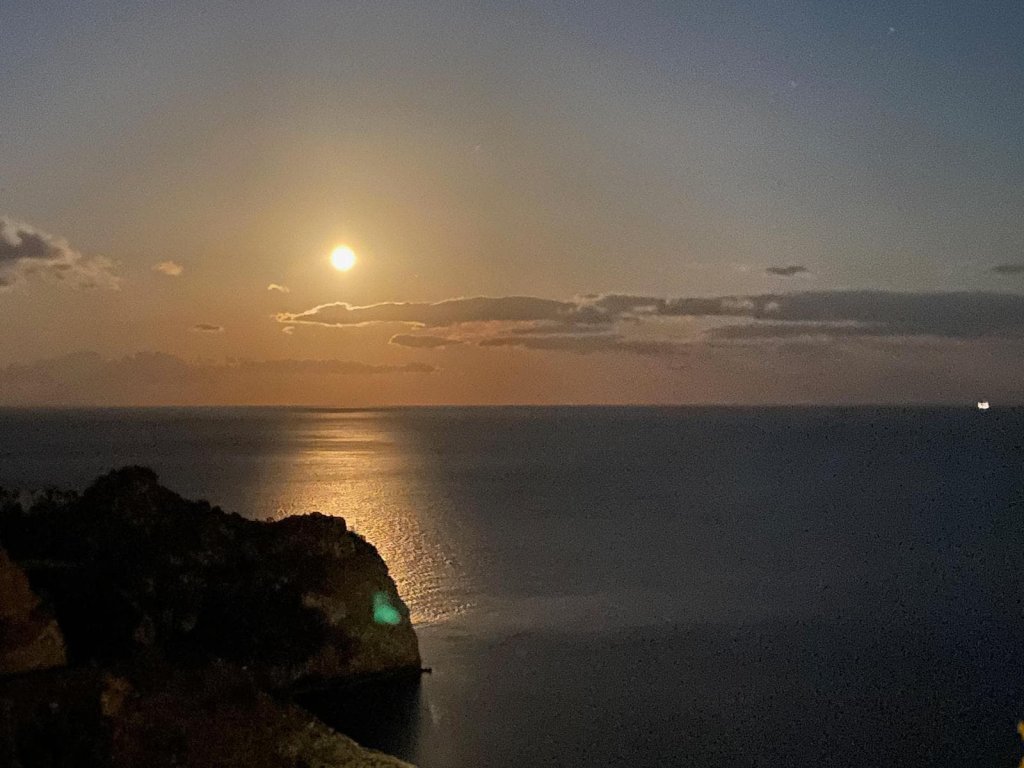
The family holiday in Taormina was entirely different: ancient Greek theatre with Etna as backdrop, excellent restaurants, swimming in clear water, the kind of relaxed week where nobody wants to leave. Taormina has been a destination since Roman times, which tells you something about the location.
For centuries Sicily was 'Magna Graecia' - greater Greece. Modern Naples, far north of Sicily, owes its name to the Greek 'Nea Polis' (New City). Archimedes worked in Syracuse. The island is layered with Greek temples, Roman mosaics, Norman cathedrals, and Arab architecture. It's a palimpsest of Mediterranean history, and the food reflects all of it.
All of this makes Sicily worth more than a quick visit. Give it time.
If you’re looking for places to stay in Italy we have:
Villas in the Veneto
Villas by the Italian Lakes
Villas in Tuscany
Villas in Umbria
Villas in Puglia
Villas in Sicily
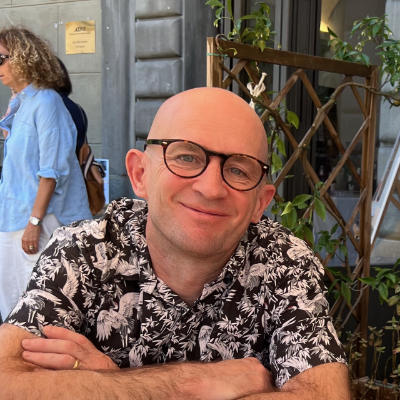
Author: Daniel Wrightson
Dan Wrightson grew up in Tuscany, Italy and has been writing about, sketching and exploring Tuscany and Italy since 1983.
15th Jun 2018 7th Sep 2026