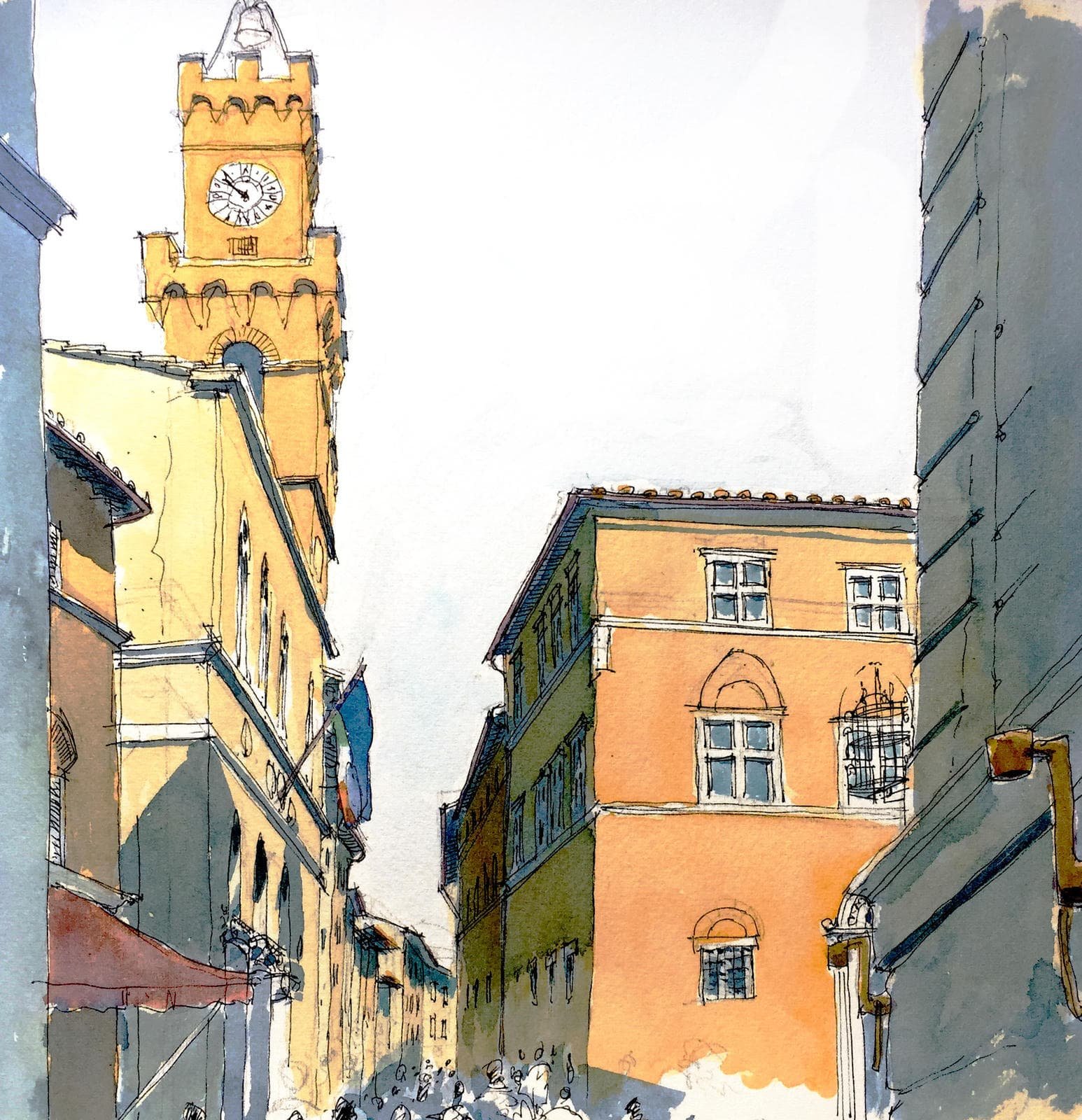
Pienza is a beautiful town south of Siena, in the Val d'Orcia, the valley of the river Orcia, famous for its rolling hills and spectacular vistas. It's about an hour's drive from Siena, through beautiful landscape, and is surrounded by other villages, towns and historical sites worth visiting.
History of Pienza
Pienza was once called Corsignano and in 1405 was the birth place of Enea Piccolomini who later became Pope Pius II. During a trip north from Rome in 1459 Pope Pius passed through his birthplace and found it in a dire state, degraded and with buildings in ruins. He was travelling with Leon Battista Alberti and his student Bernardo Rossellino and, after discussion with them, Pope Pius II decided to remodel Pienza, and to do so according to his humanist beliefs, attempting to create the Ideal City, a Renaissance idea whereby one could attempt to mirror the perfection of heavenly proportions and layouts here, and thus also create a better society on earth. He charged Bernardo Rossellino with this quite daunting task and the architect Bernardo started work, under instruction to respect the existing quirks and angles of the existing town.
Is Pienza worth visiting?
I'd say absolutely yes: the results were spectacular and the little town of Pienza is today a listed UNESCO World Heritage site. The architecture, the views over the surrounding landscape, the atmosphere, and the wonderful Pecorino, sheep's milk cheese produced from the many flocks that wander over the surrounding.
Start from Piazza Pio II
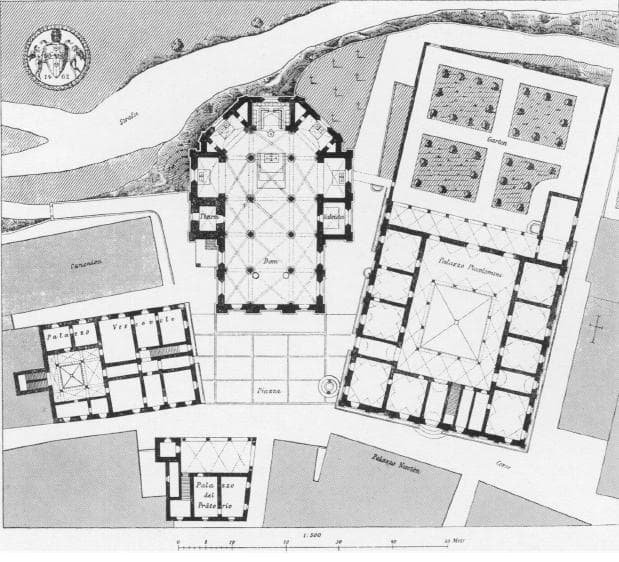
The focus of the town is now the main square that contains the Cathedral and three palaces, laid out in a trapezoidal plan so that two streets splay out on either side of the cathedral facade, each giving beautiful framed views of the green hills beyond. The square contains the Cathedral, the Bishop's Palace and the Town Hall, as well as Piccolomini's own Palazzo, bringing together the seats of power in the fifteenth-century, religious, secular and personal wealth. Powerful families held a lot of influence over both the secular and the religious.
Cathedral of Santa Maria Assunta
The Cathedral seems to have taken a step back to accommodate the square, and to create the breathing space civic life needs in the heart of the city. The rear of the Cathedral has been cleverly engineered to support itself on the same rocks that hold the city, as they drop away from the ridge. It's an impressive feat, and possible over-ambitious: already in 1545 an earthquake split the great rock on which the Cathedrals foundations sat, and further movements have given a definite lean to the rear of the building, and you'll see a couple of cracks snaking across the floors at the rear of the church. The cathedral was built on the Romanesque church of St. Mary and you can still see the remains of the original church in the crypt.
The façade is typical of the Renaissance, divided into three parts by arched columns. The interior of the cathedral is luminous and airy and was apparently inspired by German Hellenkirchen, large luminous churches Pius II had seen in Germany (he was poet and secretary of the Emperor Frederick III in 1442 for around 3 years), with lots of light and equal sizes to the nave and the aisles. The Pope's original vision for the church had been of a simple, light-filled hall without frescoes:
nemo candorem parietum atque columnarum violato nemo picturas facito nemo tabulas appendito meno cappellas plures quam sint, aut altaria erigito nemo formam ipsius templi, sive quae superius, sive que inferius, est mutato
No one shall deface the whiteness of the walls and columns. No one shall draw pictures. No one shall hang up tablets. No one shall erect more chapels and altars than there are at present. No one shall change the shape of the church either the upper or the lower.
For those who contravened these rules Pius II promised excommunication, but by the seventeenth-century the Cathedral had already suffered various changes, including blocking windows up and adding altars. Some of these changes were reversed by Barbacci in the 1930s, though the altars remain. The church remains remarkable for its time in the clarity and use of light as the main descriptor of the interior space.
Palazzo Piccolomini
The main building on the square is Palazzo Piccolomini, a large residence for the Pope and his family, that is now open to the public. If you visit you'll see a row of rooms with furnishings from the 16th and 17th centuries, and then you can visit the garden and loggia, from where you can enjoy one of the most celebrated views of the Val d’Orcia.

Palazzo Vescovile
On the opposite side of the square, facing you as you walk into town, the Old Bishop’s Palace (Palazzo Vescovile) now houses the Diocesan Museum. You can see the cope of Pius II, a marvelous vestment decorated with episodes from the lives of the Virgin, St. Margaret of Antioch and St. Catherine of Alexandria. The museum also houses paintings by Vecchietta, Fra’ Bartolomeo, Luca Signorelli, Sodoma, the 16th-century Sienese school, Bernardino Mei, and Ventura Salimbeni.
Palazzo Pretorio
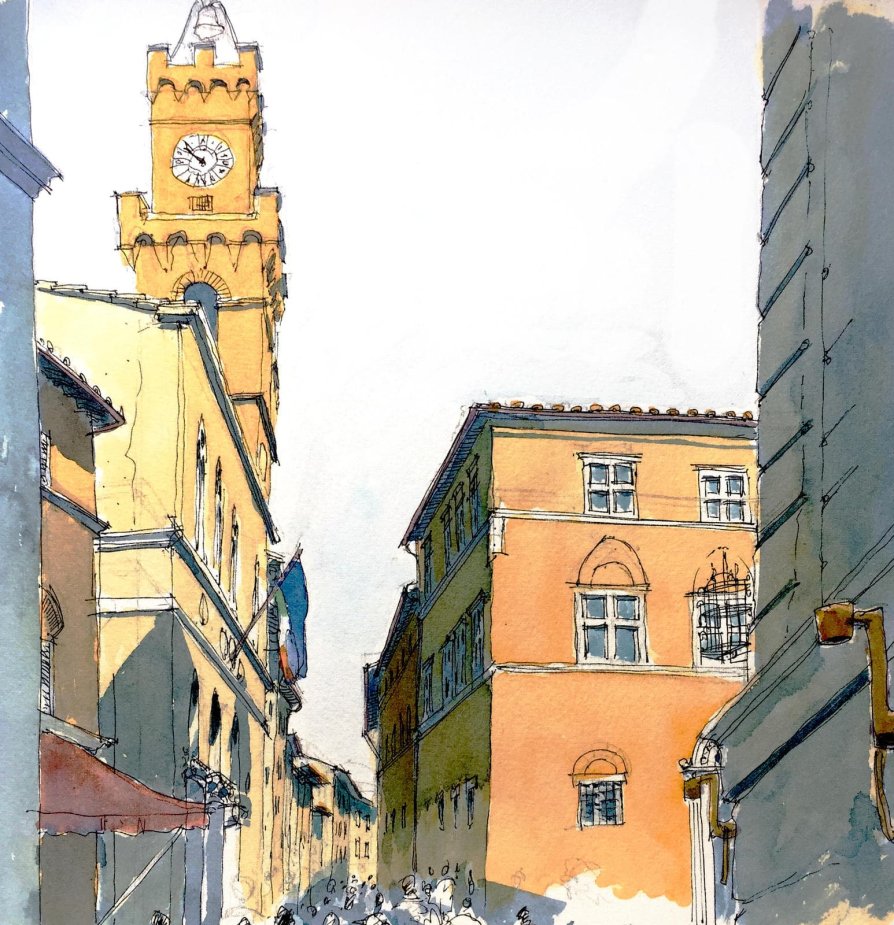
The town hall is the most recent of the buildings on the piazza, its high loggia and façade decorated with a scratched plaster technique (sgraffito) and a brick tower, which was built later. It has a bell tower, which was carefully built shorter than the cathedral’s to symbolize the superior power of the Church.
Explore the winding streets of Pienza
When you have looked around the formal elegance of Piazza Pio II, take some time to wander around the streets of Pienza. If you head off to the left of the Cathedral you'll find Via del Casello, a little road on the edge of the village with fantastic views over the Val d'Orcia towards Mont'Amiata.
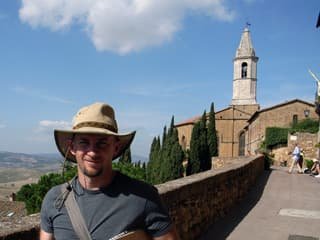
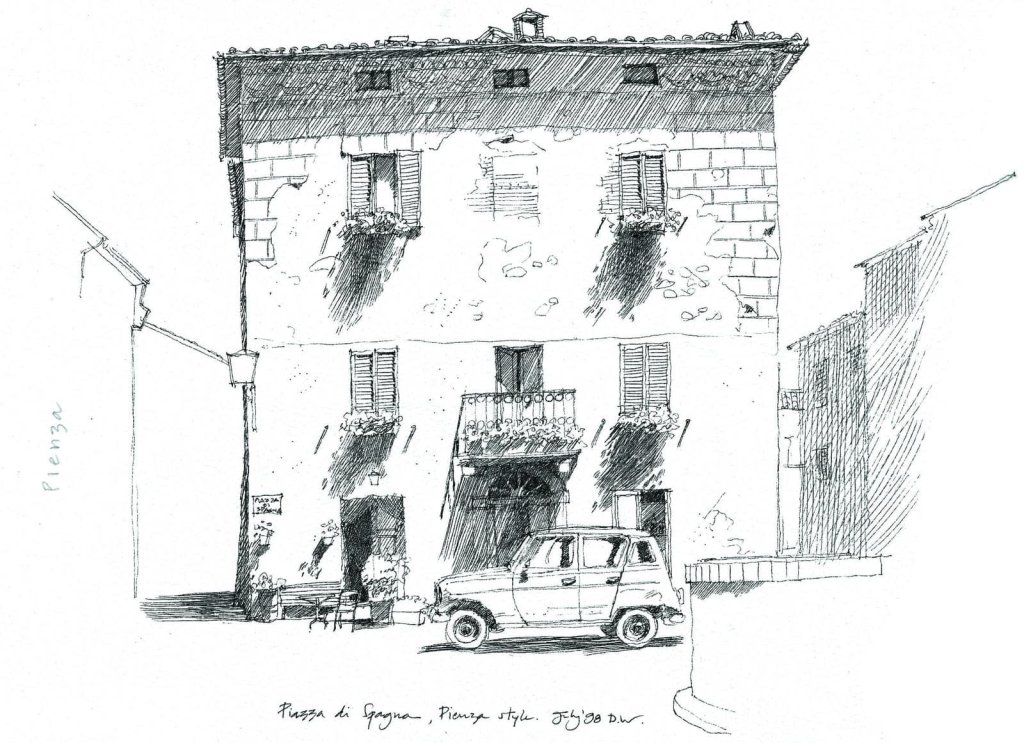
The town has many streets with interesting names: Via dell’Amore, Via del Bacio, Via della Volpe, Via Buia, Via della Fortuna, Via dell’Angelo. Also, perhaps inspired by the close relationship with Rome, Pienza has a Piazza di Spagna and a Via Condotti
Author: Daniel Wrightson
Dan Wrightson grew up in Tuscany, Italy and has been writing about, sketching and exploring Tuscany and Italy since 1983.
2nd Jan 2025 9th Jan 2025