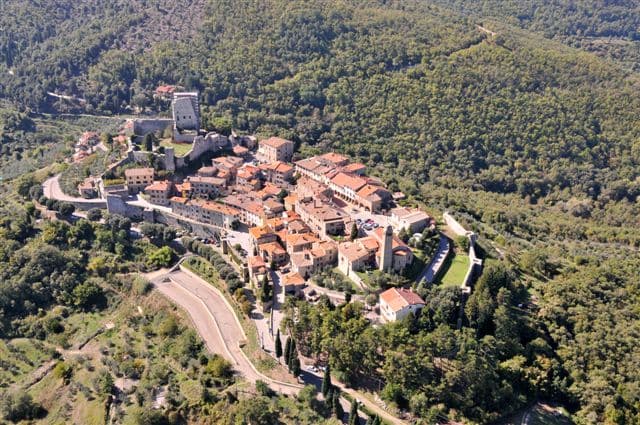
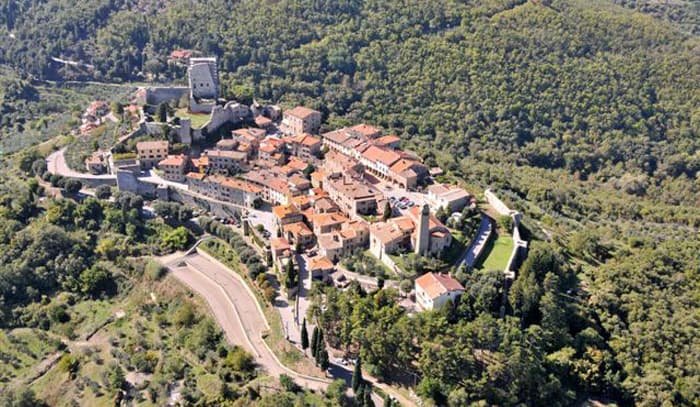
Civitella in Val di Chiana is a fortified hilltown in the northern part of the Val di Chiana, on a great defensive position on a hill with wide views over the surrounding territory.
History of Civitella in Val di Chiana
The site of the town was first inhabited by the Etruscans, taken over by Romans and later became a Lombard stronghold. By the 11th century, it was key to the defences of the territory of the bishops of Arezzo and was known as the Civitella del Vescovo (the Bishop's stronghold). In 1311, Civitella was the site of a peace agreement between the Guelphs and Ghibellines, brokered by Emperor Henry VII of Luxembourg, ushering in a period of peace.
Civitella continued to thrive as an important commercial crossroads between Arezzo, Florence, and Siena. From the late 14th century, it fell under Florentine control and became a podestà (governance center). In the 16th century, the Medici further reinforced the town’s fortifications by adding bastions.
Civitella in the second world war
Civitella was occupied by German troops during their retreat through Italy and because of this, was heavily bombarded by the Allies, destroying much of the town and its fortifications. But the town became infamous for a brutal Nazi massacre on June 29, 1944, when 244 inhabitants of Civitella were killed by soldiers of the Hermann Göring Division, in retaliation for the killing of two German soldiers by local partisans.

What to see in Civitella in Val di Chiana
Today, a visit to the town center can start in the main square, Piazza Lazzeri. You will find a medieval stone cistern, Palazzo Ninci with its blend of medieval and 18th-century architecture, the 15th-century Oratory of the Confraternity, and the Church of Santa Maria, originally a Benedictine priory from the 11th century and rebuilt in Romanesque style in 1252.

The church was destroyed in 1944 and was later reconstructed. A monument nearby commemorates the 176 civilians killed in the massacre, including a bronze bas-relief by Mario Moschi and a marble plaque inscribed with the poem "Pietà del giugno 1944" by Franco Antonicelli.
On Via Martiri di Civitella, there is a 14th-century Palazzo Pretorio, (like a town hall) featuring a portico with five arches and coats of arms from Florentine podestàs. Today the Palazzo Pretorio houses the Galleria Comunale d'Arte Contemporanea and the Sala della Memoria, which commemorates the Nazi massacre. Of the town’s two 13th-century gates, only Porta Senese still stands, with a nearby tabernacle containing a 1522 glazed terracotta "Madonna with Child" by Giovanni della Robbia.
What to see around Civitella
There are several hill villages worth visiting around Civitella. The little town of Oliveto has 14th-century walls that remain largely intact. The Church of Sant'Andrea, in the heart of the town, was originally built in the 14th century but sadly reconstructed in a neo-medieval style in 1933. Other villages worth visiting are Tuori, Dorna, Cornia, and Gaenne, all in the hills around Civitella.
Ciggiano is an 11th century fortified village with a small church dedicated to San Biagio, that contains a 16th-century sculpture of "Santa Maria Maddalena" attributed to Andrea Sansovino. The nearby Church of Santa Maria was built in 1635 along a transhumance route, the paths shepherds took when moving their flocks from summer to winter pastures.
Pieve al Toppo was the site of a significant battle between Arezzo and Siena in 1288, which Dante Alighieri wrote about.
Where to eat in Civitella in Val di Chiana
There are four restaurants in Civitella (at the time of writing!)
La Botteghina di Civitella Piazza Mazzini, 5, 52041 Civitella in Val di Chiana
Foro Osteria Imperfetta Enoteca Piazza Mazzini, 7, 52041 Civitella in Val di Chiana
Castello di Civitella Via Senese, 4, 52041 Civitella in Val di Chiana
Ristorante Casa Cecco Via di Malfiano, 11, 52041 Viciomaggio
Where to stay near Civitella in Val di Chiana
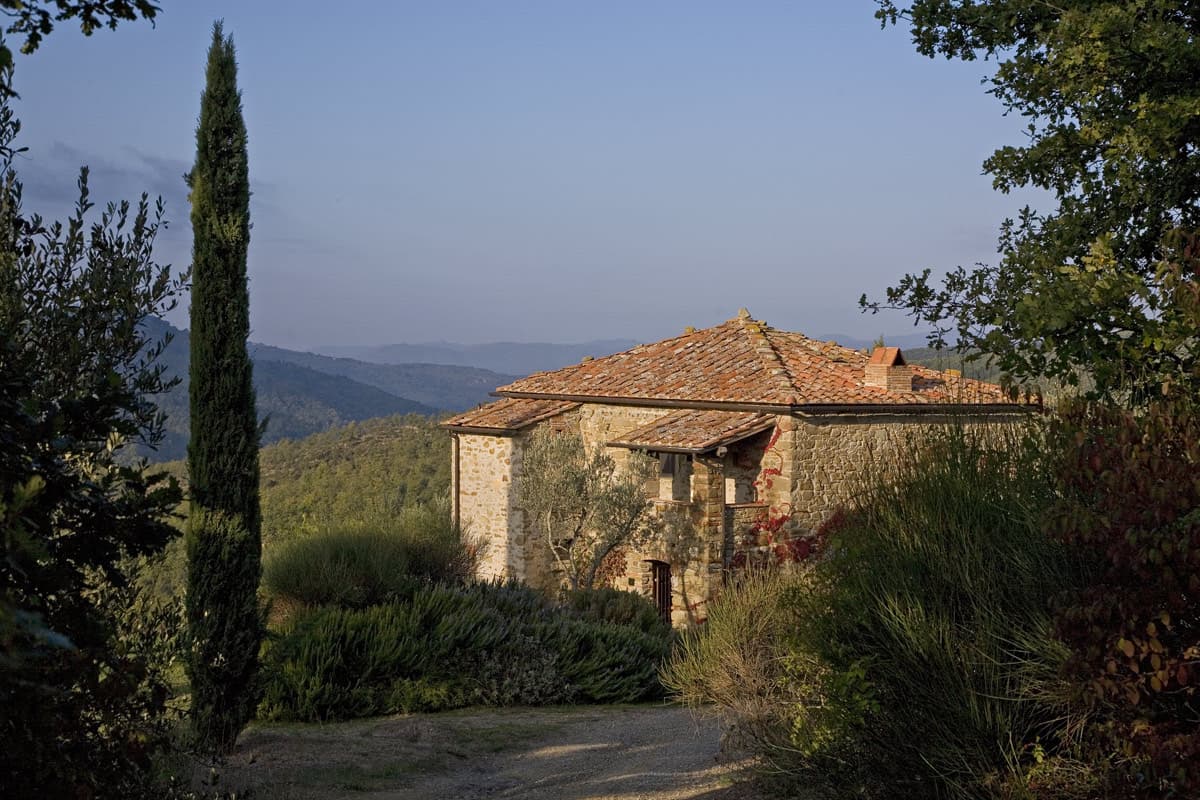
Guardiano is a Tuscan farmhouse once a watchtower for Civitella, with an infinity edge pool and space for 5 guests, within walking distance of the village.
Author: Dan Wrightson
Dan Wrightson grew up in Tuscany, Italy and has been writing about, sketching and exploring Tuscany and Italy since 1983.
29th Nov 2024 29th Nov 2024