Making Hand-rolled pici
When it comes to pasta, Tuscany never disappoints.
There is so much to try: from a juicy plate of pappardelle with wild boar ragù to the generous tortelli maremmani filled with spinach. The key is knowing where to eat each dish, as they are traditional to different areas of the region.
If you find yourself in Siena or the surrounding countryside (don’t forget to visit Monteriggioni, San Gimignano, Montepulciano, Radda in Chianti, Bagno Vignoni, just to name a few), make sure you order pici. Pici are a long pasta shape, similar to thick spaghetti, and they should always be hand-rolled to be enjoyed at their best.
Nonne in the Senese area all have their own versions of the recipe but this is ours.
Recipe for Pici
We suggest using a mix of type 0 flour and semolina flour. Alternatively, you can use only type 0 or only semolina, just keep in mind that the final texture of your pici may vary slightly. This recipe serves 4 people (or two very hungry ones). Remember that in Italy pasta is served as a first course and followed by other dishes, which is why 75–80 g per person is usually considered enough.
If you need to adjust the quantities, remember this simple rule: 50ml of liquid for every 100 g of flour.
Ingredients for the pici dough
- 150 g type 0 flour
- 150 g semolina flour
- 150 ml lukewarm water
- 2 tablespoons extra virgin olive oil
- A pinch of salt
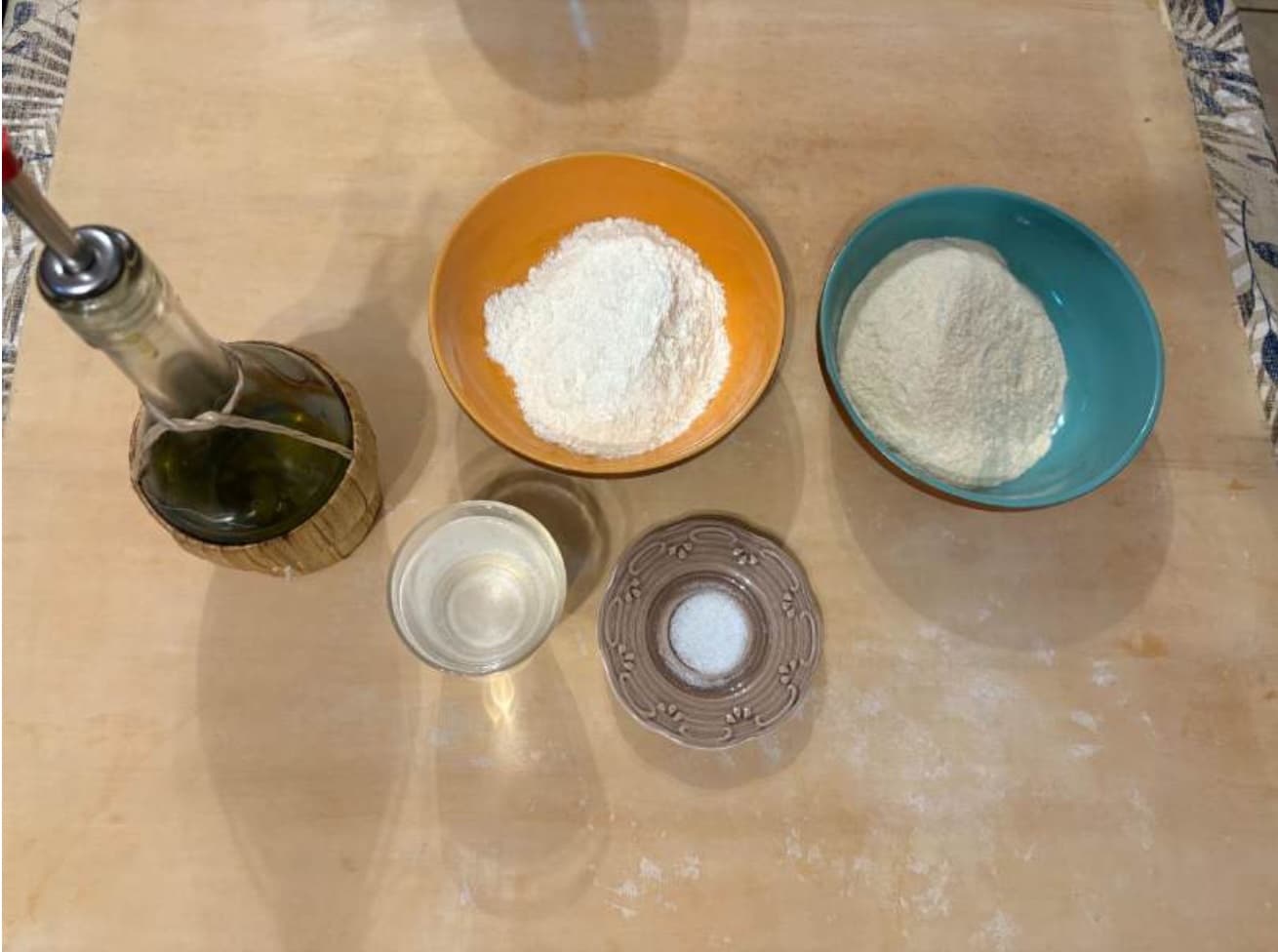
Method
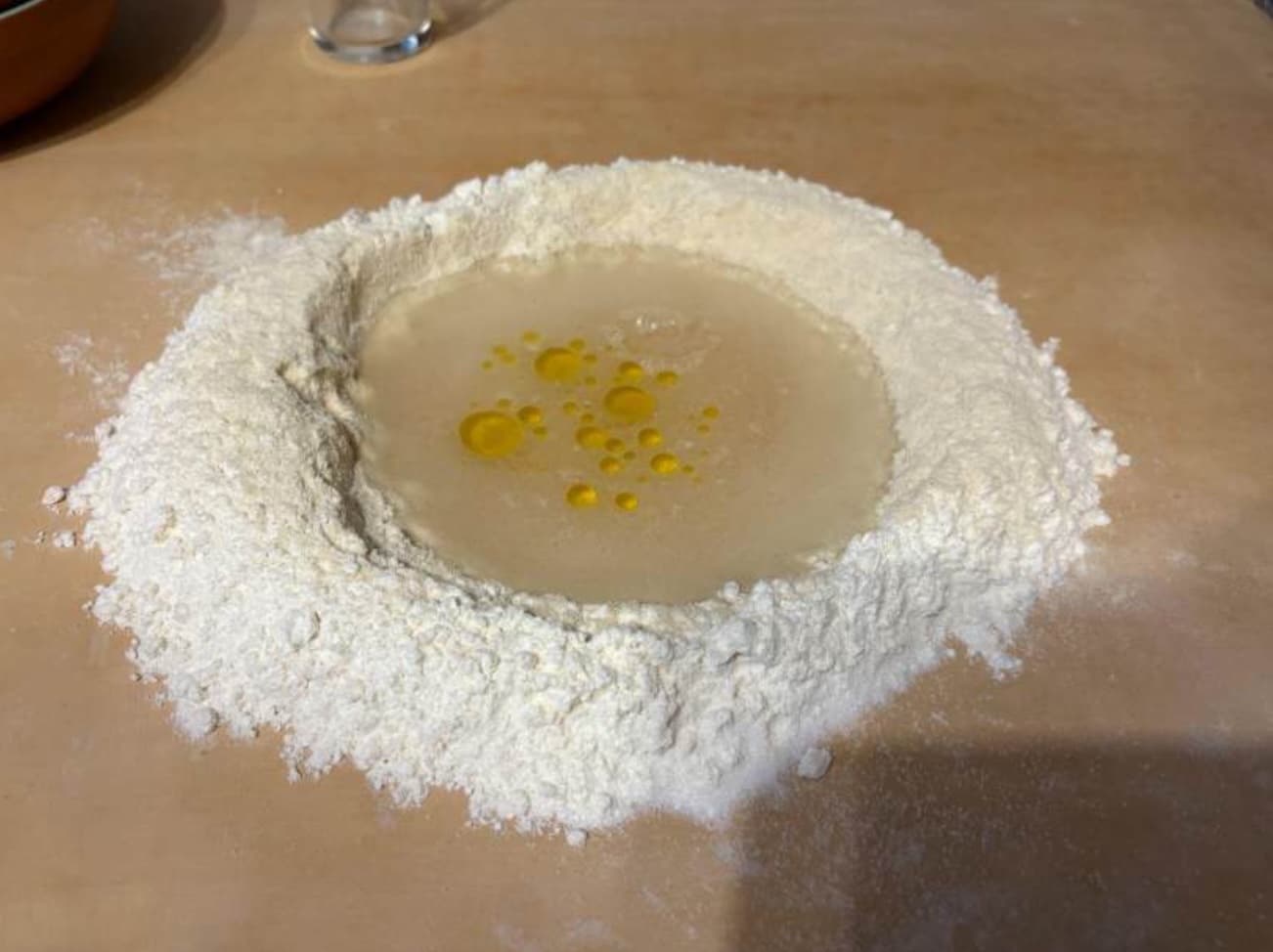
On your work surface (a wooden board works best, but any flat surface will do), mound the flours together. Using your fingers, make a well in the centre large enough to hold the water and olive oil. Add the pinch of salt.
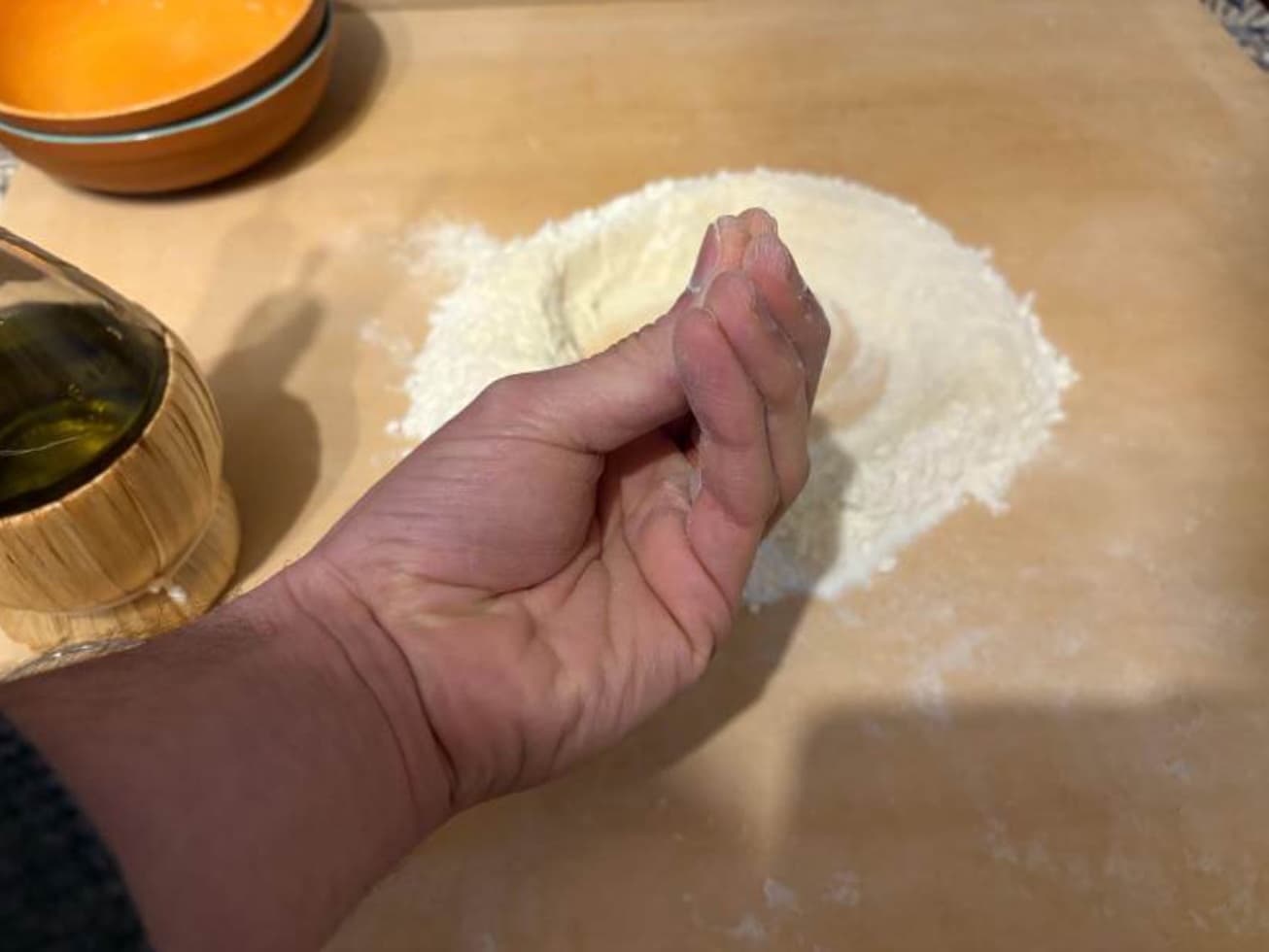
Still using your fingers, start scraping flour from the sides of the well into the liquid. Do this gently, being careful not to break the walls of the well, until the mixture thickens and no longer runs across the surface.
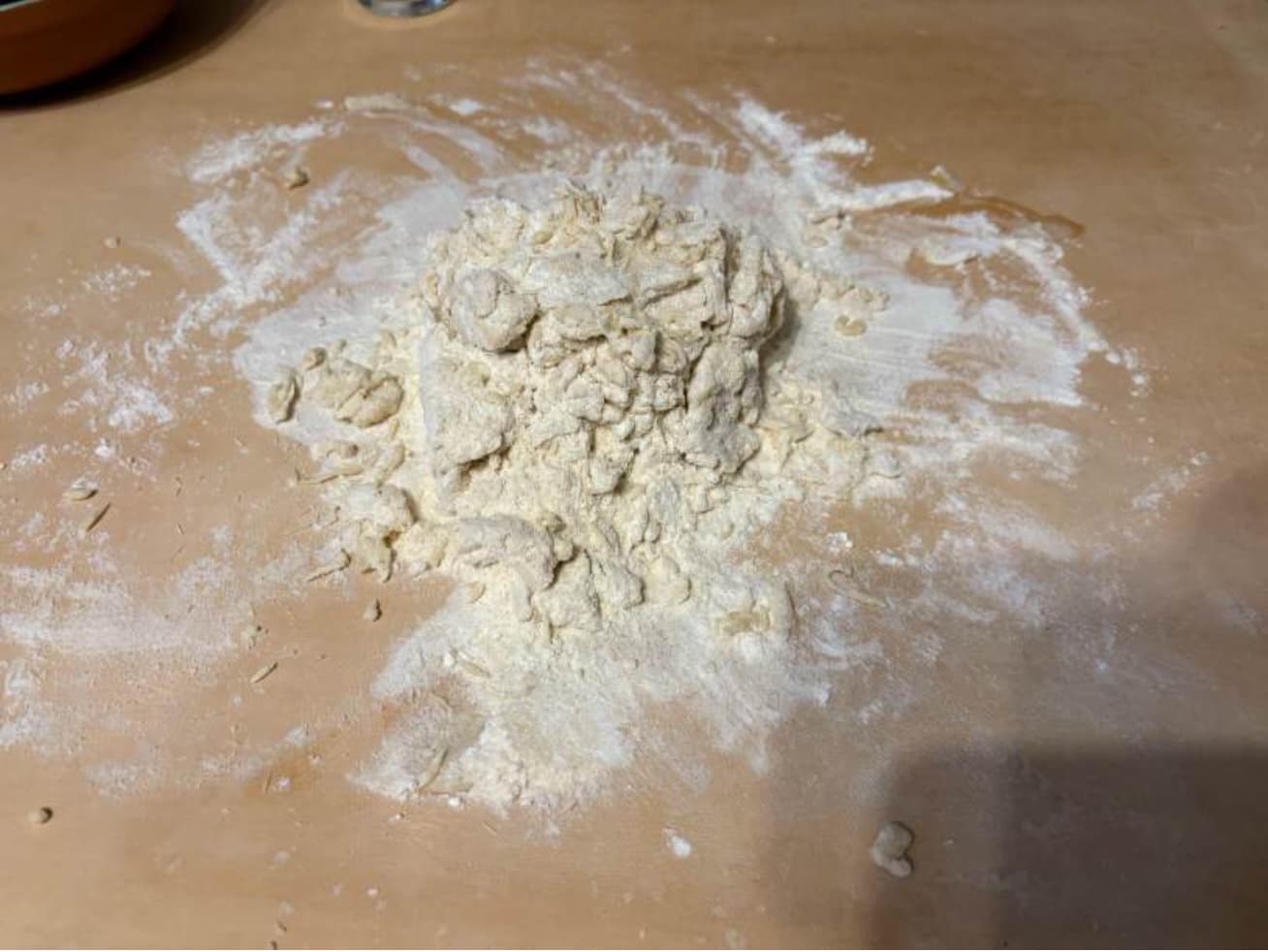
Once all the flour is incorporated, it’s time to use both hands. Press the small crumbs together and form a rough ball. The dough may look dry and floury on the outside, resist the temptation to add more liquid. All the moisture is trapped inside.
Begin kneading energetically: hold the dough with one hand, and with the other push it forward, fold it back onto itself, and rotate it slightly. Don’t worry, you can’t overknead this dough.
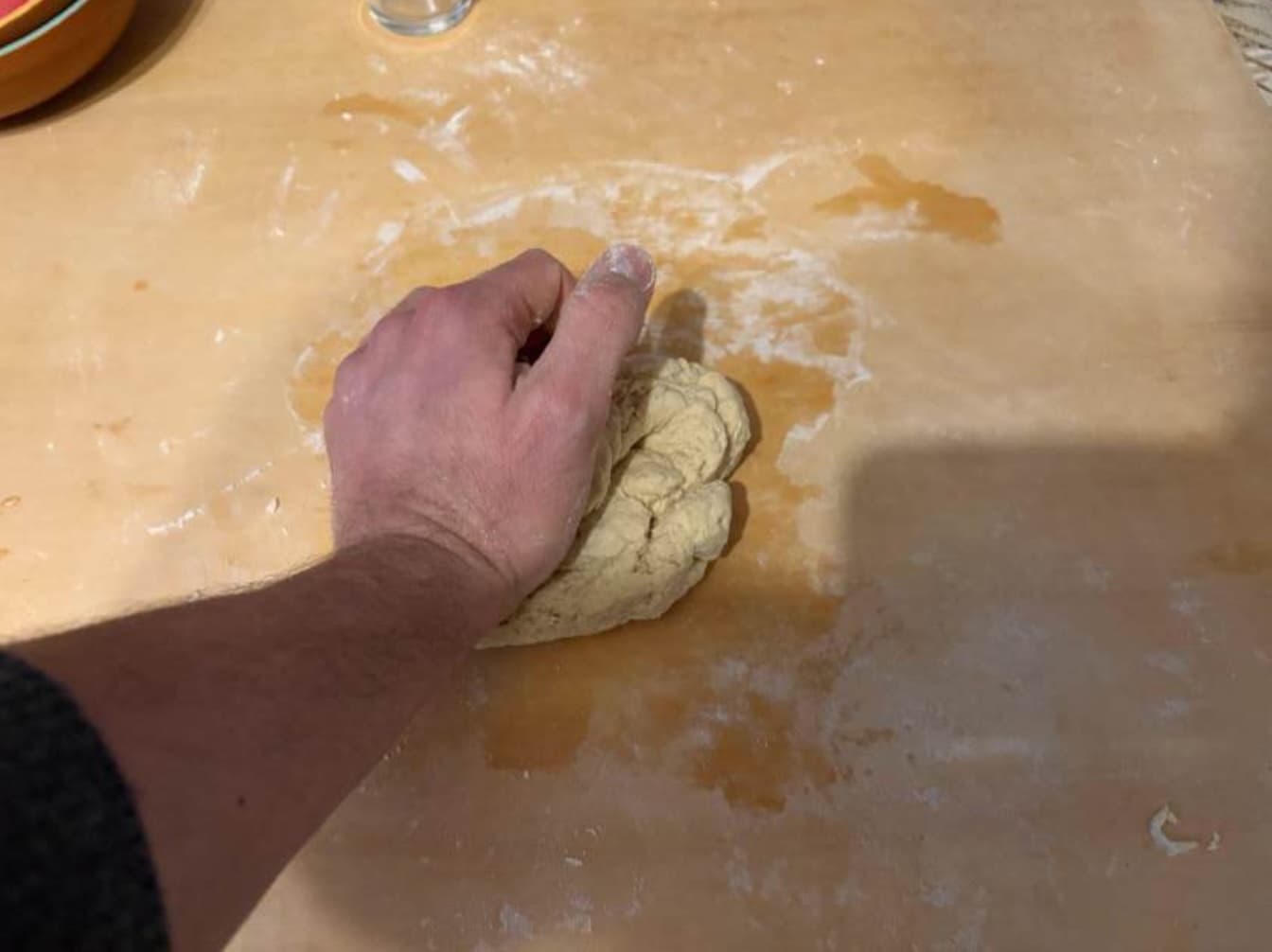
Kneading activates the gluten, giving the dough elasticity. You’re aiming for a texture similar to play dough: not too soft, not too stiff. If it feels sticky, add a little flour. The surface should become smooth and silky. Press your finger into the dough, if it springs back, it’s ready to rest.
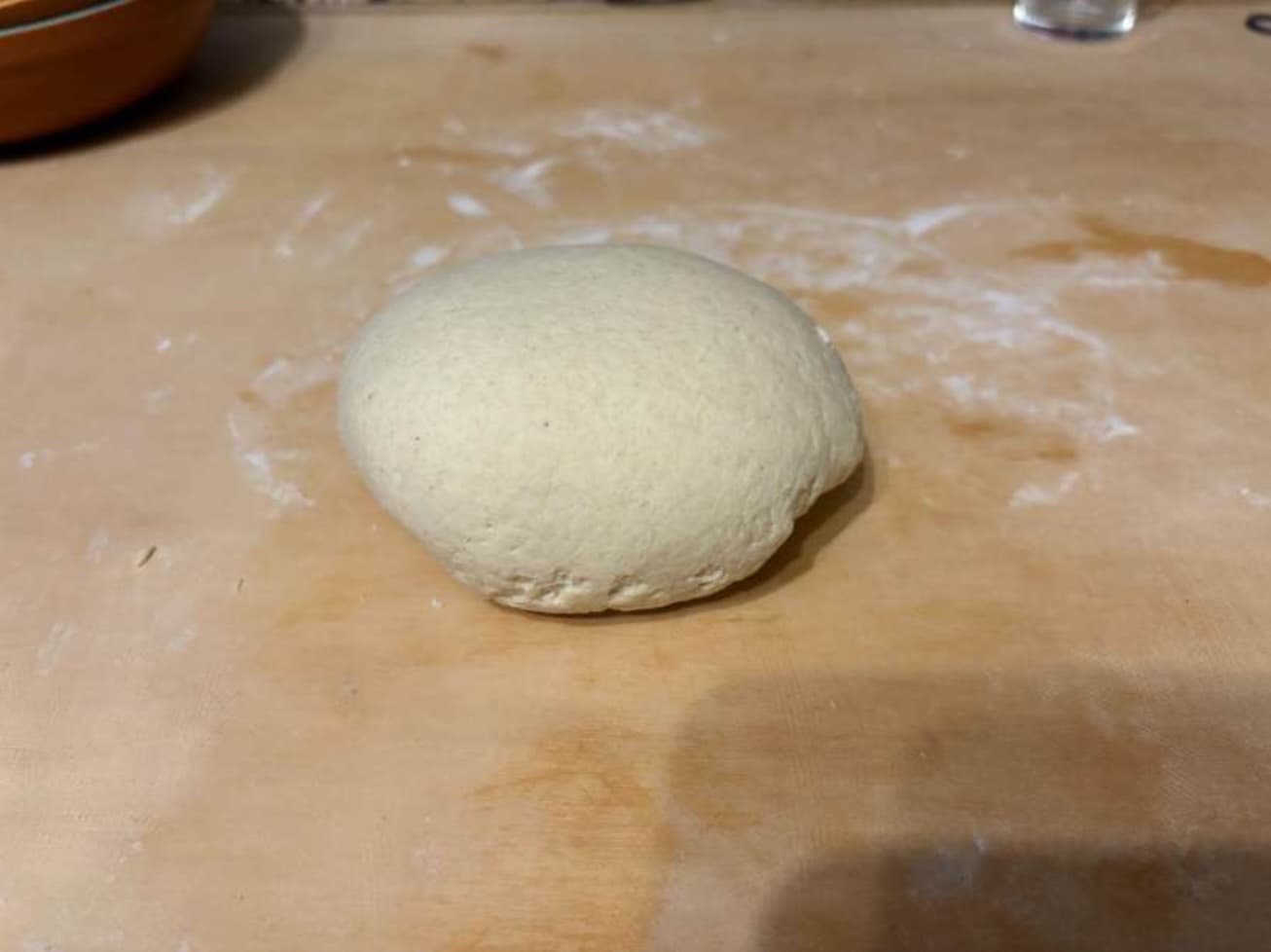
Wrap the dough in cling film or cover it with a damp cloth and let it rest for 30 minutes. Traditionally, Nonna would use this time to prepare the sauce. You can do the same, or enjoy a short break with a glass of wine (a Chianti Gallonero would be a perfect choice).
Shaping the pici
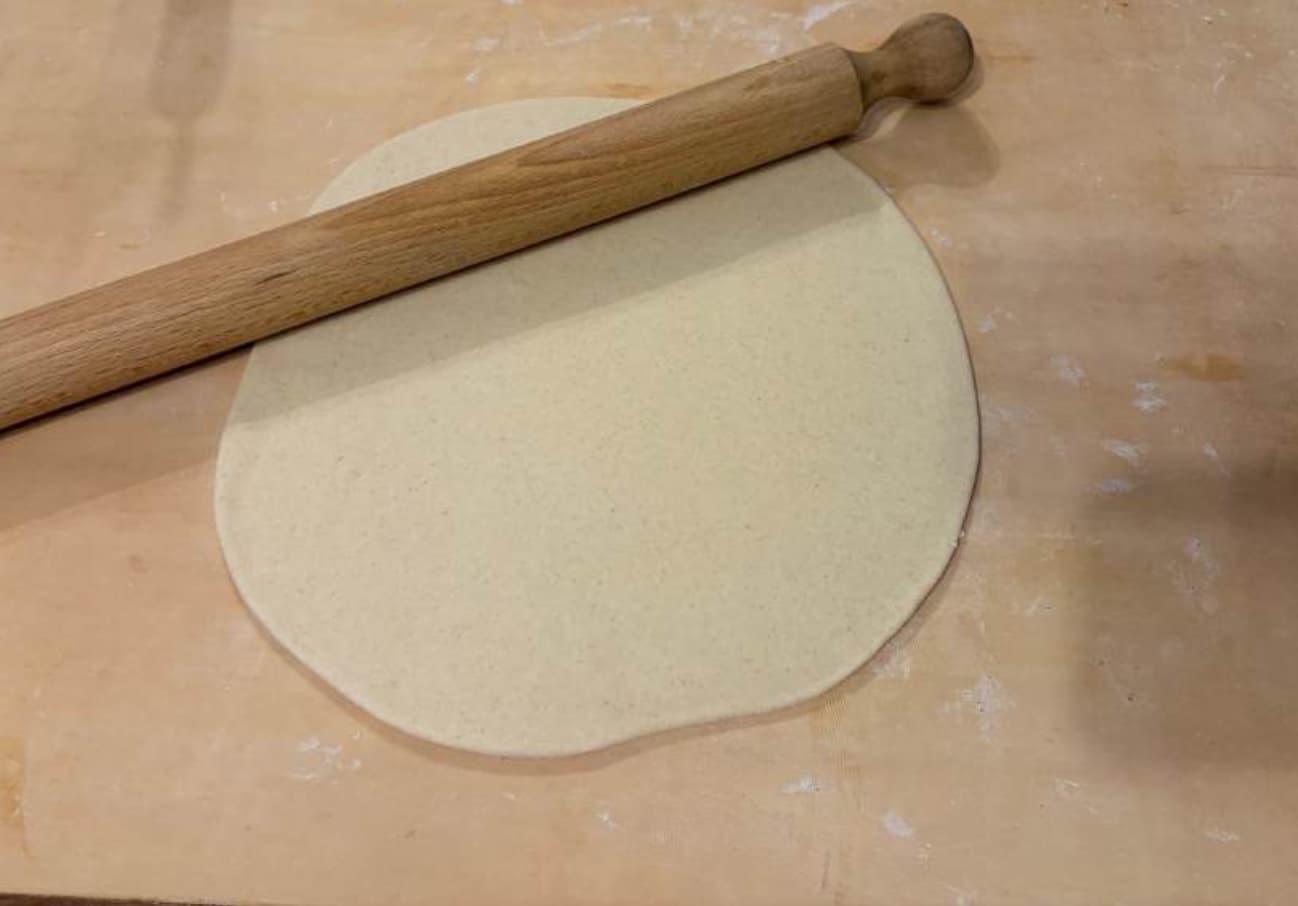
After resting, take a rolling pin, or an empty wine bottle (desperate times call for desperate measures). Roll the dough to about ½ cm thickness, roughly round if possible (but perfection is not required).
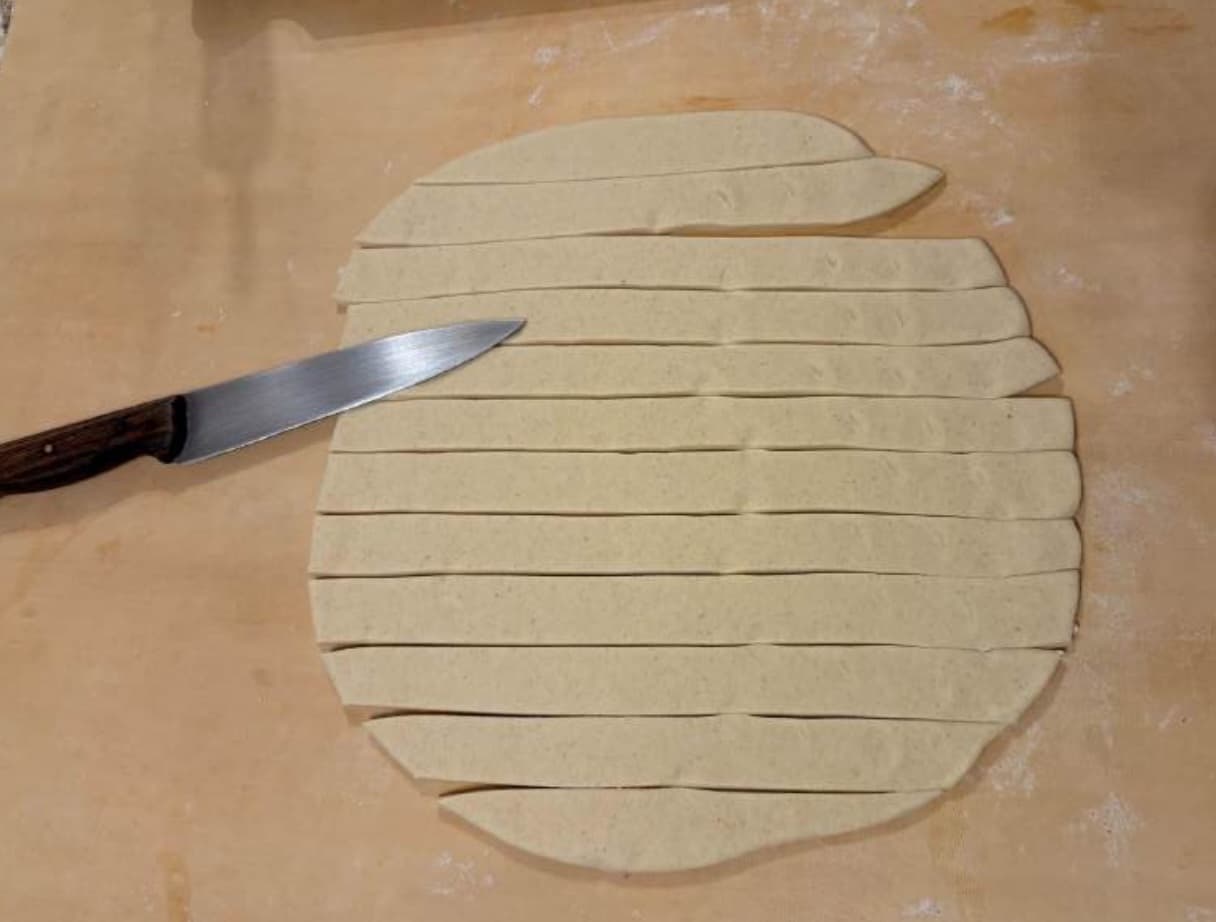
Cut it into strips about 1 cm wide.
Take each strip and roll it under your palms, moving from the centre outward and back again, until it forms a round strand about 3–5 mm thick and 20 cm long: essentially, a thick spaghetti.
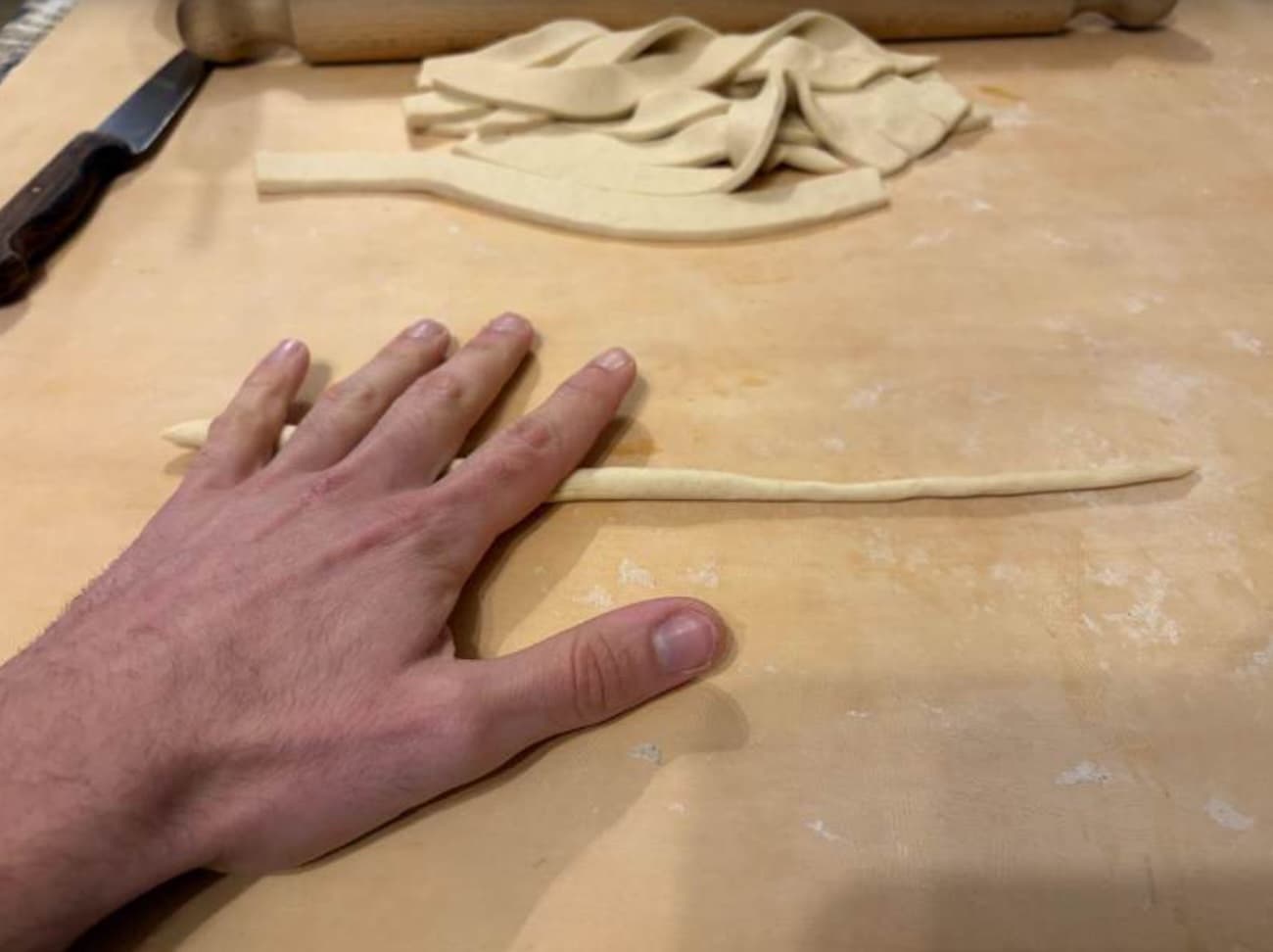
This rolling action is traditionally called “appicciare”, which is where the name pici comes from.
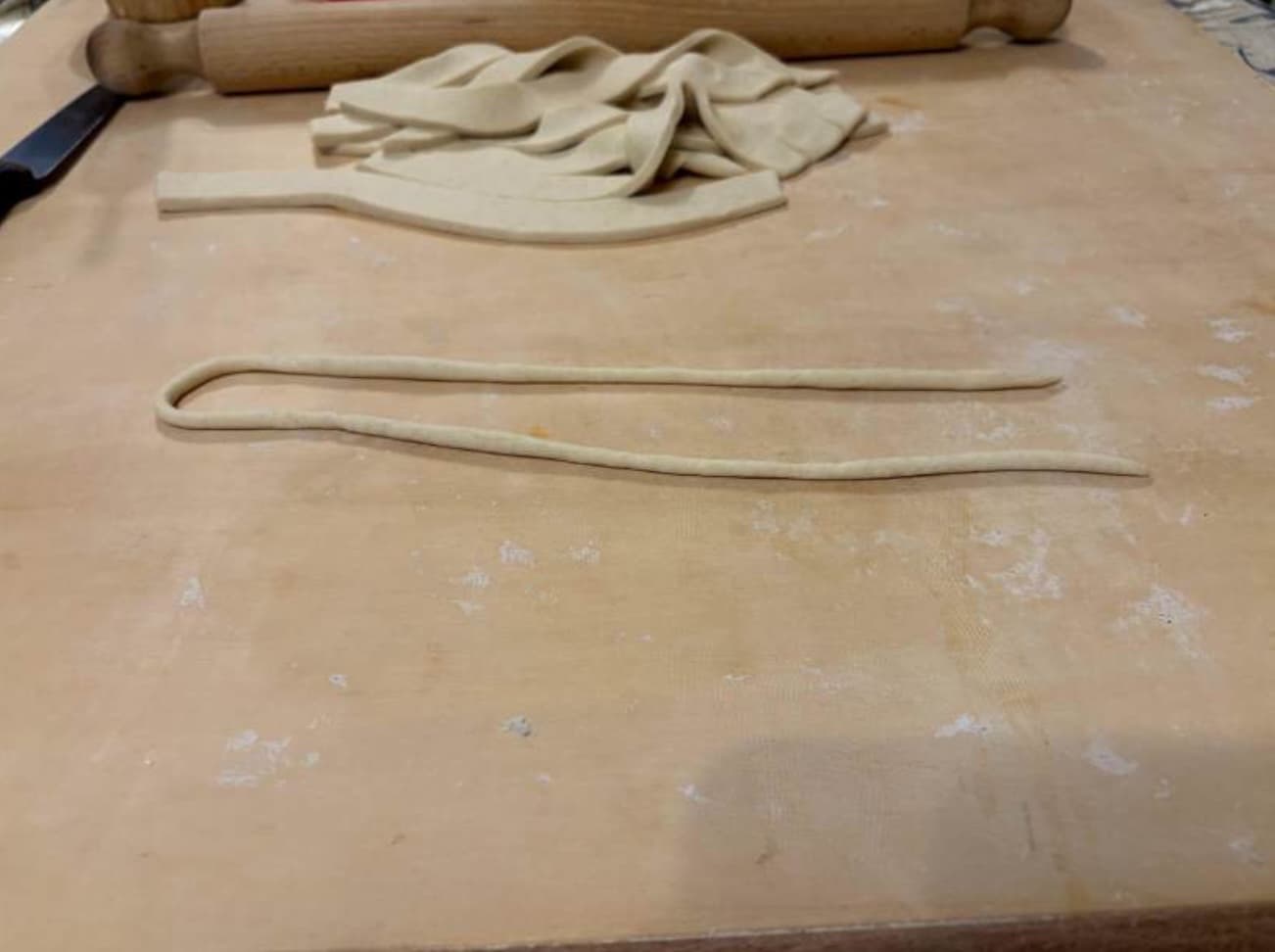
If the dough doesn’t roll easily, lightly oil your palms or the work surface with olive oil.
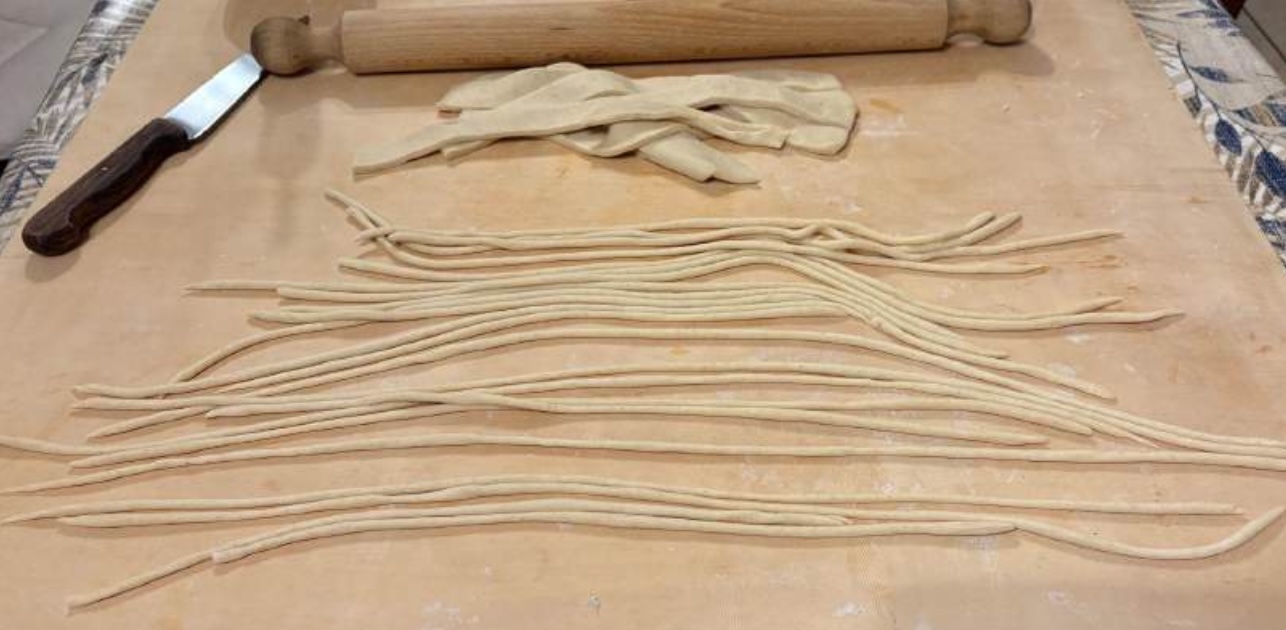
Cooking the pici
If you are cooking the pici immediately, drop them into boiling water generously salted with sea salt. Taste after a few minutes (usually 3–5 minutes, depending on thickness). When they are still al dente, transfer them to the pan with the sauce, adding a little pasta cooking water. Finish cooking together for extra creaminess.
Pici are traditionally served with aglione, duck ragù, briciole (toasted breadcrumbs), or cacio e pepe.

Author: Alessio Biagiardi
Alessio is Tuscan but works in London, teaching people how to cook like an Italian.
12th Jan 2026 12th Jan 2026